OpenAI released ChatGPT Images 2.5, pushing the focus of image generation competition from "whether it can be generated" to "whether it can be continuously modified." The new model enhances detail, subject fidelity of reference images, and multi-round editing consistency, reducing generation latency by up to 50% compared to Images 2.0; OpenAI claims that ChatGPT Images and API image models have generated over 3 billion images per week.
Moving from text prompts to direct operations
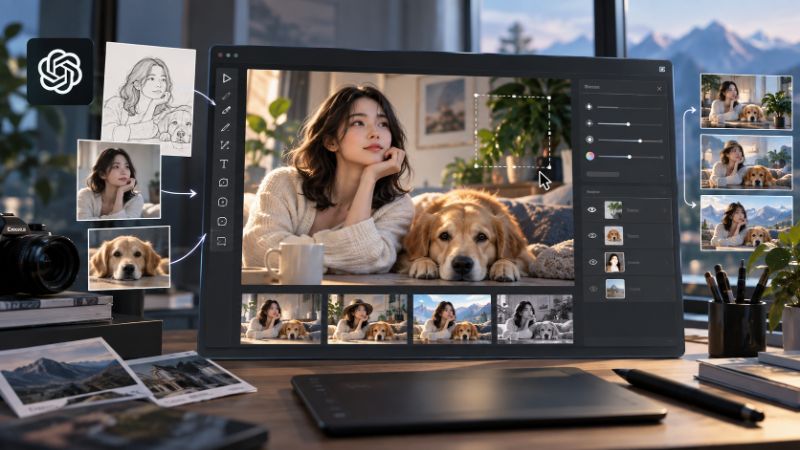
Images 2.5 adds Sketch, template, and image comment features. Users can directly sketch in ChatGPT for reference, and also leave modification comments for specific parts of images, no longer relying solely on long prompt descriptions.
The model itself also emphasizes "fewer errors": when modifying individual elements, try to retain the person, composition, background, and previous edits. For scenarios requiring repeated iteration like e-commerce images, ad materials, and social content, this is even more critical than the quality of a single image output.
APIs are divided into two tracks: speed and accuracy
For developers, OpenAI simultaneously launched GPT-Image-2.5 Flare and GPT-Image-2.5 Sunburst. Flare focuses on high quality and low latency, with the official position positioning it as the default choice for most applications; Sunburst targets professional workflows that emphasize editing precision and final quality.
Both API models support both text and image input. OpenAI currently lists image output prices at $30 per million tokens and image input at $8 per million tokens.
AI images are starting to compete for workflow
Images 2.5 is now available to users across ChatGPT, ChatGPT Work, and Codex platforms, covering desktop, mobile, and web platforms. On the security side, C2PA source information continues to be used, and SynthID invisible watermarks have been added.
The core of this upgrade is not to create another "better at drawing" model, but to weave sketches, reference images, partial annotations, and multiple rounds of revisions into a unified AI creation workflow. The next phase of competition in image models will likely depend on who can get closer to truly controllable and reusable production tools.