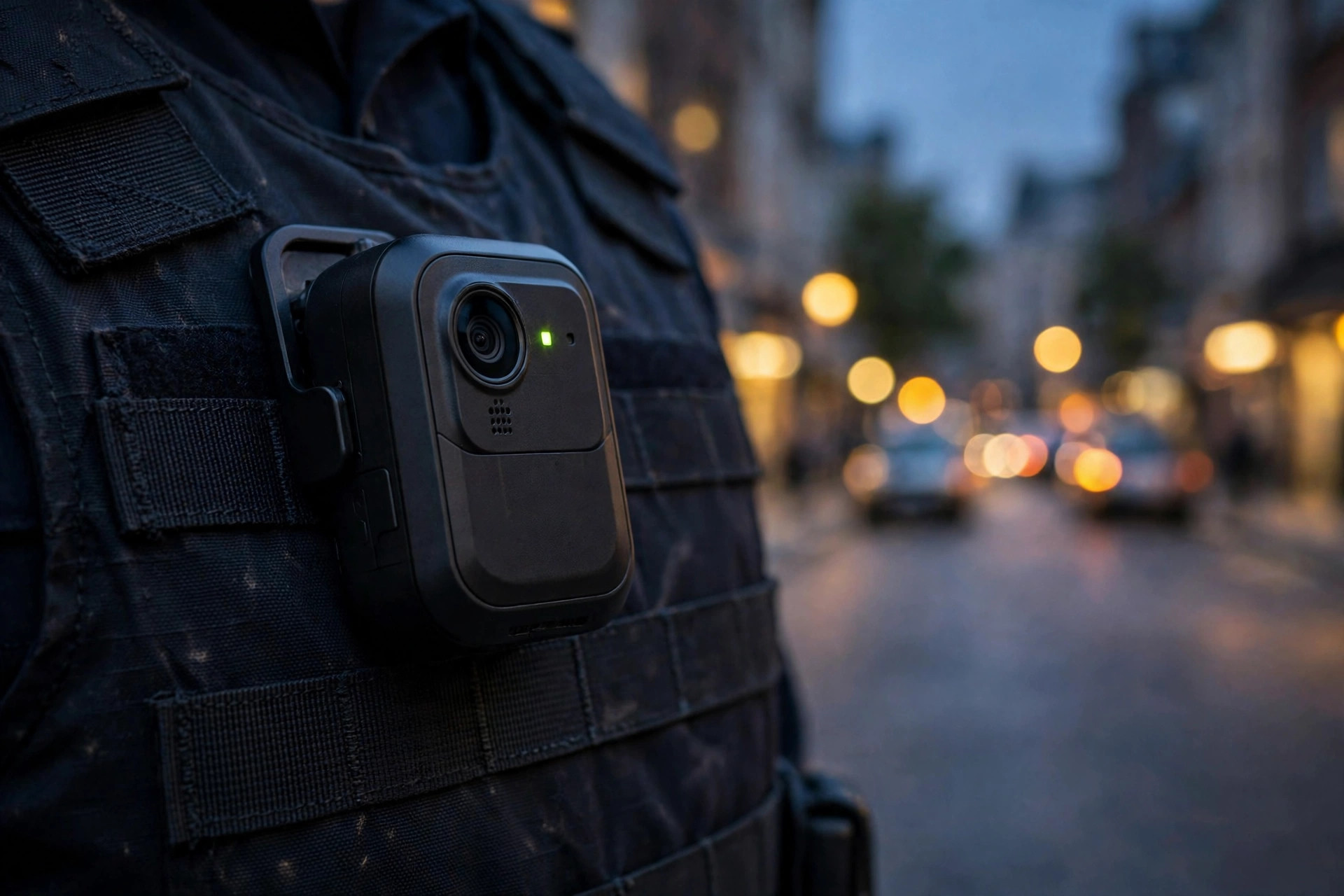
On October 24, 2026, public safety technology company Axon announced in an official press release its next-generation body-worn camera, Axon Body 5: 25 times the AI computing power of the previous generation, 20% more battery life, and, for the first time, two versions — a standard model and a Pro model. The device once handled only after-the-fact evidence; Axon now wants it to work live at the scene, instead of waiting until officers are back at the station to process footage.
From Recording the Scene to Acting in It
A body camera used to have one job: capture and store, as evidence and oversight. Body 5 changes that logic. Stronger on-device compute, better low-light video, more reliable connectivity and more precise location all serve one purpose — running AI features during the shift itself. Two existing tools in Axon's AI Era Plan show the direction: Draft One turns body-camera audio into report drafts, and Axon Assistant offers voice-based information lookup and real-time translation. Body 5 is a sturdier hardware base for those tools.
What the Pro Adds
Both versions share the compute, video, connectivity and battery upgrades. The Pro adds three pieces of hardware: a near-focus camera that scans driver's licenses, checking license status and wants or warrants within seconds without a trip back to the patrol car, with results sent to the Axon Fusus platform; four front-facing speakers that project sound more clearly toward the person an officer is speaking with, so real-time translation stays intelligible over traffic and crowd noise; and extra memory to run several AI tools at once. All three additions serve the same moment: during a roadside stop or interview, officers can get information that used to require going back to the car, without leaving the scene. Axon founder and CEO Rick Smith put it the same way at launch: officers should not have to choose between getting information and watching the scene.
Guardian: AI Flags, Humans Decide
Debuting alongside Body 5 is Axon Guardian, a new category of real-time AI features in the AI Era Plan built for field devices. Its first two features are escalation detection — when a Body 4 or Body 5 camera is recording, the system spots potential conflicts in real time and raises an alert in Fusus, where a human reviews the livestream and decides whether backup is needed — and approach alert, where the Fleet 3 in-car system detects a stopped vehicle's door opening and warns the officer through the in-car display and body camera. The key is the division of labor: AI notices and alerts, humans judge and act. Axon stresses that both follow its Responsible Innovation framework, developed with input from its independent Ethics and Equity Advisory Council, with agencies keeping control of their data. In policing, that matters more than any accuracy figure, because the cost of a false alarm is an unnecessary escalation.
What Is Still Unannounced Is Worth Watching
Axon has not announced general availability dates for Body 5 and Guardian, nor pricing or exactly which features vary by configuration. This launch reads more as a statement of direction: the hardware is ready to run real-time AI, but what decides its success is field performance over the coming quarters — how reliable translation proves in noisy streets, how often conflict detection cries wolf, and what rules agencies set for data use. Body 5's significance is not that a body camera got stronger; it is that AI is moving from offices and phones into real-time work on the street, at scale, for the first time.