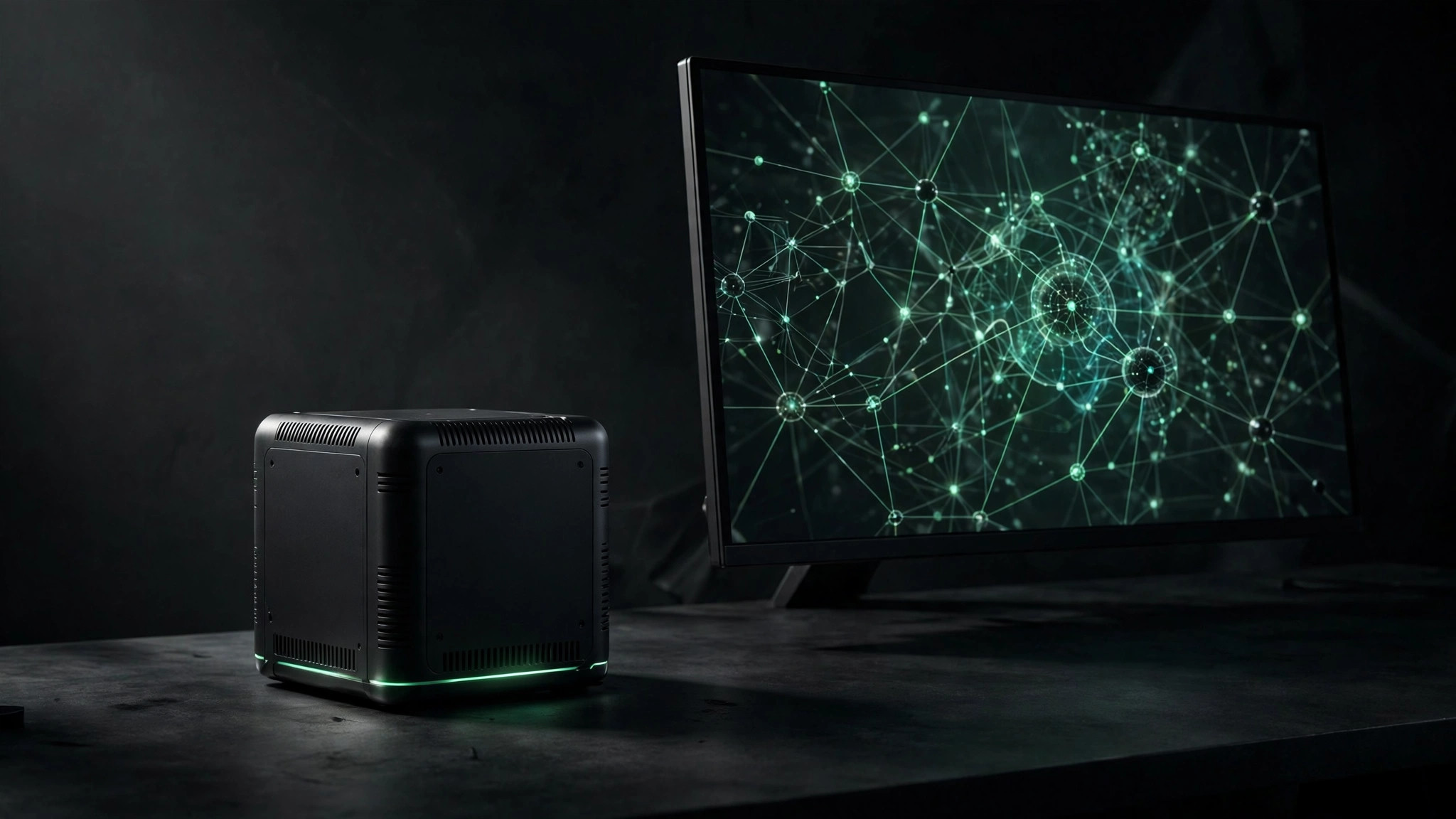
The 64GB version of the NVIDIA DGX Spark went on sale on October 23, 2026, only through six OEM partners — Acer, ASUS, Dell, Gigabyte, HP, and MSI — starting at $4,999. The verdict first: it uses the same GB10 chip as the 128GB version, but memory is halved from 128GB to 64GB, and the ceiling for runnable models drops from 200 billion parameters to 100 billion, while the price is $1,000 higher than the 128GB version's $3,999 launch price. What you are buying is that it is actually available, not that it is a better deal.
The real selling point: a small box with a big memory pool
The DGX Spark is a 1.2 kg desktop computer, 150 × 150 × 50.5 mm, in which a 20-core Arm processor and a Blackwell GPU share one unified memory pool, with 273 GB/s of bandwidth and up to 1 PFLOP of AI compute (FP4 precision). The 64GB version handles inference up to 100 billion parameters and fine-tuning up to 70 billion; two units linked by one cable combine into 128GB and can run 400-billion-class models. The system is NVIDIA's DGX OS, an Ubuntu-based Linux, with the CUDA ecosystem and tools like vLLM ready out of the box, so developers do not have to rebuild their workflow.
Thresholds and costs: work out three sums first
First, the system runs Linux only, with no Windows; anyone wanting it as an everyday main machine should forget it. Second, $4,999 is only the OEM starting price; storage, chassis, and configuration differ by vendor, and the final quote follows live market pricing. The 128GB version's $3,999 launch price is long gone, with reports of units selling for $6,950, so comparing against the launch price is meaningless. Third, the official claim that 64GB fits 100 billion parameters assumes suitable quantization; anyone wanting to run a full-size large model should first do the memory math, because a model that does not fit is cheap for nothing.
Buy, wait, or skip
Developers who run models up to 100 billion parameters locally, fine-tune up to 70 billion, and depend on the CUDA ecosystem can consider it; anyone who can get the 128GB version at a reasonable price should not buy the 64GB one, since memory doubles and the per-unit ceiling doubles with it. People who only run small 7B or 14B models get far cheaper results with an ordinary graphics card and open-source options; anyone tied to Windows, or who just wants it for chatting and office work, has no need for it at all.