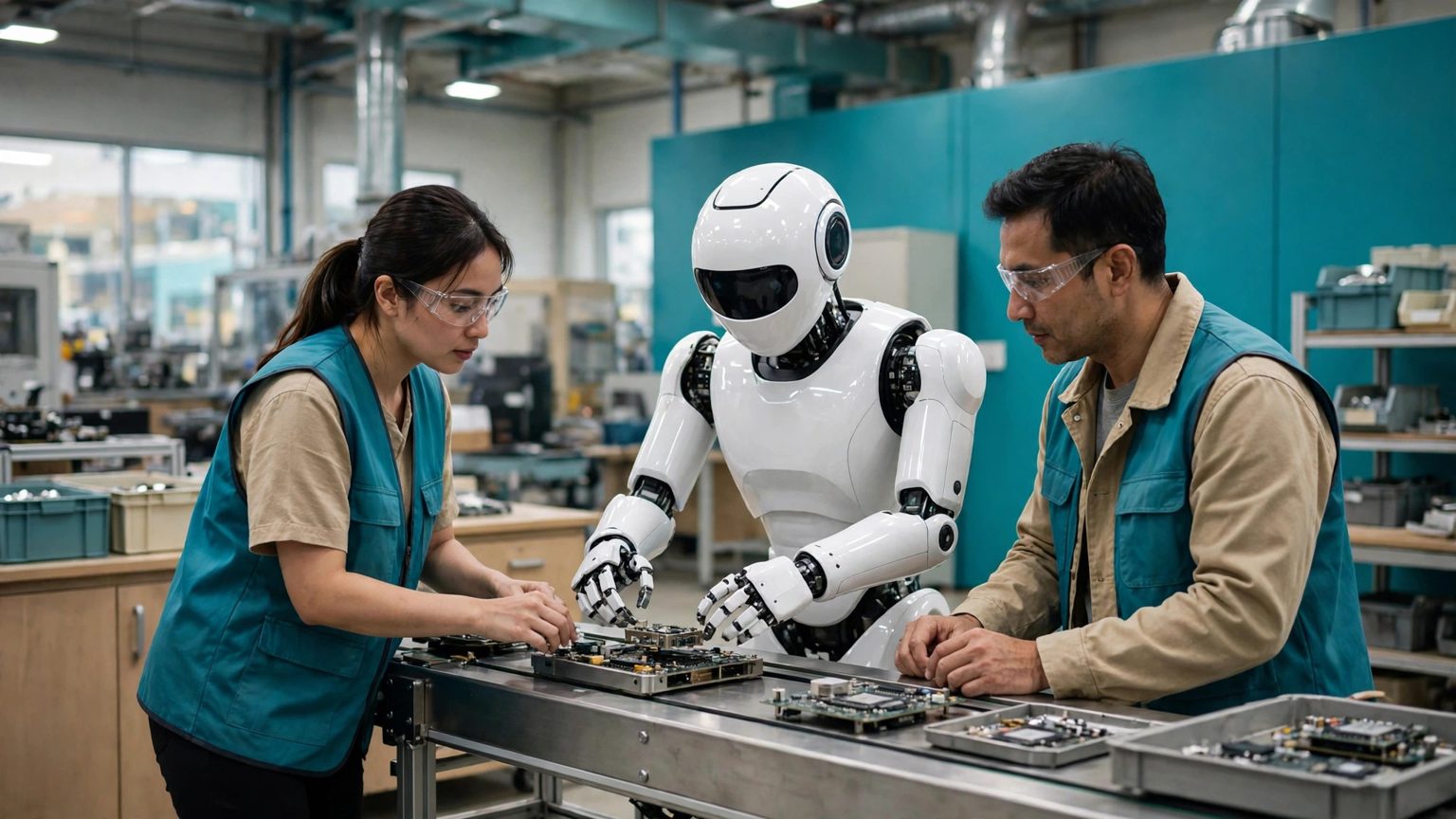
AgiBot wants a different yardstick for itself. On the morning of October 29, AgiBot co-founder, president and CTO Peng Zhihui said at the 2026 AgiBot Innovation Day that the company's revenue in the first half of the year was close to 2 billion yuan and that 20,000 general-purpose AI robots had rolled off the production line in total; AgiBot said its share of the global humanoid robot market was 43%, putting it among the leaders. At the same event, AgiBot introduced Worken, its first yardstick for the value of physical AI: effective intelligent working hours.
What Worken counts
Worken is calculated as the number of active robots multiplied by autonomous working hours multiplied by an output efficiency ratio. It no longer counts only installed units; it ties together how long robots are on duty and how much useful output they produce. AgiBot says the measure is already in use in visitor services at Chengdu's Kuanzhai Alley, material handling on Longcheer production lines, subway security guidance, entertainment shows at Chimelong in Zhuhai, retail guidance at ASD stores and hotel services at Shangri-La properties. Changing the yardstick matters because the robot industry has too easily told its story with shipment numbers; but Worken is AgiBot's own definition, and whether other vendors accept it and whether counting methods can be aligned will decide whether it stays a corporate slogan or becomes a shared industry measure.
Peng also set out five leaps for physical AI: first a usable body, then deployment in niche scenarios, then a generalized embodied foundation model that escapes custom development and lets one machine generalize across scenarios, then swarm intelligence, and finally intelligent bootstrapping, in which robots produce training data and AI takes a larger part in training itself. The first two steps already have identifiable deployments; the hard fight is the third. Without stronger generalization, robots remain machines that each need individual tuning, and no attractive Worken denominator can support a conclusion about scale. For buyers, one extra question is worth asking: beyond the unit count on the quotation, will the vendor commit to delivered results measured in effective working hours?