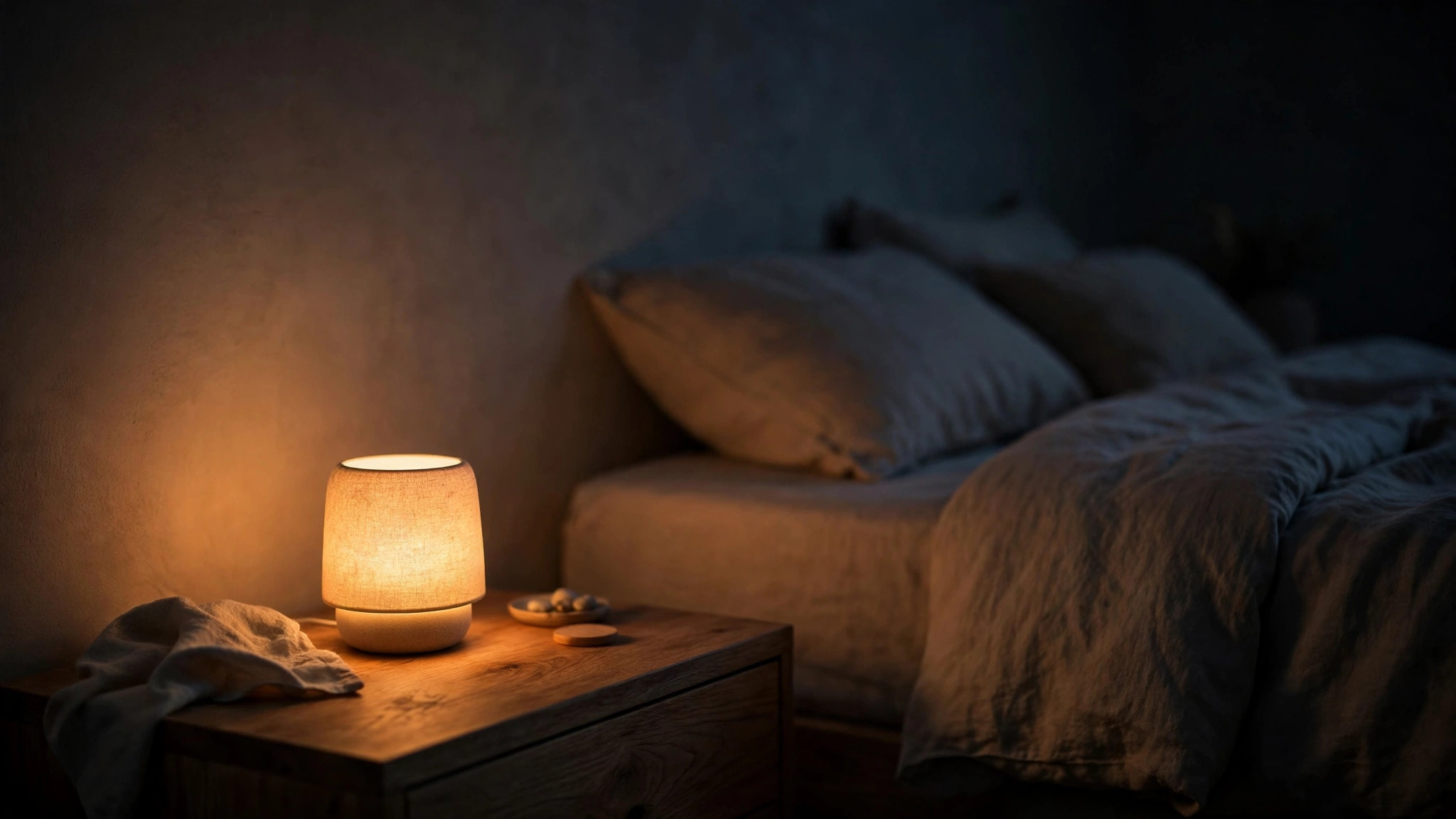
Whether an AI sleep lamp is worth buying depends on what you want it for. If you want a bedside lamp with soft light that dims on a schedule and helps you keep a regular bedtime routine, it can be worth it. If you are buying it for its claimed sleep tracking, sleep-onset analysis, or insomnia improvement, the extra money is mostly not worth it. Light-assisted sleep is the real bonus here; AI monitoring is only a side feature, not a health device.
What It Actually Does Well
The most useful thing an AI sleep lamp does is make bedtime automatic. In the half hour before sleep, the light slowly turns warmer and dimmer, switches off on time, and wakes you gently in the morning. That fixed rhythm is easier to stick to than just dimming your phone screen. It will not treat insomnia, but it can help people with irregular schedules build a steady pre-sleep ritual. What works is the light and the routine, not the sleep score on the screen.
Three Costs to Work Out Before You Buy
First, the price: a basic model with gradual dimming, a timer, and adjustable color temperature is enough. Paying hundreds more for tracking algorithms and member reports is rarely good value. Second, the environment: the bedroom itself needs to be dark enough. Poor blackout curtains and long phone use before bed will outweigh even an expensive lamp. Third, the effort: scenes are set in a phone app and firmware needs occasional updates. If you dislike fiddling with apps, choose a model with physical buttons that works as soon as it is plugged in.
Who It Suits, and Who It Does Not Suit
It suits three groups: people whose sleep schedule drifts and who want a fixed bedtime; people who need a bedtime ritual and use light as a cue to put the phone down; and families setting up a bedtime routine for children. It does not suit everyone, and that should be clear: people with diagnosed insomnia, heavy snoring, or suspected sleep apnea should see a doctor first, not buy a lamp. People who are sensitive to light and cannot sleep with any glow nearby will find an extra bedside lamp a burden. If you only need an ordinary night light, a plain warm lamp is cheaper.
How to Buy Without Regret
Set a budget cap first, and pay only for dimming and timing, not for monitoring. Prefer a model that can go very warm, dim very low, is flicker-free, and can be switched manually without the phone. After buying, test it for two weeks: judge only whether you fall asleep earlier and use your phone less before bed, not the score in the app. If your routine has not changed after two weeks, it is just a good-looking bedside lamp for you, and stopping there is wiser than buying more accessories.