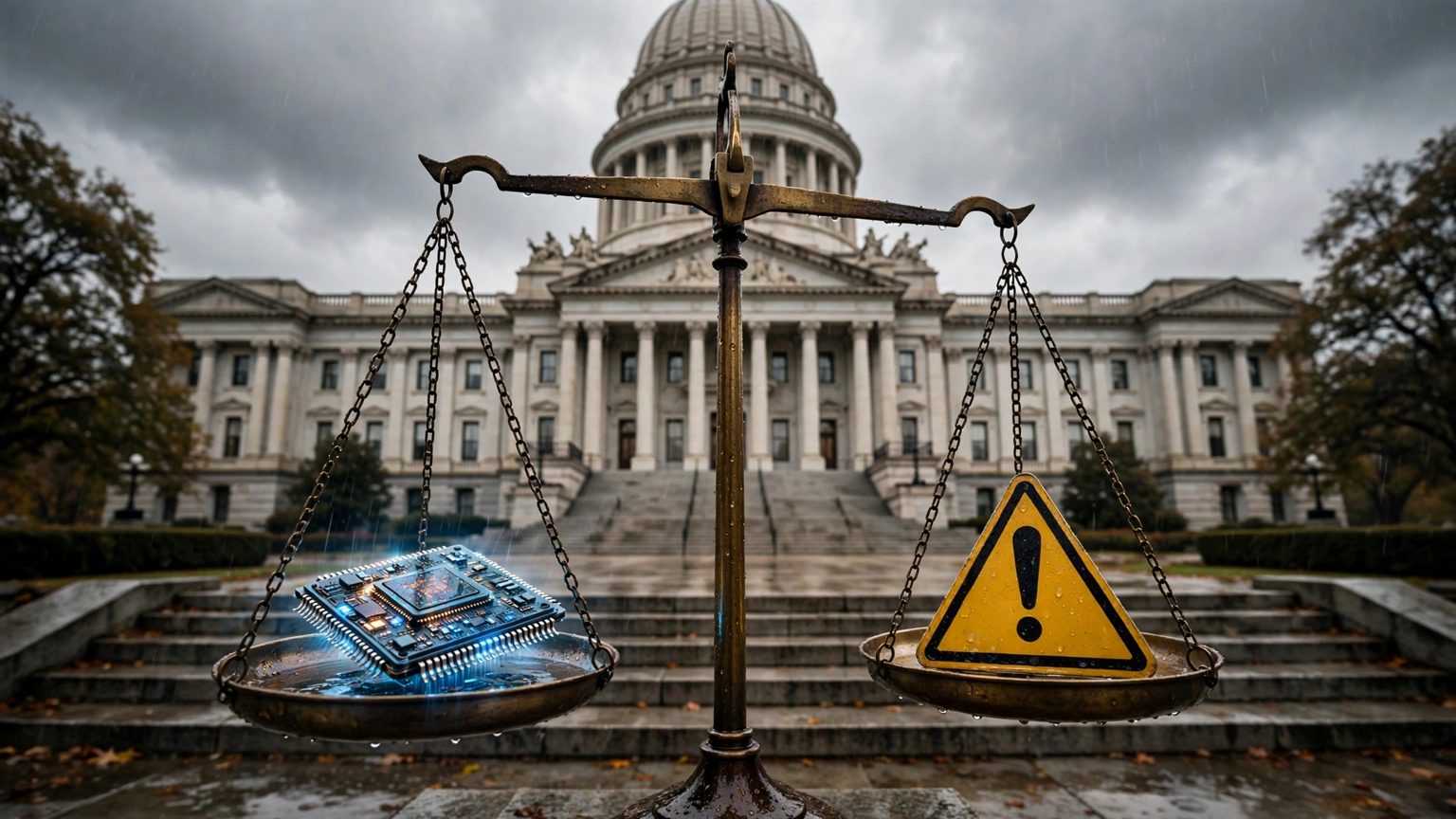
Anthropic's draft safety bill is now out in the open: on October 16, 2026, Reuters, citing a Politico report, said representatives of Anthropic have been quietly pitching a company-drafted bill to lawmakers on Capitol Hill that would set safety and security rules for the most capable AI models. The reporting rests on three people familiar with the effort; at the time Reuters published, neither Anthropic nor the Department of Commerce had immediately responded to requests for comment. The draft is still at the lobbying stage, with no public text and no named sponsoring lawmaker.
The bar for stopping a model is set deliberately high
The most striking feature of the draft is how narrowly it fences in government power: the state could block a model's release or use only if the model foreseeably and imminently risks causing more than $1 billion in damage, or killing or seriously injuring more than 50 people. The risk also has to fall into one of three listed categories — helping to create or release a biological weapon, escaping its developer's controls, or being used in a cyberattack. Everyday harms such as bias, misinformation or commercial disputes would not trip this emergency brake; it is aimed only at catastrophic risk.
The procedure for a halt is just as tight. Only the Commerce Department could start the process: after determining that a risk exists, it would ask a court to act, and a federal judge for the District of Columbia could order a suspension. The draft explicitly bars every other department, agency or official from suspending a model's development, deployment or internal use on their own. Who may pull the brake, and under what conditions, are written into the same narrow gate.
An independent evaluator layer sits in between
The draft's other main piece is evaluation. Independent evaluators would register with Commerce and periodically assess both the labs and their frontier models; labs could pay the evaluators, provided the payment is not tied to the outcome. If an evaluator finds an imminent, listed risk in a company's frontier models, it must report that to Commerce within 72 hours of completing the assessment. Developers, for their part, would have to test frontier models, be transparent about findings and submit to independent evaluation — obligations in line with the proposals in Anthropic's Advanced AI Framework, released earlier this year.
The timing invites a contrast. In the same week, Microsoft president Brad Smith publicly called for global AI rules and mandatory incident reporting, as covered in Microsoft President Brad Smith's call for global AI rules. Anthropic's draft takes the opposite route: no routine licensing regime, only a very high-threshold, procedurally narrow power to halt, plus registered evaluators watching day to day.
How much weight should the draft carry?
It is, first of all, a sample rulebook written by a company that would be regulated under it. With the trigger set at $1 billion and 50 people, almost no model iteration would ever cross the line; the everyday regulatory weight would fall on testing, transparency and evaluation, while state power appears only in extreme cases and only through a court. If the draft becomes the starting text for legislative debate, the industry will have set the first terms for what an acceptable shape of regulation looks like.
The limits deserve equal emphasis: this is not yet a bill, just a draft being pitched. The reporting names no supporters, and whether Congress is receptive — or whether the threshold numbers survive the legislative process — is unknown. Reading it either as Anthropic welcoming strict regulation or as Anthropic tailoring a guardrail to itself goes beyond what is publicly known. What can be confirmed is narrower and still significant: a frontier lab has begun handing its own design for the brake directly to lawmakers.