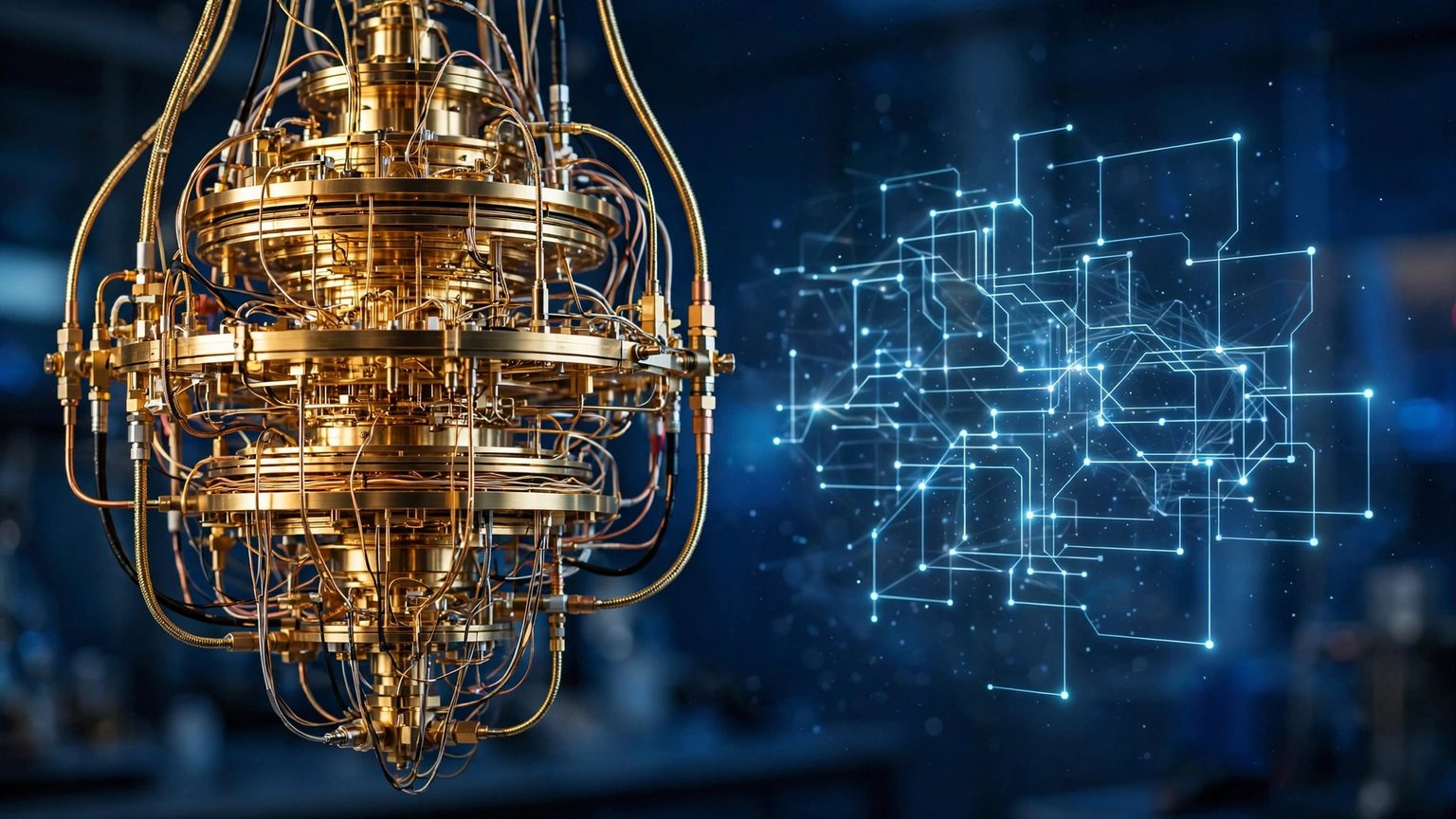
Claude redesigned eight quantum circuits on its own in a study Anthropic published on October 16, 2026, and beat the best previously published design on every one of them, cutting resource needs by more than an order of magnitude on some tasks. The work comes from Anthropic's STEM Fellows Program, led by Andi Gu with mentorship from quantum physicist Alek Kemeny, in collaboration with Harvard's Susanne Yelin and Mikhail Lukin; the full paper is on arXiv.
A spec sheet and a scoreboard, then it iterates alone
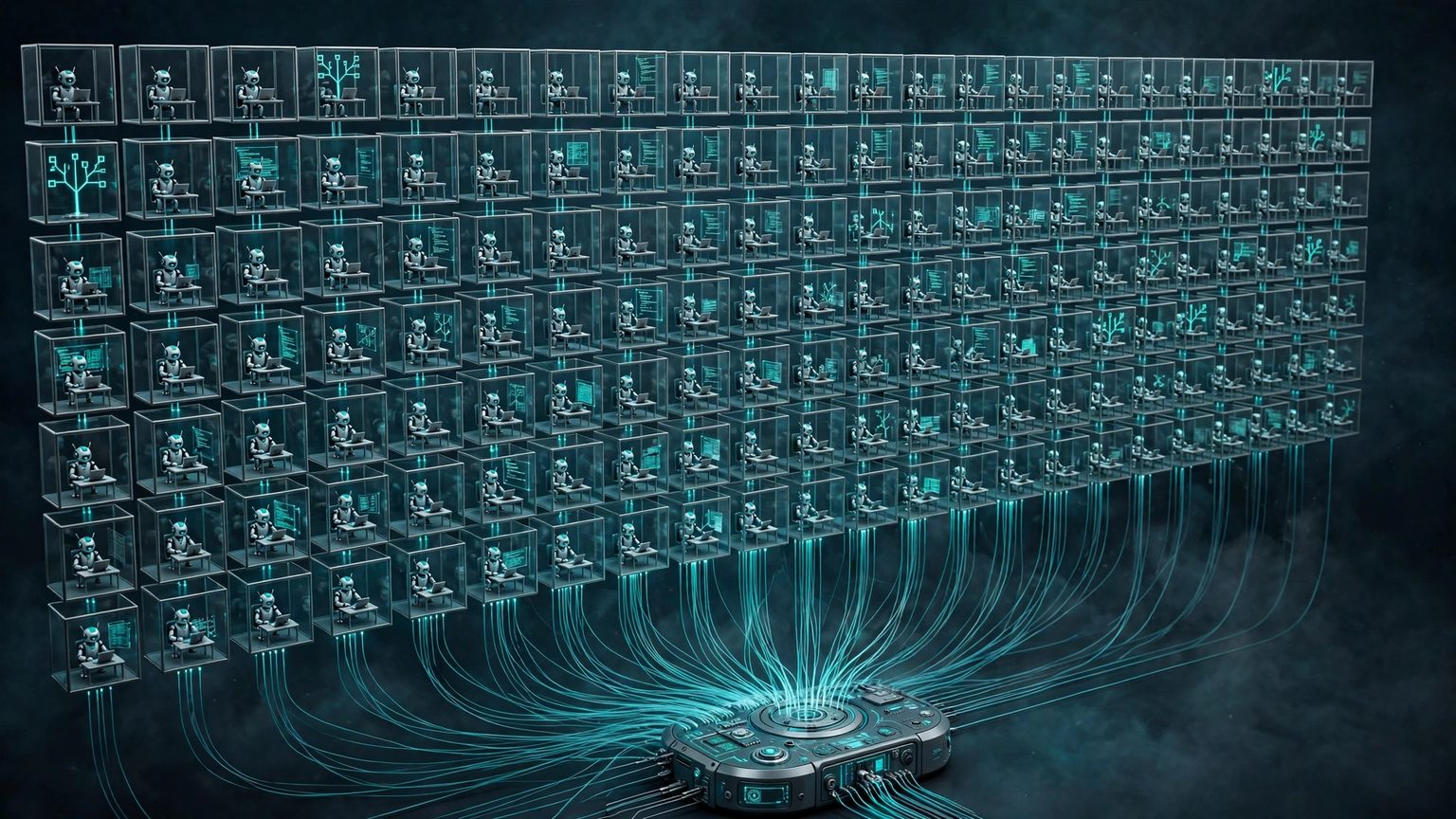
A quantum circuit's cost can be measured with two numbers: how many qubits it occupies and how many gates it needs. The team gave Claude Mythos 5 only plain-language specifications for eight basic computational primitives spanning chemistry, optimization, physics simulation, number theory and numerical computing, plus an automated evaluator that first checks whether a design is correct and then scores it on qubits multiplied by gates. Inside that closed loop, Claude proposed designs, took its scores and revised, with no human input between rounds — and all eight circuits ended up using both fewer qubits and fewer gates.
The pattern mirrors how it handles ordinary code: Claude Code Review Is Live: One PR Reviewed in 6 to 10 Minutes also rests on automated checks first and human review second. The difference is two hard constraints classical programs do not face: a quantum circuit cannot branch and discard intermediate results the way ordinary code does, because the quantum state runs across many inputs at once; and it cannot simply delete scratch work, because every step must be reversible — discarding means running the computation backwards. Those two constraints are exactly why circuits are expensive.
53 hours on the modular-inverse bottleneck
The hardest of the eight tasks was elliptic-curve point addition, the core step in quantum algorithms for the elliptic-curve discrete logarithm problem, and its costliest part is modular inversion. Classical computers compute it efficiently with a method called divsteps, but divsteps must keep a record of branch choices from every iteration, and a quantum circuit cannot afford to store that history — so no practical reversible version existed.
Given a one-paragraph brief, Claude worked for 53 hours, with human input limited to the brief itself and a few prompts to think more broadly. When its first idea — decoding the branch record back out of the number pairs instead of storing it — failed at full 256-bit size, it proved several new algebraic identities, derived an exact decoding formula, and confirmed it with large-scale numerical simulation and formal verification in Lean, producing the first reversible divsteps implementation that stores no branch history. Tuning the balance between storing and recomputing then yielded a family of designs; one of them uses just 12% more qubits than the smallest previous design while needing 17 times fewer gates.
The costliest step of an optimizer, cut twelvefold
The second case is the decoder inside decoded quantum interferometry (DQI), the most resource-hungry step of that optimization algorithm. Claude judged the extended Euclidean algorithm a poor fit and rebuilt the decoder around Berlekamp–Massey, whose fixed number of rounds suits a circuit that must run one gate sequence for all inputs; temporary values are reconstructed from the current state instead of being stored wholesale. To decide how much memory to reserve, it built a high-speed simulator and ran 403 million sample decodings, finding that exceptions needing storage almost never exceed one value — so the circuit reserves 19 qubits instead of the worst-case 665, at the price of roughly one run in ten thousand failing, within the task's allowed error. Stacked together, the changes cut the decoder's gate count to one twelfth of Google's previous construction.
For scale: human research groups spent eight years bringing the gate estimate for the FeMoco molecule's ground-state energy down from about 50 trillion in 2017 to roughly 340 million. This elliptic-curve design came out of a single 53-hour automated run. The cold water is in the paper too: these are designs validated by an evaluator and simulations, not runs on real quantum hardware, and error-correcting codes, fast decoders and hardware control remain separate hard problems. Anthropic also notes Claude was conservative early on, repeatedly re-checking improvements that already held up, and the team had to force parallel lines of attack and occasionally prompt it to widen the search. Even so, the result adds a new variable to the quantum timeline: the circuits may increasingly be designed by something other than people.