Anthropic published two research reports on October 16, 2026, drawn from its own operating data: one tracks how AI is changing the company's internal hiring structure, and the other compares employees' expectations about AI's economic impact with those of nearly 11,000 US adults (a weighted Morning Consult sample from August).
Agent hours passed headcount first
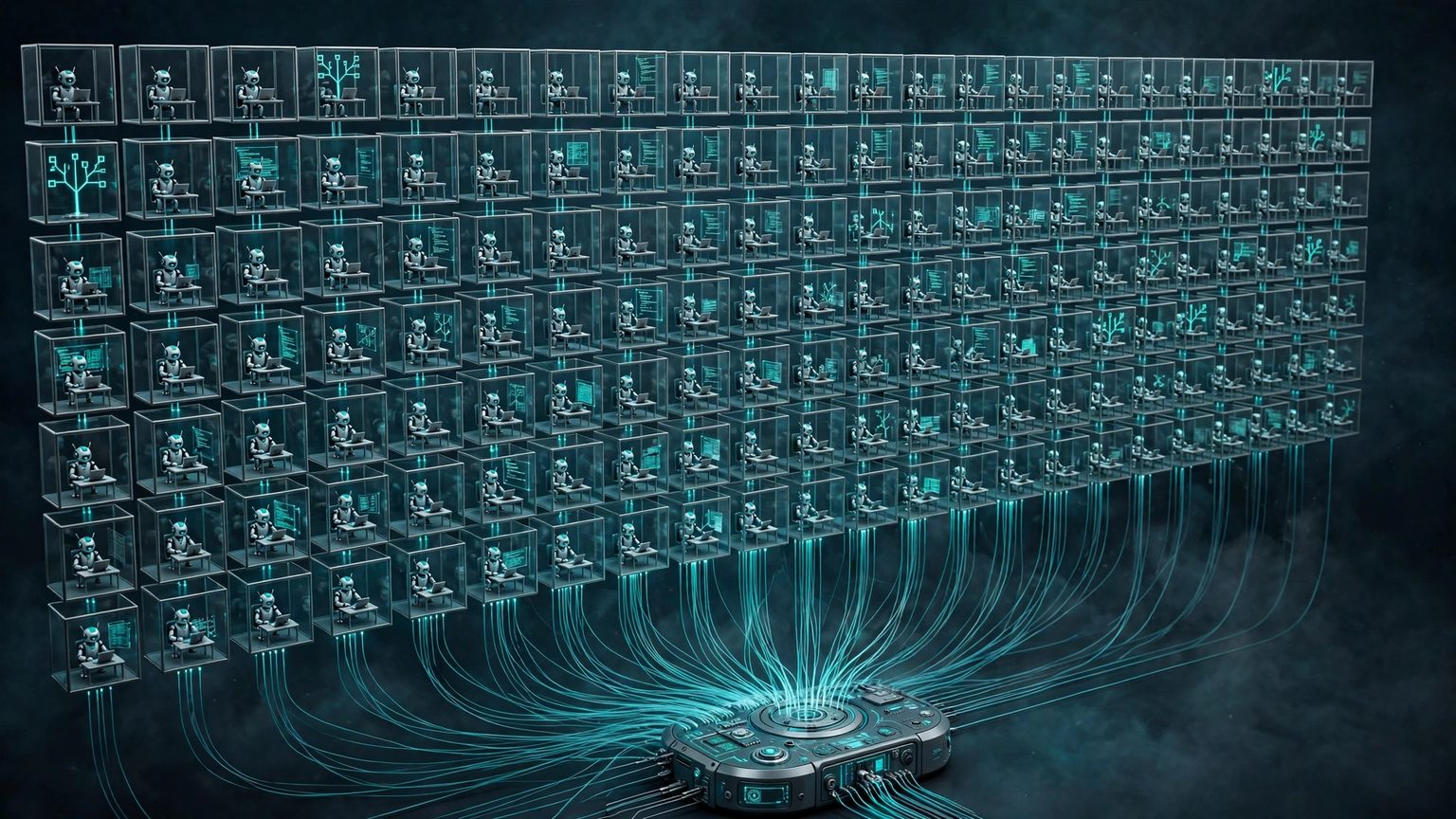
The earliest change in the report is not a layoff list but the composition of work. By March 2026, AI agents at Anthropic had logged more working hours than employees; by August, interactive agent usage time reached six times that of employees. Output signals moved in step: more code shipped per person, more sales closed per representative, more contracts processed by the legal team. Tracking the same employees over time, researchers found individual output rising as their use of AI tools deepened.
Anthropic's own framing is that the bottleneck has shifted from execution to human attention: employees spend more of their time building monitoring and reviewing agent work. Once agents genuinely take over tasks, job content gets rewritten before job counts do. The same pattern shows up in commerce, covered earlier on this site in Agent Shoppers Blocked at the Store Door: 403s Doubled, 42% of Consumers Will Not Hand Over the Buy Button, where agents already run inside real transaction flows and are stopped first by risk controls and trust.
Hiring lists changed before layoffs did
The first part of the workforce to move was the entry point. Over the past year, junior roles shrank as a share of Anthropic's hiring, and technical roles shrank as a share of its workforce. Hiring decisions increasingly weight autonomy and judgment over narrow technical expertise and execution skills.
That sequence is the more useful reference for other companies: no formal "AI replacement plan" is needed for entry-level openings to contract first in a hiring plan. For people entering the field, the rung that used to accumulate experience is the one being squeezed; for managers, the new problem is how to evaluate people whose job is directing and reviewing agents.
The expectations gap is about experience, not stance
The second report is easy to misread as "insiders are more optimistic." The data actually show that Anthropic employees and the public hold similar models of how AI affects jobs: in both groups, people who expect AI to take over more of their own work also expect stronger unemployment effects. The real split is over how fast capabilities will move: 91% of employees expect AI to make a Nobel-level discovery by 2030, against 39% of the public; more than half of employees think AI will handle at least 80% of their current work by 2030, against 5% of US adults.
Chief economist Peter McCrory also released a framework for comparing AI-progress scenarios the same day, with the explanation that Anthropic runs roughly a year and a half ahead of the wider economy on AI adoption, so what happens inside may be an early sample of what follows elsewhere. That claim deserves a discount — the data come from a single frontier lab and are self-reported, and the report itself concedes measures like code per person are imperfect. But as one of the few public samples that put real agent hours next to hiring structure, its value is less in its conclusions than in the yardstick it offers: when agent hours inside a company reach six times employee hours, what changes first is the hiring entry point and the review work — not a layoff list.