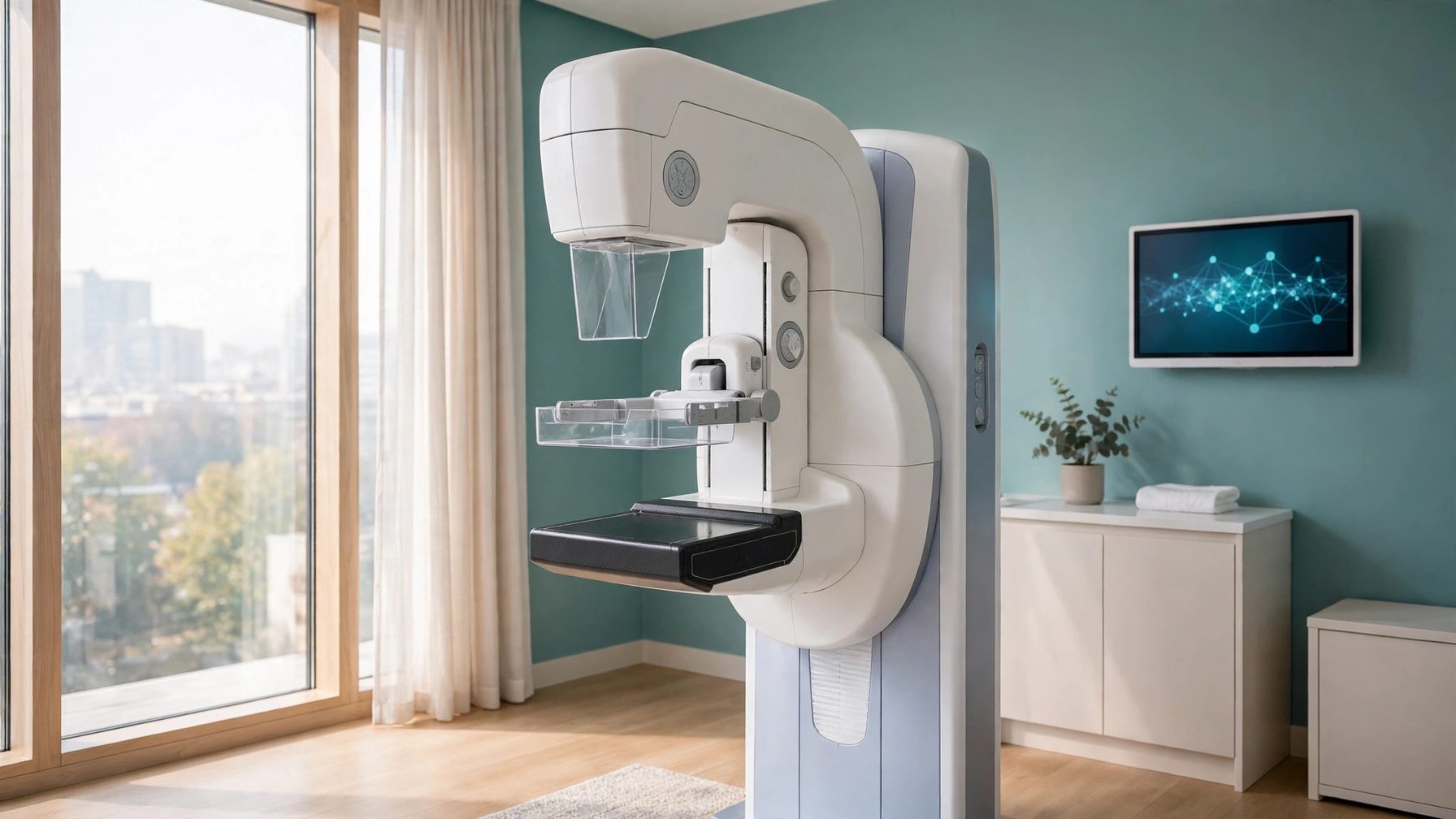
On November 29, ScreenPoint Medical announced two new breast AI products at RSNA 2026 in Chicago: the cloud platform MammoCloud and the five-year breast cancer risk assessment TRI5. The first moves breast AI detection algorithms to the cloud; the second estimates a woman's five-year breast cancer risk using only her age and an existing mammogram.
MammoCloud is a cloud-native AI operations platform that hosts ScreenPoint's Transpara family of breast AI algorithms, giving hospitals and screening programmes without a third-party radiology platform direct access. It offers cloud-first enterprise deployment, standardised algorithm updates, usage analytics and automatic pre-fetching of prior mammograms for comparison. Montefiore Nyack Hospital in the US is among the first organisations to deploy it: results flow directly into radiologists' existing reading workflow, and the Bialogics AIQ platform continuously monitors the AI's performance in routine clinical practice.
TRI5's selling point is that no new examination is needed: no questionnaire, no additional imaging, compatible with both 2D and 3D mammography. It is backed by an independent study published in March in npj Digital Medicine:
- 112,621 negative screening mammograms from the UK screening programme, drawn from two screening sites;
- four algorithms compared head to head, with TRI5 achieving the highest AUC over five years of follow-up;
- the 14% of mammograms with the highest TRI5 risk scores accounted for 41.8% of future cancers and 50.3% of interval cancers.
The limits need stating plainly. TRI5 is currently 510(k) pending and not yet available for sale in the United States; in the paper the algorithms are anonymised, with TRI5 appearing under the code name DL-1, and the data are on file with the vendor. It calculates risk stratification, not a diagnosis: a high score does not mean cancer, and a low score does not mean there is no risk.
At RSNA, ScreenPoint is demonstrating both products at booth 4946, with related academic presentations on November 30 and December 1. For screening programmes, the real test comes after FDA clearance: whether risk scores change recall intervals and follow-up strategies will depend on data from clinical deployment. Using AI for disease screening is nothing new — Google's smartwatch hypertension research appeared in Nature, pushing screening in the same direction, from hospital to everyday life: Google's Smartwatch AI Detects Hypertension, Published in Nature: Screening Without a Cuff.