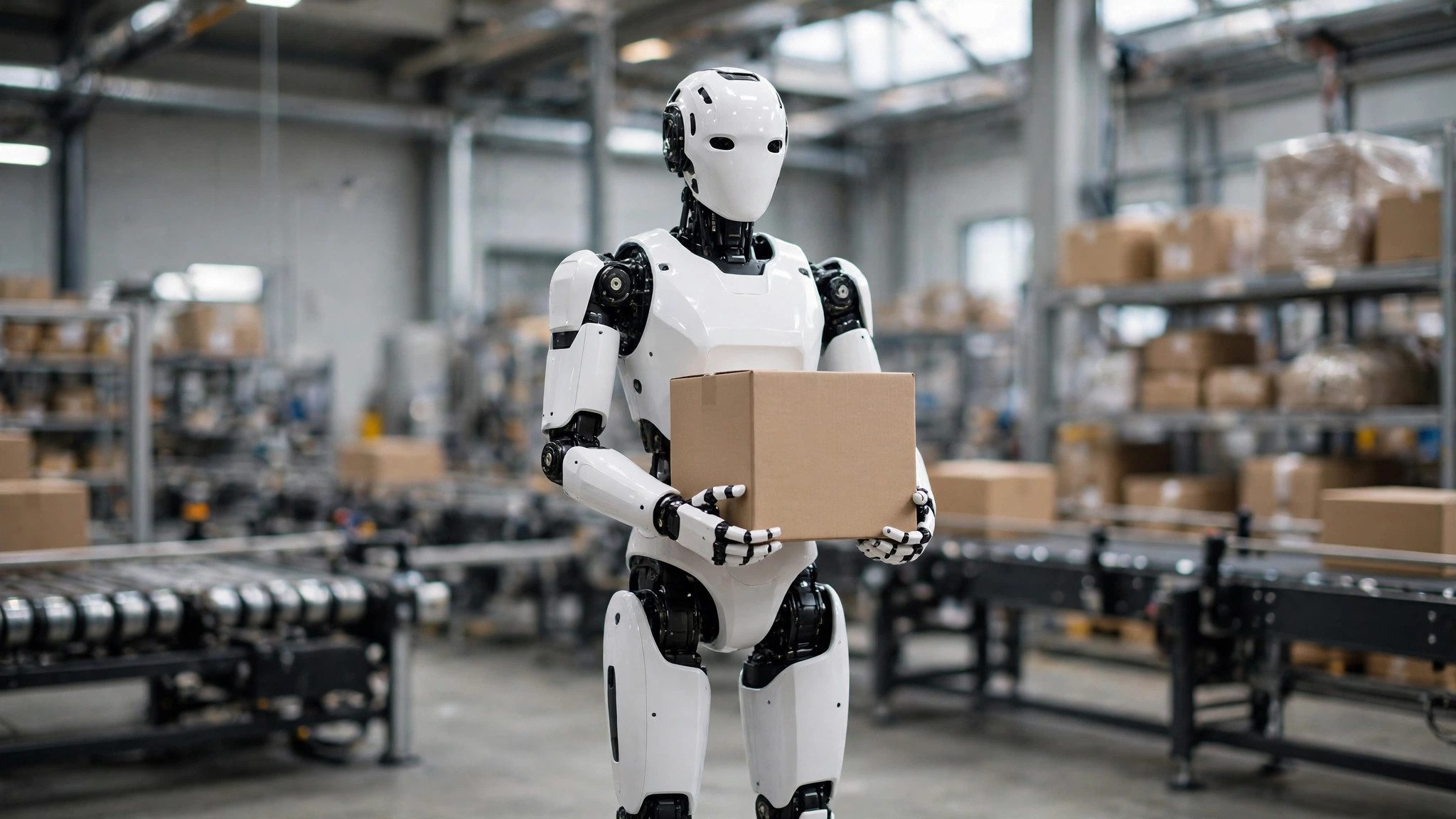
On November 29, UBTECH unveiled Walker S3, its new-generation industrial humanoid robot. Compared with the previous generation, on-device compute rises to 2,070 TOPS — five to six times higher — a single shift runs up to 8 hours, and the battery can be hot-swapped in 30 seconds without powering down. UBTECH's positioning is clear: this is no longer about showing off moves, but about sending the robot straight into factories and logistics warehouses for repetitive work like carrying and sorting.
On specs, Walker S3 stands 1.74 meters tall, weighs 59.3 kilograms, has 51 degrees of freedom, and walks at up to 2 meters per second. On top of that compute sits the "Thinker brain + ROSA 2.0" framework, combining a VLA large model, the Thinker-RSI self-evolution mechanism, and the Co-Agent Swarm Brain Network 3.0, plus what UBTECH calls the world's first pure-vision spatial intelligence solution for industrial humanoids. The robot no longer relies on people pre-programming every step: the model understands new tasks itself and learns on the job. UBTECH says adapting to a new task is now over 50% faster, with zero-code deployment and one-person unboxing. The approach follows the same line as UBTECH's earlier Thinker-Sim: practice in simulation first, then keep learning on site.
Notably, three days before the formal launch, UBTECH released a demo video of the robot rappelling outdoors, sprinting, crawling under obstacles, and carrying a stretcher with rescue workers. That video shows the ceiling of its athletic ability, not a typical day on the factory floor. What will actually decide whether it earns a place on production lines is another set of numbers: over 93% of key components are domestically made, assembly complexity is down 40%, and deployment is 38% faster. UBTECH is not the only one pushing humanoids into factories — Volvo is also having AEON learn to place parts first, with deployment targeted for mid-2027. Walker S2 already entered mass production at the end of 2025, so S3 is that mass-production platform with compute and battery life raised another notch.
Several questions remain unanswered: when Walker S3 will enter mass production, which factories will take it first, and what its real failure rate is in continuous operation — none of that was disclosed at launch, and neither was the price. Judging whether it can really hold down a frontline shift will take operating data from the first factory deployments, not just launch-day specs.