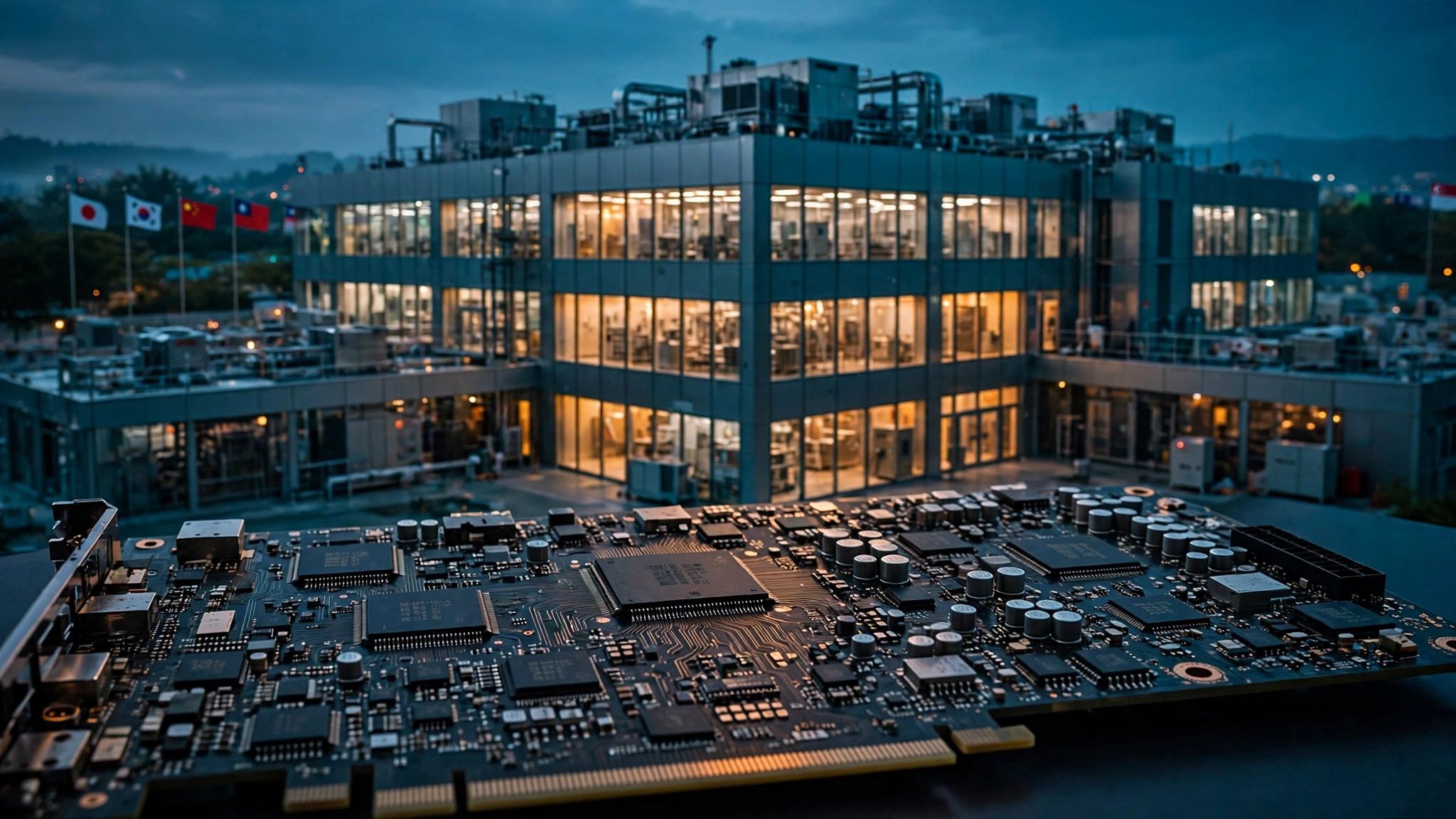
After Jensen Huang resigned as chief executive of Nvidia on November 12, governments across Asia responded over the following two days, and their core concern was strikingly consistent: chip supply must not stop, and local projects must not stall. South Korea's Ministry of Science and ICT was the first to confirm Nvidia's supply commitment, with the plan to deliver 260,000 advanced GPUs unchanged; Taiwan and Japan said projects would continue as planned and that they were watching closely; the responses from China and Singapore could not avoid the ongoing investigation and export-control dispute.
South Korea: Locking In the 260,000-GPU Supply Promise
South Korea moved fastest in this round of responses. Nvidia's AI chips depend on high-bandwidth memory supplied by Samsung Electronics and SK Hynix, and South Korea's government AI strategy council held an emergency meeting on November 13 to assess what Huang's departure means for the country's AI industry. Afterward, the Ministry of Science and ICT said Nvidia had reaffirmed its plan to supply 260,000 advanced GPUs to South Korea and to continue joint AI projects. The assurance matters because the supply plan was negotiated while Huang was in charge; whether it still holds after a change of leadership was the first thing Seoul needed to confirm. For the backstory of Huang's exit, see our earlier account of why he left.
China and Singapore: The Investigation and Export Controls Stay on the Table
China's response came in two parts. On November 10, its foreign ministry rejected claims that a Chinese businesswoman linked to Huang was a spy, calling them groundless; on November 13, a spokesperson reiterated opposition to export controls that disrupt global supply chains and said the ministry was not aware of reports linking restricted Nvidia chips to a Shanghai data center associated with a person involved in the case. A Reuters review of procurement notices and investment plans found that more than $3 billion in Chinese AI computing projects reliant on restricted Nvidia processors now face uncertainty. In Singapore, the Ministry of Home Affairs confirmed that police seized the passport of Alice Huang, a former executive at the company Megaspeed, in June 2025, as part of an investigation into whether server purchase declarations were false; the case is still open.
Taiwan and Japan: Projects Continue, Wording Stays Cautious
Taiwan's Economy Minister Kung Ming-shin said Huang's departure was unlikely to significantly change the growth of the global AI industry, and Taipei's city government said Nvidia's planned overseas headquarters in the city remained on track. Japan's Ministry of Economy, Trade and Industry was more guarded, saying the government would closely monitor Nvidia and describing the chipmaker as an important player in Japan's AI semiconductor industry. Both places share the same approach: secure the cooperation already on the ground first, then see what the new management does. For the impact on startup funding, see our other report.
The most direct thing to watch next is Nvidia's third-quarter earnings on November 17, interim chief executive Colette Kress's first public appearance since taking over. What the earnings call says about supply and the product roadmap will determine how long Asia's governments can keep their current posture of 'confirm first, wait and see.'