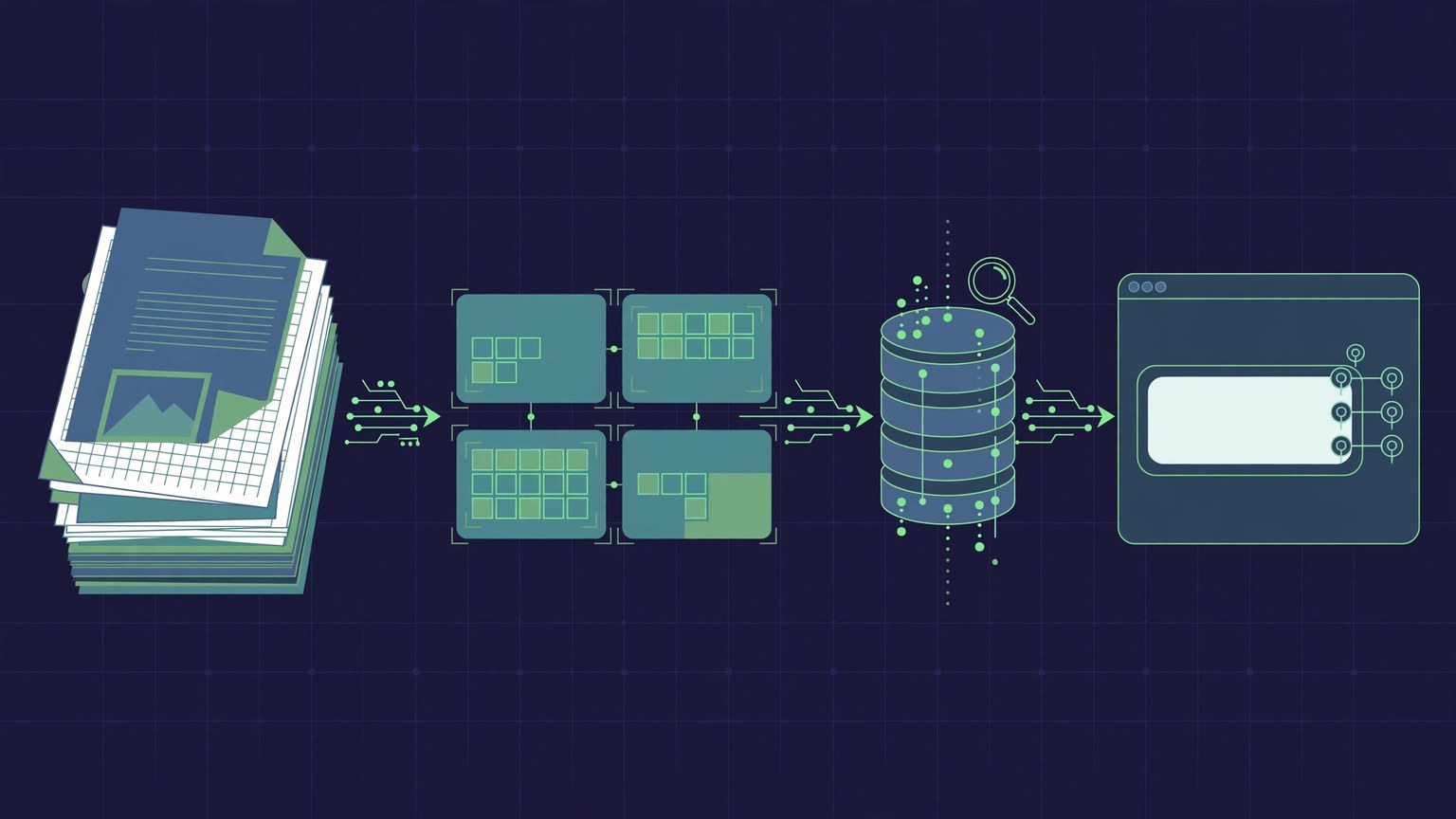
Axion-1.0 is an agent foundation model ByteDance released on November 2, with the paper, training recipe, and code all public under the Apache 2.0 license. The conclusion first: if you want to learn how agent models are trained, this is the most worthwhile open-source project to read right now. If you want to download a working model and get going immediately, hold off — the weights step isn't fully there yet.
Axion-1.0 is two models and one public training recipe
Axion-1.0 comes in two sizes: 35B (3B computed per token) and 122B (10B per token), both mixture-of-experts architectures built on Qwen3.6-35B-A3B and Qwen3.5-122B-A10B respectively. It isn't a model trained from scratch, but an agent model trained on a Qwen base with a three-stage recipe: two rounds of lightweight supervised fine-tuning plus one round of reinforcement learning, on about 18,000 training examples and roughly 1,000 GPU-hours for the 122B version. The agent ships with four tools: web search, visiting web pages, searching scholarly papers, and running Python code. On scores, the 35B version beats GPT-5.5 and Gemini 3.1 Pro on three research-style agent tests, and the 122B version scores 59 on Humanity's Last Exam. The official repository is on GitHub under the bytedance organization, project name axion1_0.
Before deploying, sort out what you're actually getting
The code and recipe are on GitHub — data construction, filtering, prompts, training code, and evaluation scripts are all there. Follow them and you can reproduce the whole training process, and that is its real value. The 35B weights can be downloaded from Hugging Face, but the project's own README says plainly that it's a community reproduction, not official weights. In BF16 format that's about 70 GB — it won't run on an ordinary computer; you need at least a large-memory GPU or a rented card. There is currently no official download link for the 122B weights; if you want them, you have to train them yourself following the recipe. There is no ready-made chat entry point and no one-click deployment script. Today it's more of a public experiment record than an out-of-the-box product. Unlike DeepSeek Harness, a runtime for running agents, Axion-1.0 is a model for studying how agents are trained.
Three pitfalls — read these before you start
The first pitfall is mistaking community weights for official weights: when something breaks, there's no official support, and updates and fixes depend on the community. The second is being misled by benchmark scores: HLE-style scores measure research tasks, which doesn't mean everyday coding or research works just as well. The third is underestimating the cost of reproduction: a public recipe doesn't mean cheap — the training bill for 122B still runs to over a thousand GPU-hours. It's suited to researchers and engineers who want to study agent training methods; not suited to anyone who just wants a ready model to use right now — they should wait for official weights or a community package. If you want to understand the MoE architecture first, see how mixture of experts saves compute.