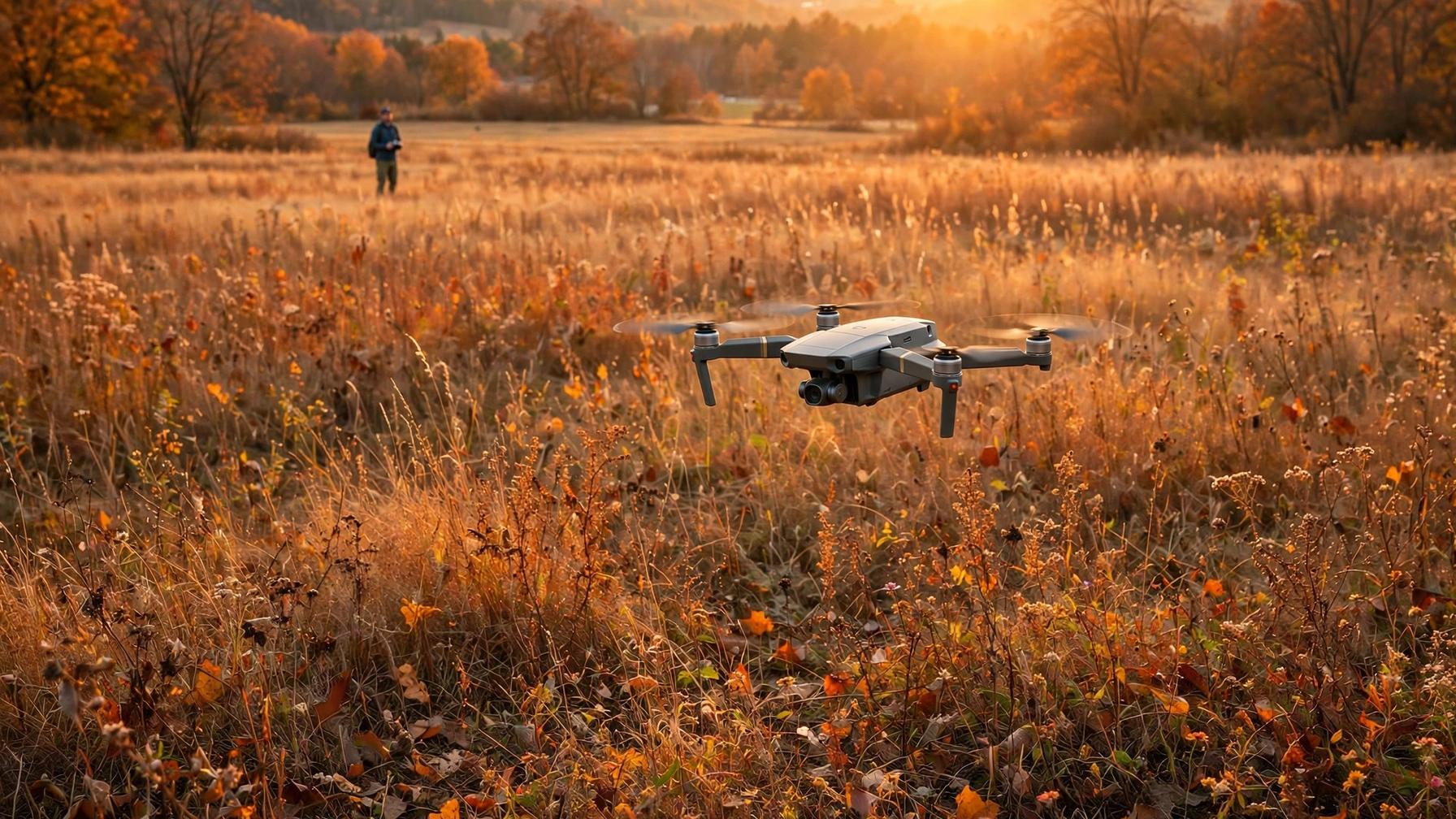
Whether an AI drone is worth buying starts with whether you genuinely need shots from the sky. Its selling points are concrete: automatic follow-me, obstacle avoidance, smart return-to-home, and one-tap edited clips. For travel, sport, and event footage, a phone or camera is hard to substitute. But it is also the most rule-bound category of AI hardware, so before buying, work out the rules, the flight time, and the cost of a crash.
What genuinely works well
Follow-me is the most practical selling point. While running, cycling, or skiing, the drone follows on its own and frames the shot, instead of needing someone to help film steadily. Obstacle avoidance lowers the crash risk for beginners, and in open ground the machine steers around obvious obstacles itself. Smart return and low-battery warnings matter too: when the drone is far away, there is no need to bring it back by feel, and when the battery runs low, it comes back on its own. Taken together, the value is that one person can capture aerial shots alone — not the numbers on the spec sheet.
The barriers are higher than expected
First, the rules. Many places have no-fly zones, altitude and weight limits, and some regions require registration or a test; the exact rules vary by location and must be checked in their latest form before flying. Second, flight time. One battery usually lasts barely twenty minutes, and after take-off, landing, and return, even less time is left for filming, so spare batteries are needed for a day out. Third, the environment. On windy days, in woods, and in crowds, even the best obstacle avoidance has blind spots; beginners should first practise take-off, landing, and hovering in an open place with no people around.
Who should not buy one
People who would only fly around housing blocks or crowds at tourist spots are a poor fit, since flight bans and crowds will leave the drone gathering dust. People whose budget only covers the bare drone, with nothing left for spare batteries and repairs, should also hold off — a repair after a crash can cost more than expected. Anyone who only wants a few bird's-eye photos and would use the drone fewer than three times a year will do better renting one or hiring a pilot. Extra care is needed for filming other people or private places: aerial filming touches other people's privacy, and footage of others should not be published without thought.
Before buying, check four things: whether and where flying is allowed locally; whether the total budget includes spare batteries and accident cover; whether the places you usually go have signal and wind problems; and whether there is time to edit the footage afterwards. If the answers are clear, and you are often outdoors and willing to practise, an AI drone is a worthwhile tool that is also a toy; otherwise, it becomes an expensive dust collector.