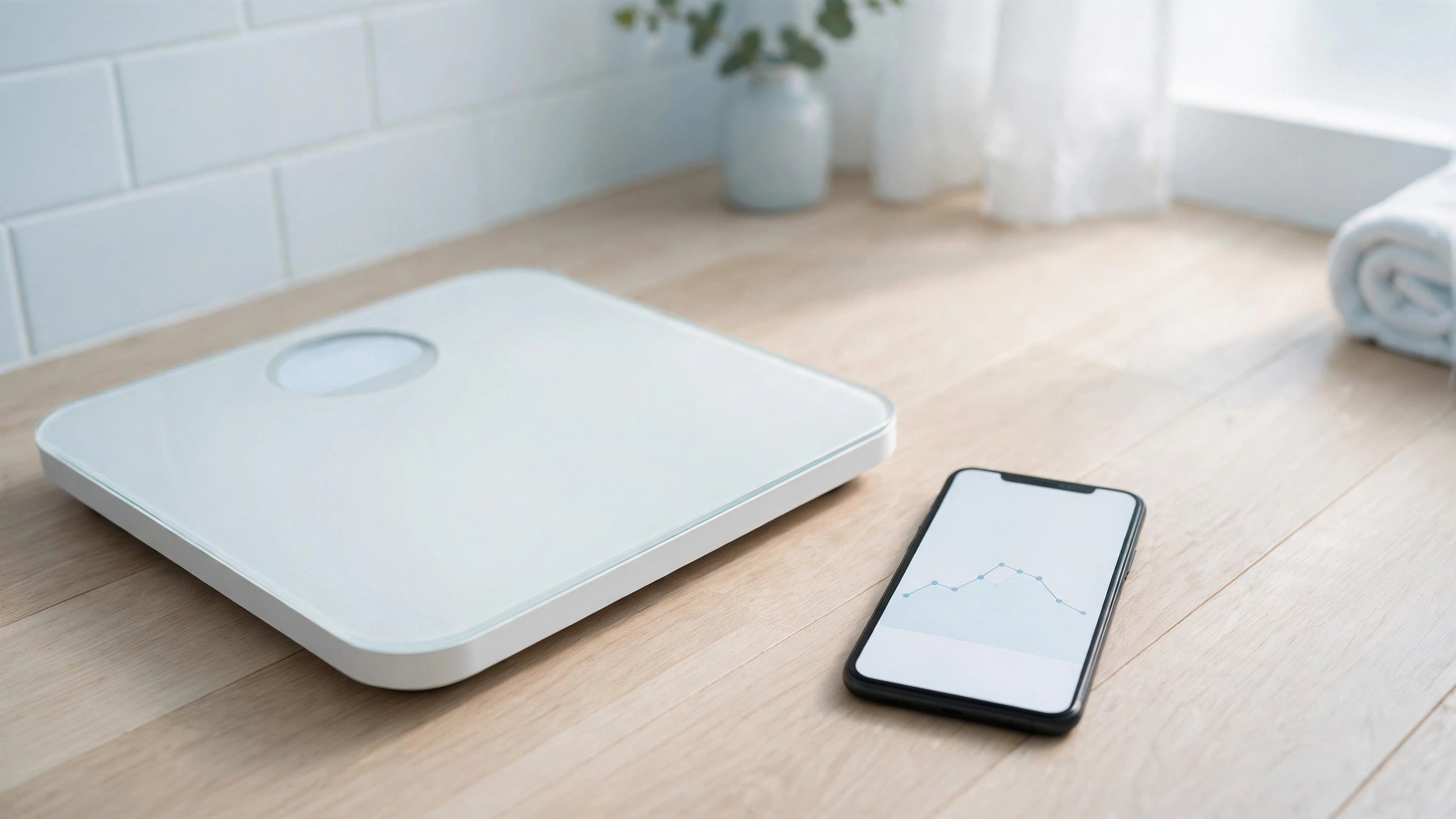
Whether an AI body fat scale is worth buying depends on the number you care about most. If you only want to weigh yourself every day and watch how your weight changes, it is more than enough. If you expect it to measure body fat percentage and muscle mass accurately in one reading, you will be disappointed. Its weight measurement is relatively accurate, while the long list of body-composition numbers is only an estimate. It suits long-term trends, not a medical check-up. Before buying, think through what happens when health data is synced to the maker's cloud.
Weight is accurate, body-composition numbers are estimates
Most AI body fat scales use bioelectrical impedance: a current passes through the body, and the scale estimates fat, muscle, and water from resistance. The estimate is strongly affected by how much water you have drunk, whether you have just eaten or exercised, and the time of day, so morning and evening readings can differ quite a lot. Only readings taken on the same scale under the same conditions give a usable trend. Do not rush to a conclusion from a change measured at a different time or in a different state.
Accurate trends need identical conditions every time
To keep trends comparable, fix the measuring conditions: the same time each day, on an empty stomach, after using the toilet, barefoot, standing still, with the scale on a hard floor. Wearing socks, placing the scale on carpet, or weighing right after a shower makes the estimate even less stable. Height, age, and sex entered in the app must also be correct, because they feed into the calculation.
The real benefit comes after weighing
The convenience is not the extra numbers, but automatic syncing and trend records: no manual notes, with the weight curve and long-term change visible in the app. Multi-person recognition is also useful. When several people in a household take turns, the scale separates them by weight range, so data does not get mixed up. For people managing weight over the long term, a record that needs no persistent manual logging is easier to keep up.
Not everyone needs a model loaded with indicators
If you only want your weight, a plain electronic scale is enough, and there is no need to pay extra for indicators you will not use. People who are losing weight, need long-term trends, or share the scale with others are more likely to get value from it. Pregnant people and people with implanted medical devices should ask a doctor before use whether a bioelectrical impedance product suits them, rather than trusting only the product page.
Before data goes to the cloud, check three things
Once health data is synced, it no longer lives only on the scale. Before buying, read the app privacy notice: where data is stored, whether sharing is on by default, and whether history can be exported and deleted. Do not use a weak password, turn off social sharing and leaderboards you do not need, and if you stop using it, delete the account and history inside the app instead of only deleting the app.
Sort out privacy first, then choose the model
Whether it is worth buying depends on what you buy it for: for weight trends and no manual notes, it is worth it; as a check-up result or to guide treatment, it is not. When choosing, look first at measurement stability and how the app handles data, then at price, and do not let the number of indicators decide for you.