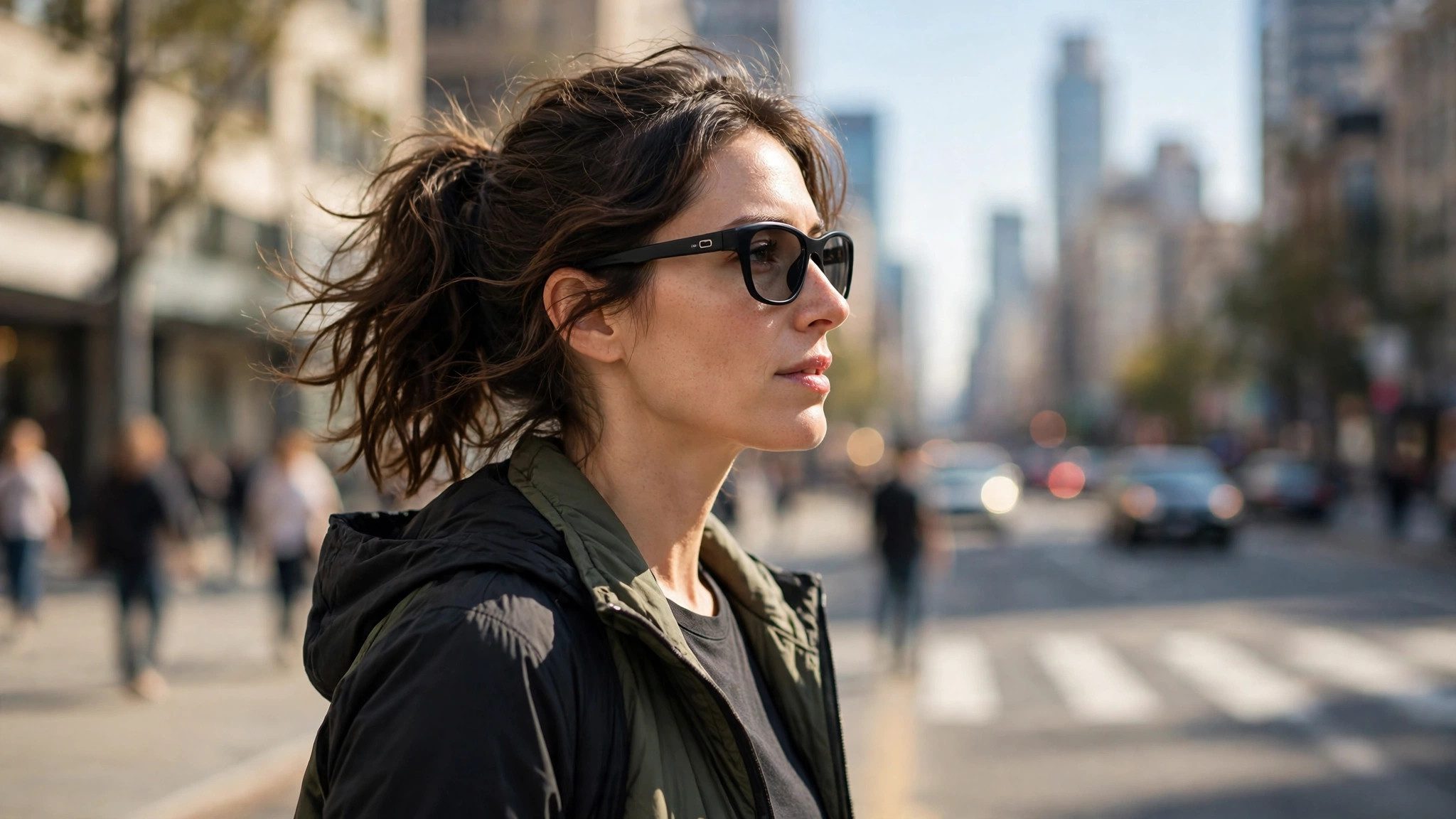
Whether AI glasses are worth buying depends on what you want them for: if you often want to record first-person footage or need hands-free translation and a voice assistant, they are the most personal AI hardware you can get right now; but if you're buying them to "replace your phone", they'll most likely gather dust after three months.
What's genuinely great: first-person capture and hands-free use
The most solid selling point is first-person shooting. When cycling, looking after kids, cooking, or traveling with your hands full, one press on the temple captures photos or video from exactly the angle your eyes see — something neither phones nor action cameras can offer. Next comes hands-free AI conversation and real-time translation: asking directions, reading menus, listening to foreign-language guides — no need to pull out your phone, just speak. Open-ear speakers play music and take calls without blocking your ears, doubling as half a pair of earbuds on the commute.
Three hurdles before daily use
The first hurdle is vision. Nearsighted users need prescription lenses; some makers offer official lens programs, and independent opticians work too, but that adds a few hundred yuan and days of waiting. The second is the app and account: the glasses' features depend on pairing with a phone app, and switching phones or regions can limit functionality. The third is battery life: camera versions generally don't last a full day of continuous use, and heavy shooting sends them back to the charging case by midday; camera-free audio-only versions double the battery life, at the cost of cutting camera and "look and ask" visual features.
Who should buy now
Three groups genuinely benefit: commuters who want their hands free for audio content, travelers abroad who need translation on tap, and people who love recording first-person slices of life. If you can't give up phone photography, or your work setting is privacy-sensitive, better to wait.
Where the value falls short: privacy, price, and maturity
Walking into an office, restaurant, or gym wearing glasses that can record at any moment makes people around you uneasy — this social-acceptance barrier is one AI glasses still haven't crossed, and it's why makers are launching camera-free versions. On price, mainstream products start around three to four thousand yuan, with lenses and accessories adding more, while AI features iterate so fast that this year's hardware may be left behind by next year's software updates. Fundamentally they remain a phone "accessory": for anything complex, you'll still reach for your phone.