SpaceX reported a changed business in its regulatory filing and third-quarter earnings call on October 20, 2026: quarterly revenue reached $14.6 billion, and the renamed Super Intelligence segment contributed $7.5 billion, about 52% of the total. Net income was $4.4 billion, reversing a $1 billion loss a year earlier. A company built on rockets and satellites now makes most of its money from AI, at least on paper.
Where the $7.5 billion comes from
The segment bundles three things: the recently acquired coding tool Cursor, the Grok chatbot, and the fastest-growing piece, a neocloud business that SpaceX says now runs 1.7 GW of compute. The AI business earned $431 million in profit, even after $1.2 billion in one-time stock-based compensation tied to the Cursor acquisition. About $1 billion of revenue came from Bitcoin price recovery and related items rather than operations; strip that out and the operating growth still holds. The legacy business did not collapse either: Starlink subscribers rose to 13.6 million, though compute has overtaken it as the growth story. We previously covered Anthropic renting GPU capacity from SpaceX; what looked like a side deal then is now the headline of the earnings report.
Profitable quarter, $19.6 billion of capex
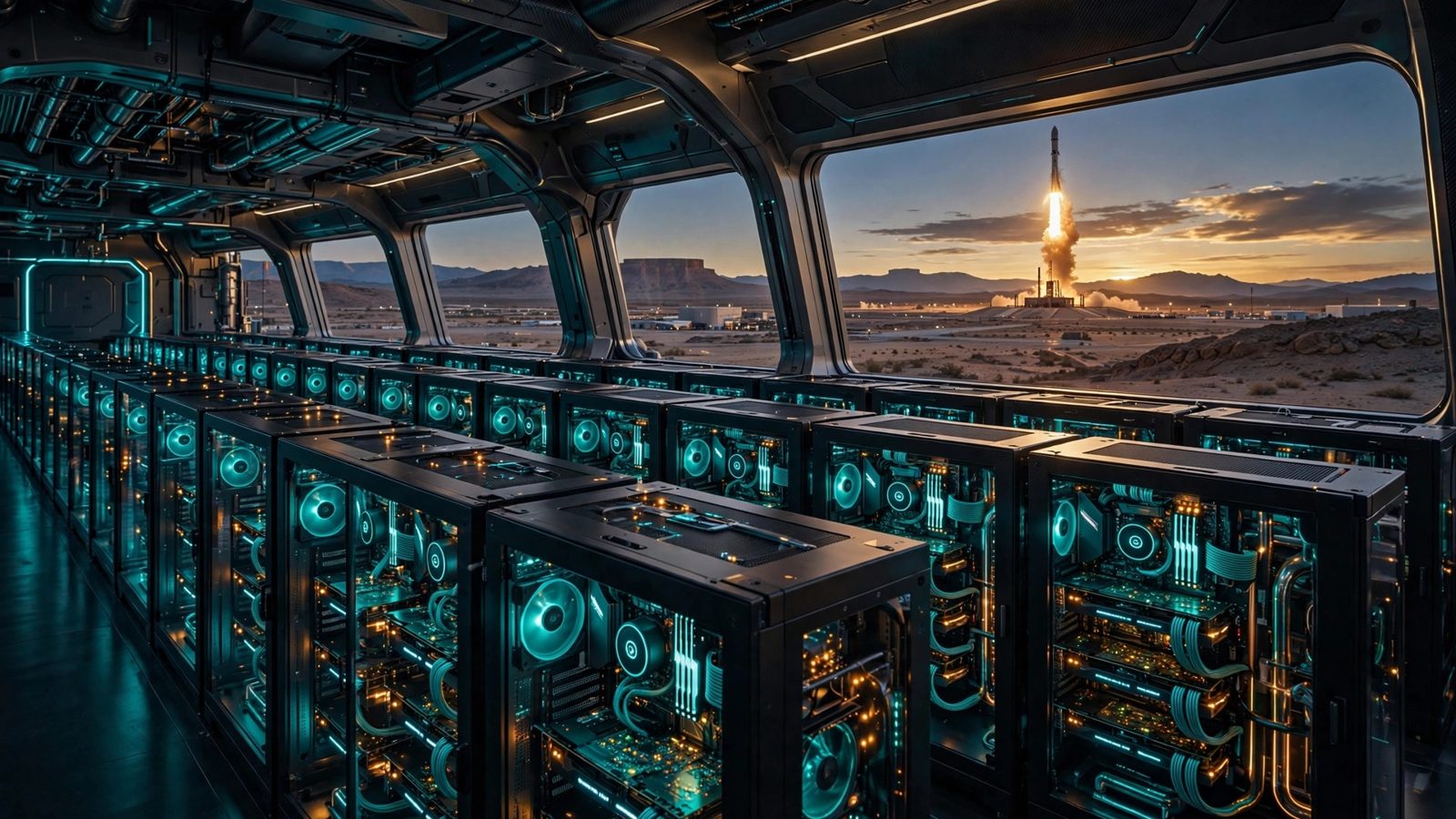
The other side of the report is the burn rate. Capital spending hit $19.6 billion in the quarter, funding the Colossus II data center, Starship and new Starlink satellites, and management guided to $35-40 billion of capex in the fourth quarter. Elon Musk said he spends four days a week in Memphis bringing Colossus II online, arguing the binding constraint is power, cooling and infrastructure rather than chips. For readers, the point is that AI compute competition is no longer about how many accelerators you can buy, but how fast you can deliver power, cooling and buildings together.
Separate the forecasts from the facts
On the call, Musk suggested annualized recurring revenue could reach somewhere between $500 billion and $1 trillion by the end of 2027. No signed contracts support that figure yet; treat it as a management claim. The checkable guidance is narrower: first-quarter 2027 revenue of $33-37 billion, per the CFO. Note also that SpaceX remains $413 million in net loss for the first nine months of the year, so one profitable quarter is not a profitable year. The one conclusion the filing supports is structural: AI has crossed from side business to main business at SpaceX, and whether it stays profitable depends on how quickly this capex starts paying for itself.