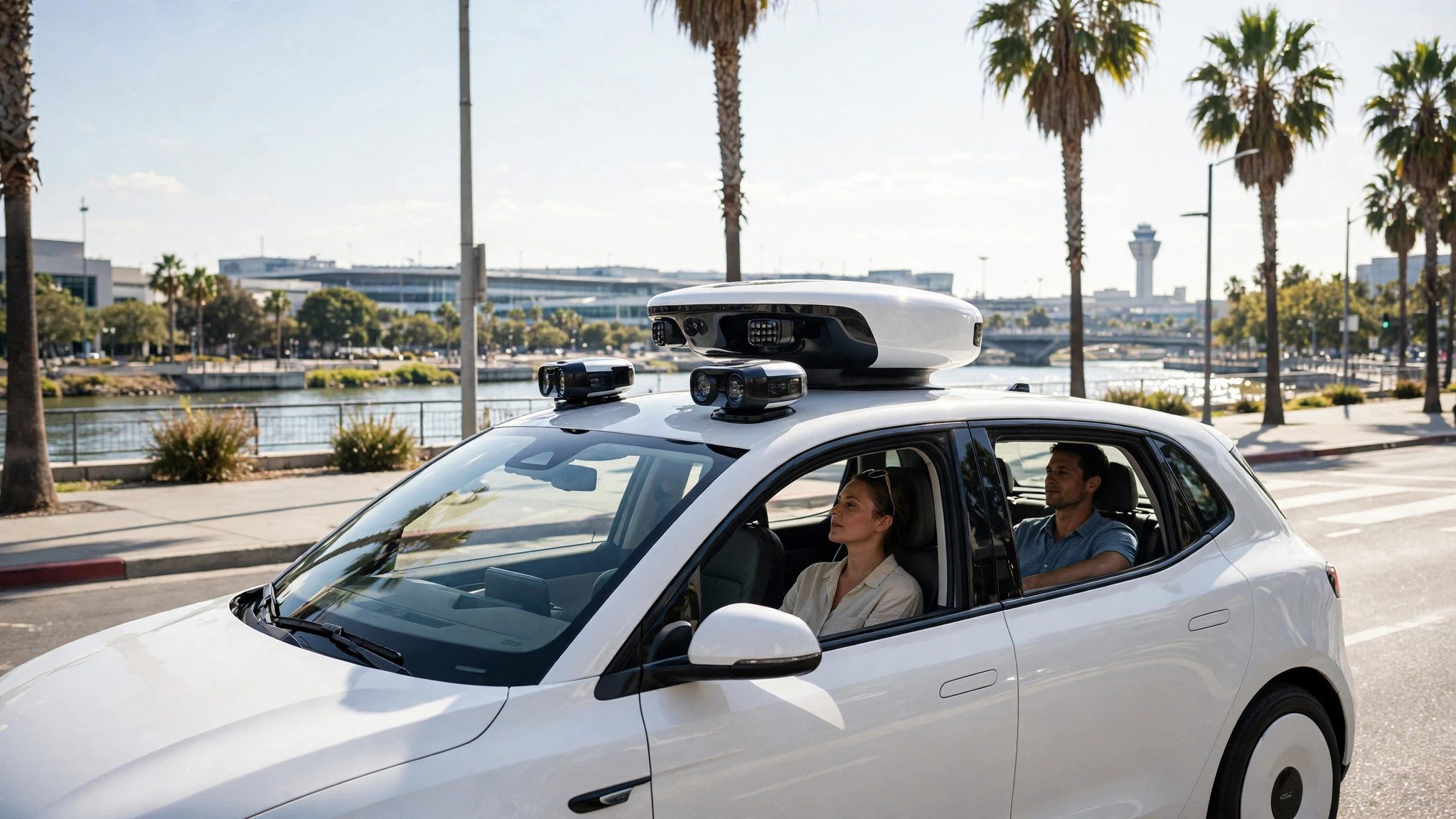
Grok Voice 3.0 is the speech-to-speech model xAI released on October 14, 2026, available the same day through its Voice Agent API at the same price as its predecessor. It ranks first on Artificial Analysis's Speech-to-Speech Index with a score of 86.9. More telling than the ranking is the production footprint xAI disclosed: the model already handles millions of conversations a day inside Tesla vehicles and in Starlink support centers, a sign that voice agents are now competing on whether a call actually gets resolved, not on demo polish.
The numbers behind the top score
The 86.9 comes from Artificial Analysis's independent testing, which blends speech reasoning with preference and task success from blind head-to-head calls. For context, Grok Voice 2.0 scored 81.3, OpenAI's GPT-Live-1 (Astra, medium) 83.2, and Google's Gemini 3.8 Live 82.6. On sub-scores, it reaches 98.5% on speech reasoning (Big Bench Audio) and 97% on Full Duplex Bench, which measures how naturally a model handles pauses, turn-taking, and interruptions. One test it did not win: on τ-Voice, which simulates real support calls, it scored 71.6%, roughly level with GPT-Live-1 — xAI's edge there is latency about 40% lower, keeping responses under one second. The top ranking rests on the overall score and speed, not on sweeping every category.
The real proving ground: 20,000 Starlink calls a day
The production figures in xAI's announcement are unusually specific. Starlink call centers use Grok Voice for roughly 20,000 calls a day across multiple languages; about 70% are resolved with no human in the loop, and one in four sales calls ends in a purchase before the caller hangs up. A single agent can verify a customer, troubleshoot hardware, issue credits, and ship replacement equipment end to end. On EVA-Bench, ServiceNow's enterprise voice-agent benchmark covering more than 200 realistic scenarios, it posted the highest accuracy at 74%. In cars, the scale is larger still: Grok Voice powers millions of conversations a day in Tesla vehicles, where drivers check calendars, answer email, or ask Grok Bot to order coffee and book dinner hands-free. Grok has also recently been bundled into The X Subscription plan, and voice is the layer of that ecosystem closest to the user.
Same price, different buying logic
The API costs $0.08 per minute, identical to version 2.0, and agents using grok-voice-latest were switched over automatically with no code changes. In Artificial Analysis's cost-per-task measurement on Big Bench Audio, it comes in cheaper than both GPT-Live-1 and GPT-Realtime-2.1. For enterprise buyers, the selection criteria are shifting: not just how smart the model sounds, but what each resolved call costs and how many calls never reach a human. A caveat applies — the production and cost figures come from xAI's announcement and the evaluator's measurements, and on τ-Voice, the test closest to real-world noise, accents, and interruptions, it merely ties its rival. Any serious migration decision should still start with a trial on a company's own call recordings and accent mix.