
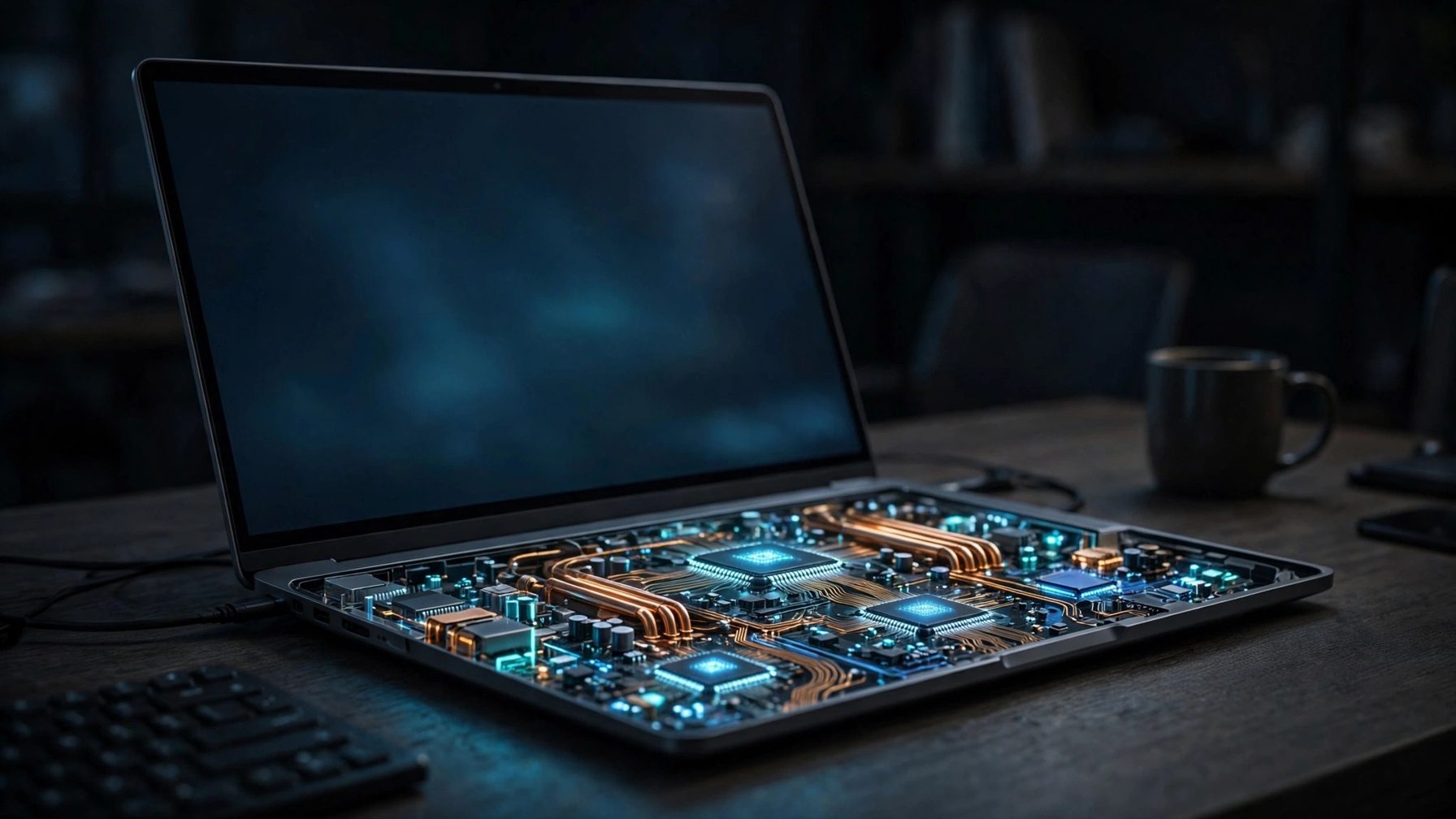
Surface Laptop Ultra is the centerpiece of this partnership: according to Reuters reporting on October 7, 2026, Microsoft will unveil the new Nvidia-powered laptop at its Windows and Surface event in San Francisco, with Microsoft CEO Satya Nadella and Nvidia CEO Jensen Huang introducing it on stage together. The proposition is concrete: let AI agents write code and handle complex projects on a local machine instead of sending everything back to the cloud. Pricing and full specifications await the event itself; this article follows Reuters' pre-event reporting.
Why now
Microsoft's motive is cost. Many agent workloads currently run in Azure data centers, where Microsoft carries the compute bill; shifting part of that work onto powerful Windows machines in offices and homes moves hardware costs to customers and eases pressure on the cloud. The silicon underneath is Nvidia's RTX Spark, announced in June: a 20-core Grace CPU paired with a Blackwell GPU and up to 128GB of unified memory, a platform specified precisely for running agents and large models on a PC. When Microsoft pitched AI PCs two years ago, the software was not ready; this time both companies are betting that agent software has matured enough to carry the pitch.
Nvidia is aiming at Intel and AMD territory
For Nvidia, Windows PCs are one of the few large markets it has not truly entered, long dominated by Intel and AMD. If RTX Spark gains a foothold through Surface, Nvidia's silicon footprint expands from data centers and discrete graphics cards to the heart of the machine itself. Apple is chasing the same users with new Macs, and the contest is not only about raw compute: operating-system scheduling and ecosystem fit will matter just as much. Whoever makes agents work reliably on a personal computer owns the strongest argument in the next upgrade cycle.
Agents on personal machines must first be contained
The hard part is not performance but containment. Agents run autonomously for long stretches, and once such a system holds file and tool permissions on a personal computer, a failure or hijack costs more directly than inside a cloud sandbox. Reuters noted that Nvidia is working to avoid a repeat of incidents like the breach of the Hugging Face AI hub, while Apple is tightening how agents get access to a Mac's drive. Local privacy and latency gains are real, but without permission boundaries, isolation and auditing that keep pace, enterprises will not hand core projects to an agent living on a laptop.
Price may be the biggest open question
Analysts keep circling back to price. A memory-chip crunch has pushed machine costs up: Nvidia's DGX Spark recently rose about 75% to $6,950 on the cost of its 128GB of memory, while the AI laptops of two years ago mostly sat below $2,000. As one analyst put it to Reuters, two years ago the software was not ready but the hardware was; now the order has flipped, and the hardware is expensive enough that only buyers with real budgets can run AI locally. Where the Surface Laptop Ultra lands on price will say directly whether local agents are a mass-market upgrade reason or a premium option for a narrow professional crowd.