
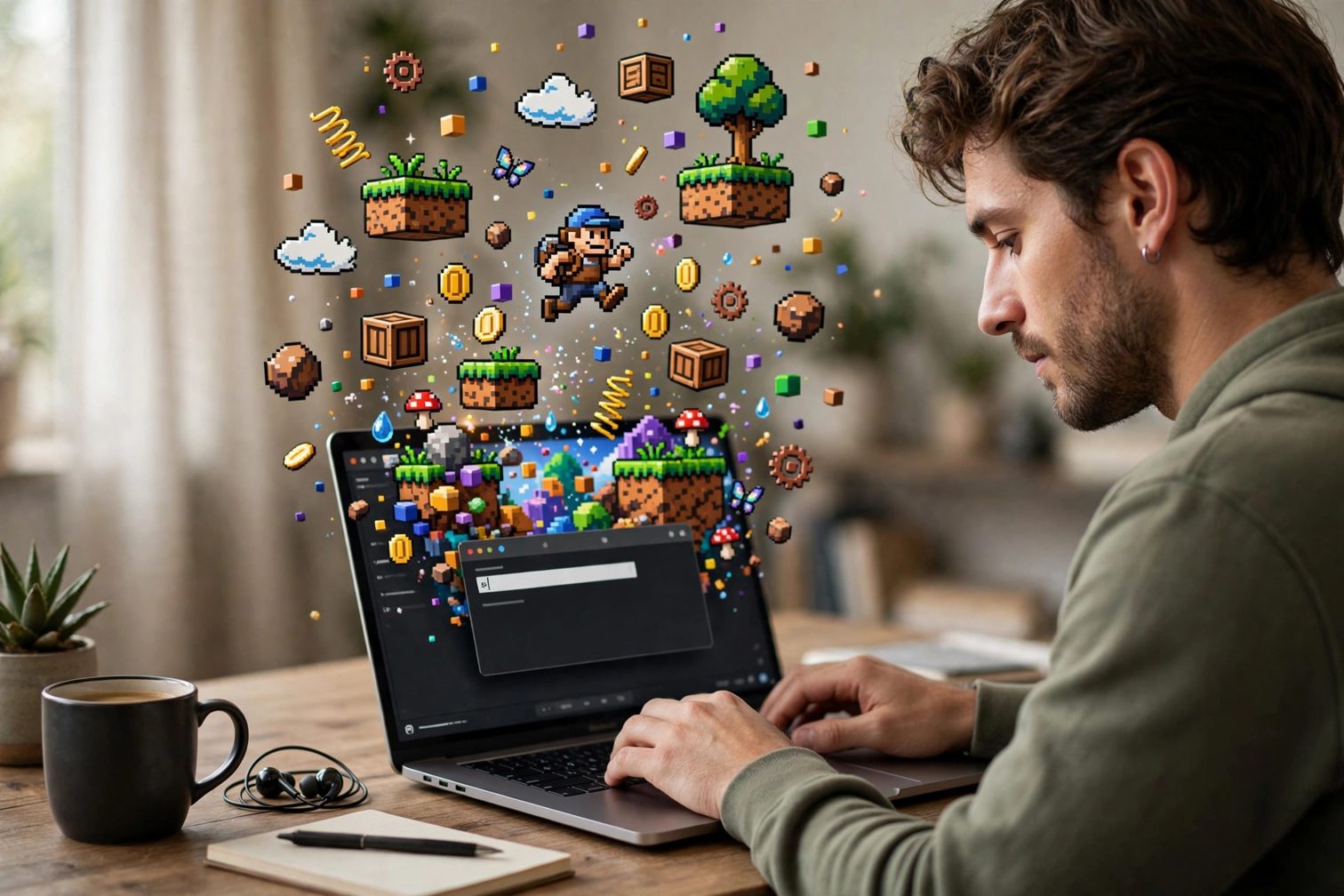
Google Playground was officially introduced by Google in a blog post on October 7, 2026, and it lowers the barrier to making games from writing code and learning an engine to simply typing a description: users explain what they want to play in a conversational interface, the platform generates a game that can be tested immediately, and physics, rules, characters and environments can all be adjusted on the spot. The experimental platform opened the same day to users aged 18 and over in the United States, with creation access tiered by Google One membership.
Skip the engine, describe the game instead
Playground offers three ways to start: from a blank canvas, by remixing starter prompts, or with guided support that helps shape a rough concept. Once generated, a game needs no export or build step; it runs in the browser on a phone or a laptop. If the jumping feels wrong, the rules are too loose or a character looks off, you just ask for changes in words, keeping creative control with the maker. This skips the parts of game development that discourage beginners most, environment setup and engine learning, and leaves mainly the question of whether the idea itself is fun.
Publishing, galleries and leaderboards are built in
Finished games can stay private, be shared through a link, or be published to the Playground Explore gallery for everyone. Select genres support leaderboards and multiplayer, and a Play Games profile lets players claim a handle, like games and follow creators. The gallery surfaces titles using ratings and play activity, and every published game passes safety screening aligned with the platform's community guidelines, with user reporting on top. For creators, distribution is built in rather than something they must arrange separately for each small game.
Unity Spark is the path for going further
Google also previewed an integration with Unity Spark: when prompt-made mini-games are no longer enough, creators will be able to tap the Unity runtime for professional mechanics and high-fidelity 3D. Spark is currently in testing, with a closed beta coming soon. The intent is clear: pull people in with a zero-code start, then leave a road open toward professional tools instead of letting promising work stall inside an experiment.
The limits are written into the details
It is explicitly an early experiment: US only, adults only, and creation access tied to membership tiers, which suggests generation is not cheap and usage is being metered. The harder question is on the supply side. When anyone can generate a game from a sentence, the gallery will quickly fill with similar titles; whether ratings and play activity can surface genuinely fun work, and whether safety screening can keep up with volume, will decide if this becomes a lasting creator venue or a brief novelty. New users will learn its strengths faster by remixing starter prompts than by starting from a blank page.