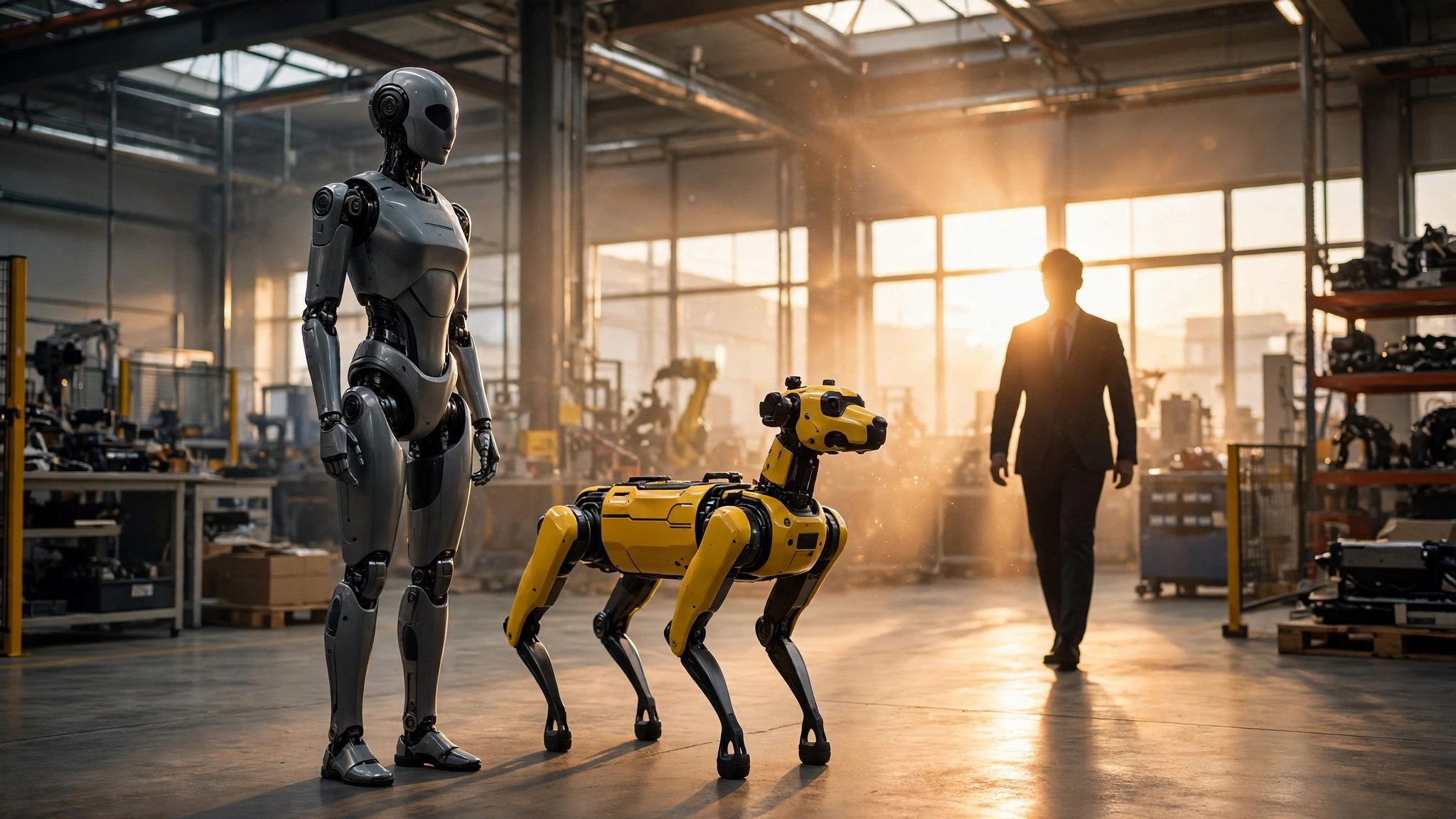
Boston Dynamics announced a change at the top on October 6, 2026: Rohit Prasad, formerly an Amazon senior vice president who led Alexa and artificial general intelligence, becomes chief executive officer effective October 7. The company known for robot dogs and humanoid robots has set the keyword for its next phase: putting physical AI to work at scale.
What the incoming chief spent twelve years doing
Prasad spent 12 years at Amazon, helping build Alexa from its early days into a voice service used in hundreds of millions of households, and later leading the Amazon Nova foundation model family. Before that, he spent nearly 14 years at Raytheon BBN Technologies on machine-learning research aimed at government and commercial use. Boston Dynamics' previous permanent CEO, Robert Playter, retired in February after more than 30 years at the company; chief financial officer Amanda McMaster has served as interim CEO since. Controlling shareholder Hyundai Motor Group was blunt in the announcement: world-class robotics, experience turning AI into products at global scale, and Hyundai's manufacturing, logistics and mobility capacity are meant to combine into a physical AI push.
The new CEO's problem is not demos
Boston Dynamics robots have never lacked attention: Spot already performs inspections in factories and on construction sites, and Atlas recently gained new hands, handling a refrigerator weighing over 100 pounds in demonstrations. But a good demo and delivery at scale are different things; customers pay for reliability, maintenance costs and fit with existing production lines. Prasad's own framing in the announcement sits on applied value: building intelligent systems that create value in real environments and expanding robotics across industries. That connects directly to his record: Alexa and Nova were both exercises in packaging model capability into stable products, not single-point technical breakthroughs.
What to watch next
The humanoid robot field is crowded this year with heavily funded rivals. Boston Dynamics' strengths are three decades of hardware know-how and Hyundai's manufacturing settings; its weakness is exactly AI productization and delivery pace. The first test for Prasad will not be the next demo video, but Atlas's commercialization timetable and whether orders for mature products like Spot can step up another level. Whether physical AI is a business whose numbers add up is the question the new chief has to answer.