
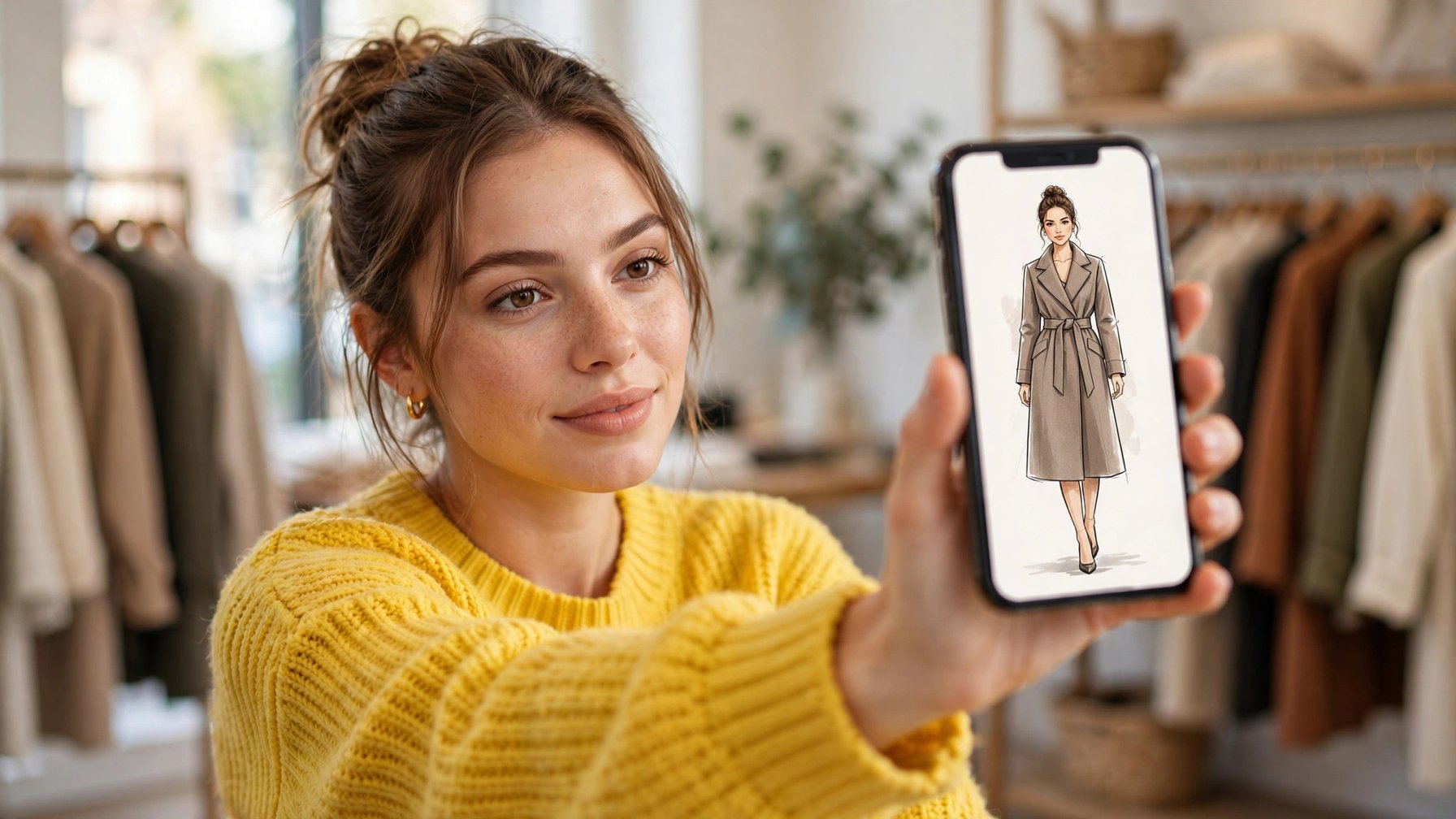
ChatGPT now lets users try things on first, and only then decide whether to buy. On October 1, 2026, OpenAI announced the global launch of two new shopping features, virtual try-on and Favorites, with the update recorded in the official release notes and TechCrunch reporting on it the same day. The focus this time is not on payment, but on seeing things clearly and saving them to browse at leisure.
Like an item of clothing? Put it on yourself first
In shopping results, eligible clothing and accessory products will show a Try on button. Users can upload a selfie or a full-body photo and generate an image of the product worn on their own body, getting a rough idea of how it looks on them. Users can also upload a screenshot of a product and have it put the item from the screenshot on them.
It is not limited to single items, either. Users can describe a style and have it put together a complete outfit, or upload a photo of a celebrity's outfit and have it find similar items that are on sale. Shopping can now start from a single sentence, or from a photo saved in passing. For clothing, whether the colors go together and whether the length is right is hard to judge from a flat product image alone; a generated image is at least more concrete than pure imagination.
Powered by ChatGPT Images 2.5
The virtual try-on runs on the newly released ChatGPT Images 2.5 model. According to OpenAI, the model produces more natural lighting and richer textures, follows editing instructions more reliably, better preserves the person in the reference photo, and generates with lower latency. Whether a try-on image looks good comes down to exactly these things: the person must not change appearance, the fabric's texture must not turn to mush, and the wait must not be too long. Image generation has been updating at a dense pace lately, as FLUX 3 Image's 4K generation and multi-reference editing shows: everyone is competing on resolution, multiple reference images, and editing control, and try-on is one of the places where these capabilities land closest to everyday consumers.
The limits should be stated plainly, though: a try-on image solves the imagination problem of roughly how something will look on you; it cannot solve fit, sizing, or how a fabric feels. The better the image looks, the more you should remind yourself that it is not a real photo from a fitting room — shoulder lines, waist, and drape may all differ on a real body. There is also a privacy cost: uploading selfies and full-body photos means handing your likeness over to the system. According to the official shopping guide, reference photos can be changed or deleted in settings, and it is worth thinking that through before using the feature.
Favorites turns shopping into keeping a list
The other new feature, Favorites, is much plainer: save products you discover into the Library in the app and come back to browse them later, with saved products and try-on images kept together. Try-on plus saving keeps users here longer, and it matches the everyday habit of looking first, trying things on, and setting items aside to compare slowly.
The backdrop is that OpenAI's earlier instant checkout performed below expectations, and this time the emphasis has clearly shifted from ordering directly to discovery and visualization. Google launched its own virtual try-on last year, so the field is not empty. The real contest is over the entry point: when the search box becomes a fitting room, discovery, comparison, and hesitation all stay inside the conversation, and what e-commerce platforms lose is precisely the discovery step. Product detail pages and recommendation feeds used to be the home ground of discovery in e-commerce; now the chat window links search, try-on, and saving into a single line, and platforms have to fight again for the starting point of users' attention. Where users finally pay matters less — whoever claims the few minutes spent choosing first holds the chance of the sale that follows.