
Latest AI News: The World Artificial Intelligence Conference opens, with 29 countries preparing to establish AI cooperation organizations
24-hour AI News Snapshot: Kimi K3 resets the scale of open-source models, intensifying global AI gov
Happycapy is a browser computer and security sandbox tool for AI Agents. It combines browsers, graphical interfaces, sandbox environments, skill capabilities, and model access such as Claude Code, allowing users to delegate automated tasks to agents to execute in an isolated environment for web manipulation, data organization, and code-assisted workflows. It is suitable for developers and efficiency tool users who want to let AI complete multi-step tasks in the browser, but also need to isolate the environment and visualize operations, as well as for web page research, tool testing, account isolation, AI automation experiments, and long-term remote continuation of long tasks to do proof-of-concept or batch organization. Before using it, you need to be aware that agent operations may still make errors, and manual confirmation must be made when logging in, paying, deleting, or publishing actions, especially boundaries such as material authorization, privacy data, output review, or quota cost. It's more like a remote workbench for agents than a regular search engine or traditional browser extension.
Before actually choosing Happycapy, users need to first determine which type of task it solves: providing an actionable, isolated, and continuously running browser environment for the AI Agent. The value of these tools is not to replace all the links, but to take care of the most time-consuming, repetitive, and contextual parts first, so that people can focus on judgment, revision, and final delivery.
Happycapy's core competencies focus on Agent Browser, Private Sandbox, GUI Operation, Skill Expansion, Multi-Model Access, and Remote Task Continuation. It is more suitable as an auxiliary tool in a clear scenario rather than a general-purpose platform; Users need to prepare their inputs, target styles, or business constraints before continuing to filter based on the results.
It's great for researching materials, testing web flows, having agents operate online tools, and placing ad-hoc tasks in isolated workspaces. For individual users, it can reduce the time spent exploring from scratch; For teams, it's more likely to be a precursor to the workflow of sorting out materials, candidates, or assessments.
Value is easier for developers, automation enthusiasts, researchers, and users who often rely on AI to assist in web tasks. If you're only trying it occasionally, it's usually better to verify the results first. If you want to stably access business processes, you need to pay attention to batch capabilities, account permissions, output quality, and subsequent review methods.
It does not guarantee that all web processes will be completed automatically, and login verification, verification codes, payment confirmations, and sensitive data operations should remain under human control. For tasks involving user data, candidate information, health records, business documents, or third-party materials, it is recommended to only upload content that you have the right to process and manually confirm it before publishing, delivering, or making a decision.
What is the difference between Happycapy and a regular browser? **
While ordinary browsers mainly give people operations, Happycapy emphasizes letting AI agents perform tasks in visual browsers and sandboxes.
Is it suitable for post-account login tasks? **
Can be used for some workflow tests that require login, but high-risk actions such as passwords, payments, data deletion, and public publishing should be confirmed by the user themselves.
Why do you need a sandbox environment? **
Sandboxes limit agent operations to a standalone environment, making it suitable for testing automated processes and reducing the risk of accidentally touching local files or the real business environment.

ChatGPT Atlas is an AI browser product for macOS. It embeds ChatGPT into any web page in the form of a sidebar, providing instant answers, web page summary, data analysis and product comparison. Users can select text to rewrite, polish and translate with one click, use intelligent agents to complete complex tasks such as retrieval, form filling and shopping, and achieve continuous collaboration through controllable browsing memory. ChatGPT Atlas supports both text, image, video and news searches. It has built-in multiple tabs, bookmarks and auto-completion, and can customize the appearance and preferences. In terms of privacy, users can fine-tune visible sites, clear history, enable traceless mode and manage browsing memory to ensure security and controllability.

Zuni is a Chrome sidebar AI workspace and Gmail assistant aimed at browser office users, Gmail users, and knowledge workers. Its value is not that it does everything for users at once, but that it provides actionable assistance around using AI chat, summarization, and drafting on web pages and emails: users can talk to tabs or emails, draft Gmail replies and manage tasks, and then follow up with their own business judgment. When choosing such a tool, you need to pay attention to browser permissions, email privacy, and reply moderation, especially when it comes to accounts, customer profiles, contracts, courses, audio, video, or code output. Its visibility capabilities include AI workspace, Gmail drafting, and chat with tabs, making it better suited for browser workflow assistance.

YourAIScroll is an AI chat history export and management tool aimed at AI-heavy users, researchers, and knowledge organizers for exporting and managing conversation history across multiple AI platforms. It's suitable for those who already have clear tasks, assets, or business processes to centralize AI chat history export, Grok, Gemini, and Claude archives into a more performable workflow. When using it, you need to pay attention to account permissions, privacy data, and export formats, especially when it involves customer information, learning content, audio and video materials, business data, or public release, you should confirm authorization and manual review first. Overall, YourAIScroll is suitable as an auxiliary tool for exporting and managing conversation history across multiple AI platforms, rather than a substitute for the final judgment of professionals.
WebFill is an AI form-filling, email, and data entry extension aimed at salespeople, operations, and browser office users for automating form-filling, email-generating, and data entry. It's better for people who already have clear materials, scripts, customer communications, or business processes that centralize form filling, email generation, and data entry into a one-of-a-kind workflow that's easier to execute. When using it, you need to pay attention to form permissions, customer data, and pre-submission review, especially when it comes to customer information, voice information, image materials, web page data, or published content. Overall, WebFill is suitable as an aid for autofilling forms, generating emails, and handling data entry, rather than a complete replacement for the final judgment of editors, operations, R&D, or management.

WebCopilot is a web-based AI assistant and second brain tool aimed at knowledge workers, researchers, and web-heavy users for carrying AI notes and knowledge assistance on web pages. It's better for people who already have clear footage, scripts, customer communications, or business processes that combine page summarization, note saving, and browser assistance into a one, easier workflow. When using it, you need to pay attention to browser permissions, data privacy and fact-checking, especially when it involves customer information, character voices, image materials, web page data or published content, you should first confirm authorization and manual review. Overall, WebCopilot is suitable as an auxiliary tool for carrying AI notes and knowledge assistance on web pages, rather than a complete replacement for the final judgment of editors, operations, R&D, or managers.

Termo is an AI tool for users who need a clearer way to handle focused digital work. It can support creation, automation, analysis, learning, media production, development, research, customer operations, or document workflows depending on the product scope. Start with a small low-risk task, compare the result with your own standards, and keep human review for facts, permissions, privacy, brand voice, safety, and final delivery.

24-hour AI News Snapshot: Kimi K3 resets the scale of open-source models, intensifying global AI gov
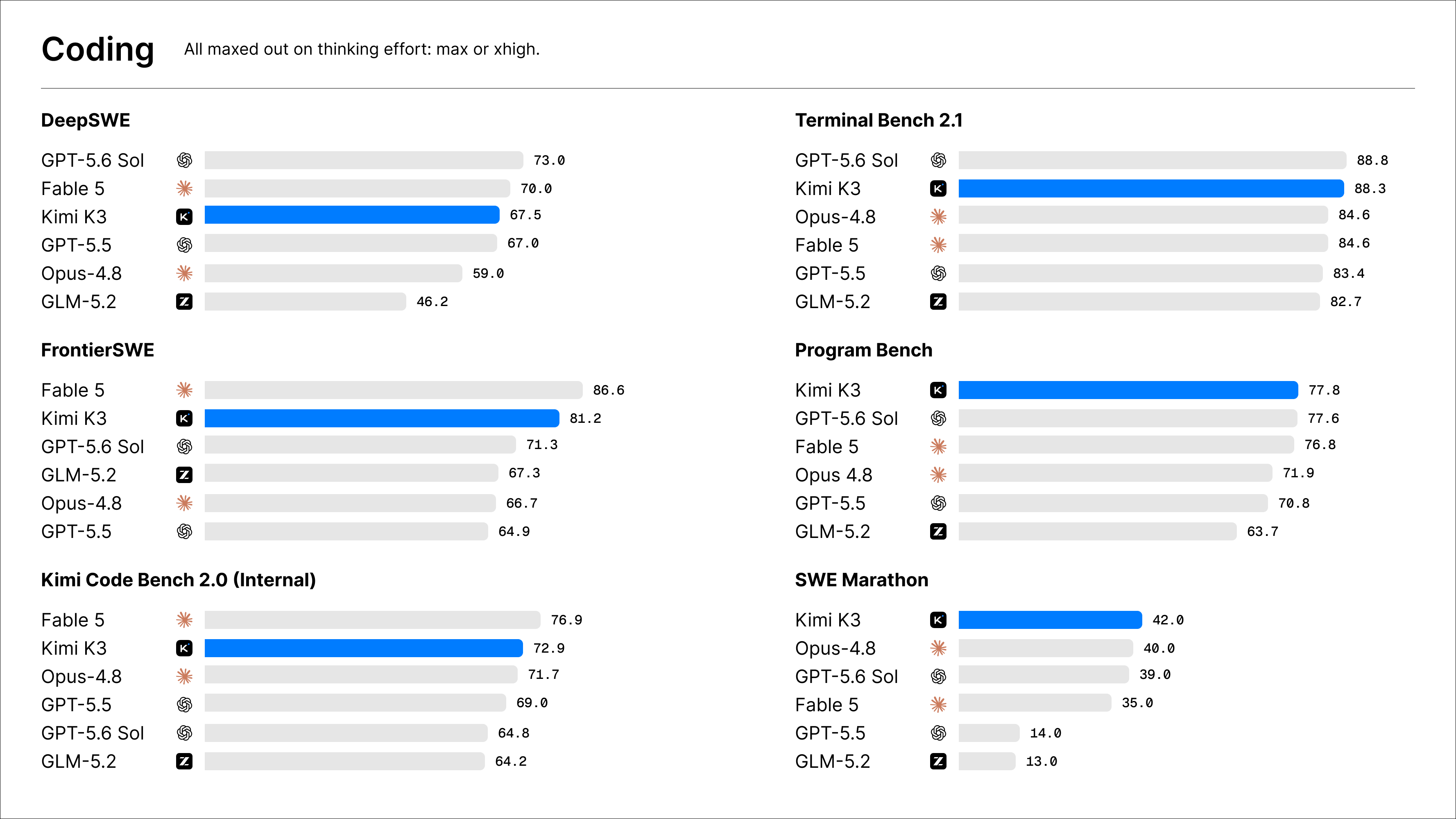
Moonshot AI officially launched the Kimi K3 . This 2.8-trillion-parameter model provides 1 million t
24-hour AI News Summary: Global AI competition continues to heat up, with chips, models, security re

On July 9, 2026, Mistral announced in its official article "Your Prompts and Skills Need a System of

On July 9, 2026, Google Research released the wearable health foundational model SensorFM. It was pr

On July 9, 2026, OpenAI officially announced ChatGPT Work in its announcement "ChatGPT is now a part