24-hour AI News Snapshot: Kimi K3 resets the scale of open-source models, intensifying global AI governance and industry competition in parallel
In the past 24 hours (July 16 to July 17, 2026), the World Artificial Intelligence Conference opened in Shanghai, with open-source models, domestic computing power, AI agents, and global governance becoming focal points. Chinese companies are intensively releasing technological achievements, while the EU further requires large platforms to open key capabilities to AI competitors.
1. Kimi K3 released, with a parameter scale of 2.8 trillion
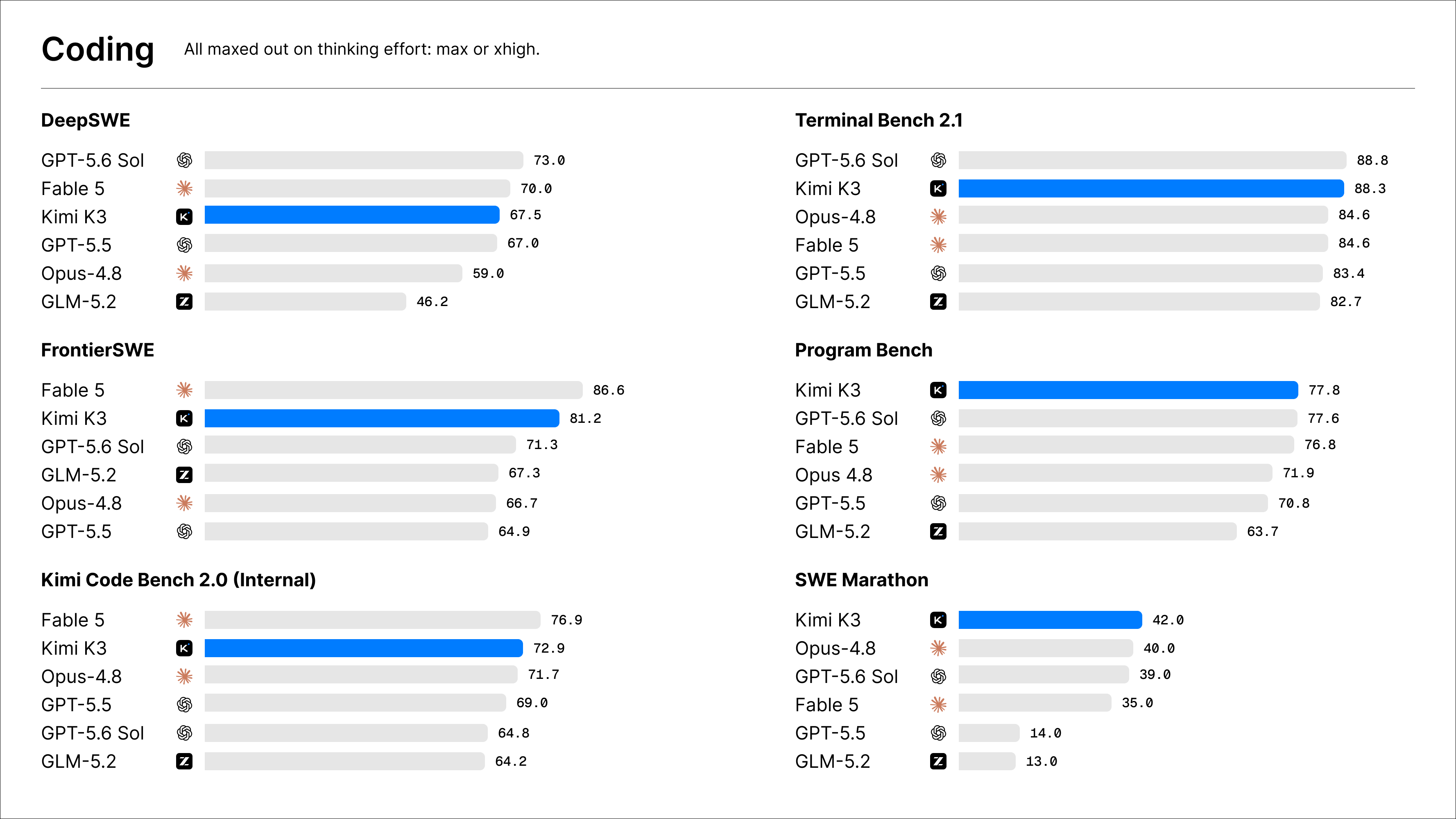
Moon Dark Side released Kimi K3, focusing on complex reasoning, long-term programming, and knowledge work, supporting 1 million Token contexts. It is known as the largest open weighting model in terms of parameters currently, further narrowing the gap between China-US frontier models.
2. The 2026 World Artificial Intelligence Conference opened in Shanghai
The conference was held from July 17 to 20, bringing together over 1,100 technology companies and setting up a high-level global governance meeting on artificial intelligence. Open-source ecosystems, agents, robots, and domestic computing power have become core topics.
3. Twenty-nine countries signed agreements to establish the World Artificial Intelligence Cooperation Organization
Relevant countries agreed to establish an intergovernmental AI cooperation mechanism to promote technology accessibility, capacity building, and coordination in global governance. The organization is expected to provide new channels for developing countries to participate in AI rulemaking.
4. Huawei showcased the Atlas 950 hypernode system
During the conference, Huawei showcased the Atlas 950 SuperPoD, designed for large model training and inference, integrating thousands of Ascend processors through high-speed interconnection. This reflects China's trend of accelerating the construction of an independent AI computing power system.
5. Seven mobile device generative AI services have been filed
Services that have completed filing include Apple Smart, Huawei Xiaoyi, OPPO AndesGPT, vivo Blue Heart, Xiaomi Surge AI, Gales AI, and Nubia Doubao Model. On-device AI commercialization will shift from functional competition to compliance operations.
6. Alibaba showcased its AI agent platform in a concentrated display
Alibaba showcased multiple intelligent agent platforms for enterprise production and research scenarios, and launched token services priced during peak and off-peak periods. The way enterprises call models is gradually approaching standardized cloud computing resources.
7. The EU requires Google to open services to AI and search competitors
The EU clarifies Google's obligations to open up under the Digital Markets Act, including some Android features and anonymous search data. Competitors like OpenAI may gain more platform interfaces and data support in the future.
8. NVIDIA teams up with Japanese companies to develop "physical AI"
NVIDIA is advancing robotics cooperation with companies like FANUC and Yaskawa Electric, and a government-supported project in Japan plans to purchase 27,500 Rubin chips. AI competition is expanding from large models to robotics and industrial systems.
9. Leading AI companies promote frontier model regulation
Recently, the heads of OpenAI, Google DeepMind, and Anthropic have all proposed strengthening frontier model testing and governance. Industry consensus is shifting from voluntary safety commitments to more formal assessment and regulatory regimes.
Frequently Asked Questions (Q&A)
Q: What is the most important technology news this issue?
A: Kimi K3 launch, with 2.8 trillion parameters and 1 million token context, became the main highlights.
Q: What is changing in the focus of AI competition?
A: Competition has expanded from simply comparing model capabilities to computing power, intelligent agents, robotics, data interfaces, and industry implementation.
Q: What does AI filing on mobile devices mean?
A: The relevant products have established a foundation for compliant operation, but still need to continuously meet requirements for content security, privacy protection, and data governance.
Q: Will global AI regulation limit innovation?
A: Compliance costs may increase, but unified testing and transparent standards also help reduce security risks and strengthen market trust.