Latest AI News: The World Artificial Intelligence Conference opens, with 29 countries preparing to establish AI cooperation organizations
24-hour AI News Snapshot: Kimi K3 resets the scale of open-source models, intensifying global AI gov
WebFill is an AI form-filling, email, and data entry extension aimed at salespeople, operations, and browser office users for automating form-filling, email-generating, and data entry. It's better for people who already have clear materials, scripts, customer communications, or business processes that centralize form filling, email generation, and data entry into a one-of-a-kind workflow that's easier to execute. When using it, you need to pay attention to form permissions, customer data, and pre-submission review, especially when it comes to customer information, voice information, image materials, web page data, or published content. Overall, WebFill is suitable as an aid for autofilling forms, generating emails, and handling data entry, rather than a complete replacement for the final judgment of editors, operations, R&D, or management.
If you're dealing with tasks like auto-filling forms, generating emails, and handling data entry, the value of WebFill is that it brings together the fragmented preparation, generation, and review into a more straightforward process. It is not a generic chat entrance, but serves specific scenarios around form filling, email generation, and data entry, making it suitable for those who need to quickly produce first drafts, materials, or business leads.
It's better suited for tasks with clear goals, such as course content, marketing materials, customer communications, data organization, or internal training. It's a good idea to prepare text, images, voice, web links, or business context before letting WebFill participate in generating and organizing it.
Ordinary processes often require users to switch back and forth between multiple tools, preparing materials, generating content, and then manually organizing output. The advantage of WebFill is that it puts form filling, email generation, and data entry in the same task context, reducing the number of steps from scratch. For content creation, operational execution, product validation, or customer communication, this approach is better suited for quickly forming a judgable version.
It's easier for salespeople, operations, and browser users to understand its value, as they are often concerned about whether the results can move on to the next step rather than just looking at the demo. In actual use, you can use WebFill to generate a basic version first, and then make secondary modifications based on brand, tone, data source, or delivery standards.
WebFill is not a substitute for final review. Form permissions, customer data, and pre-submission review are the most important parts to confirm before use, especially in commercial publishing, customer communication, character materials, web page collection, or team management scenarios, where manual review is more important than simply pursuing generation speed. Fields must be manually reviewed before submission.
Who is WebFill suitable for? **
WebFill is better suited for salespeople, operations staff, and browser office users. These users usually already have a clear task to make the process of autofilling forms, generating emails, and processing data entry faster, or get a result that can be modified first.
Can it be a direct replacement for manual delivery of final delivery? **
It is not recommended to use it this way. WebFill can take on generating content from web context and reducing duplicate typing, but the final copy, screen, voice, data, or customer responses still need to be manually checked to avoid factual errors, licensing issues, or style deviations.
What do I need to prepare most before use?
It's a good idea to prepare your goals, assets, and constraints in advance, such as scripts, images, web links, customer scenarios, brand requirements, or output formats. The more specific the input, the easier it is for WebFill to generate usable results.
What situations are not suitable for priority use?
Relying solely on WebFill is not suitable if the task involves high-stakes decisions, sensitive personal information, unauthorized human voices or footage, or requires rigorous compliance reviews. In this scenario, you should confirm the permissions before using the output as an auxiliary reference.

ChatGPT Atlas is an AI browser product for macOS. It embeds ChatGPT into any web page in the form of a sidebar, providing instant answers, web page summary, data analysis and product comparison. Users can select text to rewrite, polish and translate with one click, use intelligent agents to complete complex tasks such as retrieval, form filling and shopping, and achieve continuous collaboration through controllable browsing memory. ChatGPT Atlas supports both text, image, video and news searches. It has built-in multiple tabs, bookmarks and auto-completion, and can customize the appearance and preferences. In terms of privacy, users can fine-tune visible sites, clear history, enable traceless mode and manage browsing memory to ensure security and controllability.

Zuni is a Chrome sidebar AI workspace and Gmail assistant aimed at browser office users, Gmail users, and knowledge workers. Its value is not that it does everything for users at once, but that it provides actionable assistance around using AI chat, summarization, and drafting on web pages and emails: users can talk to tabs or emails, draft Gmail replies and manage tasks, and then follow up with their own business judgment. When choosing such a tool, you need to pay attention to browser permissions, email privacy, and reply moderation, especially when it comes to accounts, customer profiles, contracts, courses, audio, video, or code output. Its visibility capabilities include AI workspace, Gmail drafting, and chat with tabs, making it better suited for browser workflow assistance.

YourAIScroll is an AI chat history export and management tool aimed at AI-heavy users, researchers, and knowledge organizers for exporting and managing conversation history across multiple AI platforms. It's suitable for those who already have clear tasks, assets, or business processes to centralize AI chat history export, Grok, Gemini, and Claude archives into a more performable workflow. When using it, you need to pay attention to account permissions, privacy data, and export formats, especially when it involves customer information, learning content, audio and video materials, business data, or public release, you should confirm authorization and manual review first. Overall, YourAIScroll is suitable as an auxiliary tool for exporting and managing conversation history across multiple AI platforms, rather than a substitute for the final judgment of professionals.

WebCopilot is a web-based AI assistant and second brain tool aimed at knowledge workers, researchers, and web-heavy users for carrying AI notes and knowledge assistance on web pages. It's better for people who already have clear footage, scripts, customer communications, or business processes that combine page summarization, note saving, and browser assistance into a one, easier workflow. When using it, you need to pay attention to browser permissions, data privacy and fact-checking, especially when it involves customer information, character voices, image materials, web page data or published content, you should first confirm authorization and manual review. Overall, WebCopilot is suitable as an auxiliary tool for carrying AI notes and knowledge assistance on web pages, rather than a complete replacement for the final judgment of editors, operations, R&D, or managers.

Termo is an AI tool for users who need a clearer way to handle focused digital work. It can support creation, automation, analysis, learning, media production, development, research, customer operations, or document workflows depending on the product scope. Start with a small low-risk task, compare the result with your own standards, and keep human review for facts, permissions, privacy, brand voice, safety, and final delivery.

TaskAGI is a practical AI tool for teams and individual users who need a clearer way to handle focused digital tasks. It can support content work, document handling, automation, learning, communication, media production, research, or customer workflows depending on the product scope. Users should start with a small low-risk task, compare the output with their own standards, and keep human review for facts, permissions, privacy, brand voice, and final delivery.

24-hour AI News Snapshot: Kimi K3 resets the scale of open-source models, intensifying global AI gov
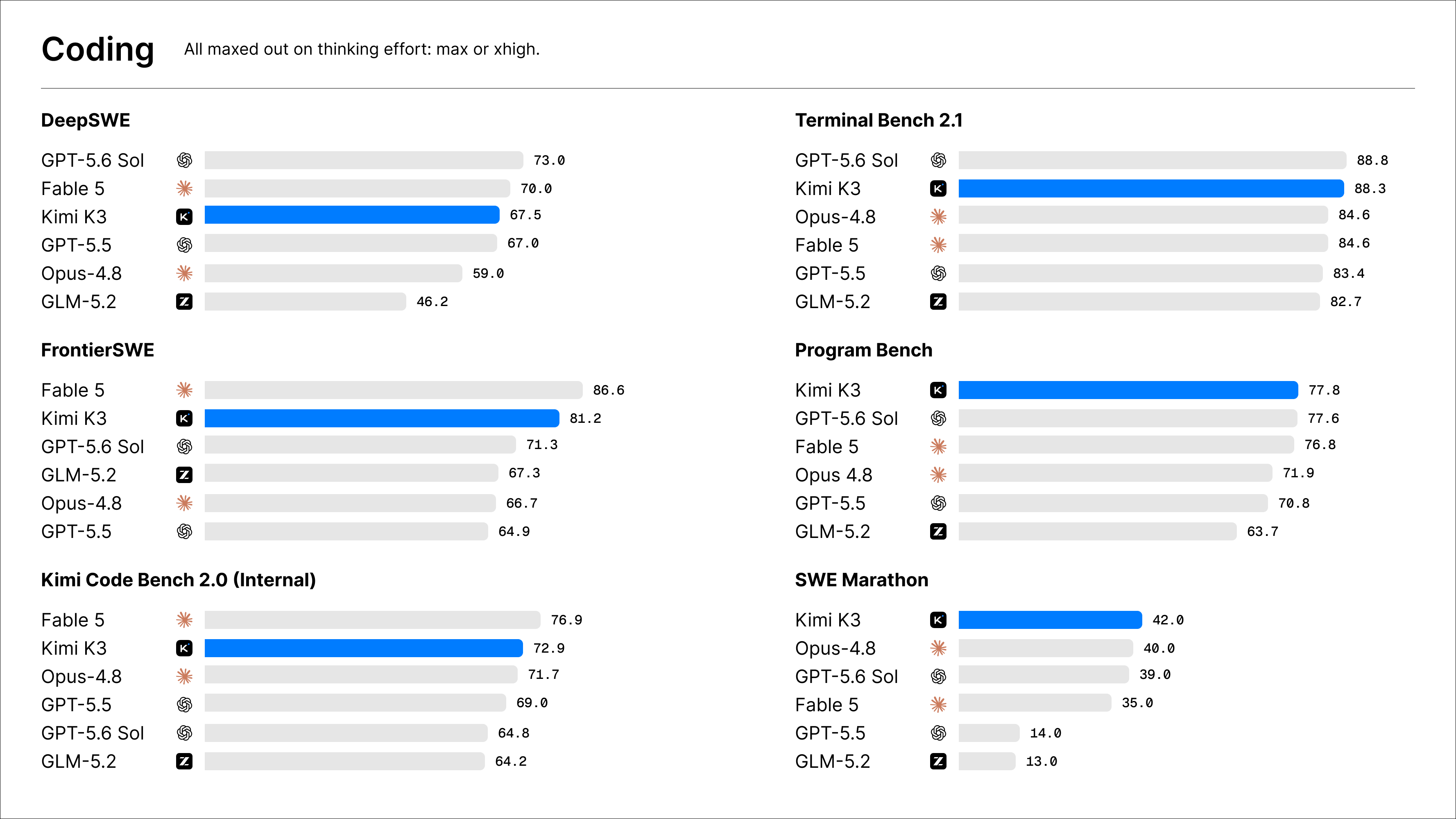
Moonshot AI officially launched the Kimi K3 . This 2.8-trillion-parameter model provides 1 million t
24-hour AI News Summary: Global AI competition continues to heat up, with chips, models, security re

On July 9, 2026, Mistral announced in its official article "Your Prompts and Skills Need a System of

On July 9, 2026, Google Research released the wearable health foundational model SensorFM. It was pr

On July 9, 2026, OpenAI officially announced ChatGPT Work in its announcement "ChatGPT is now a part