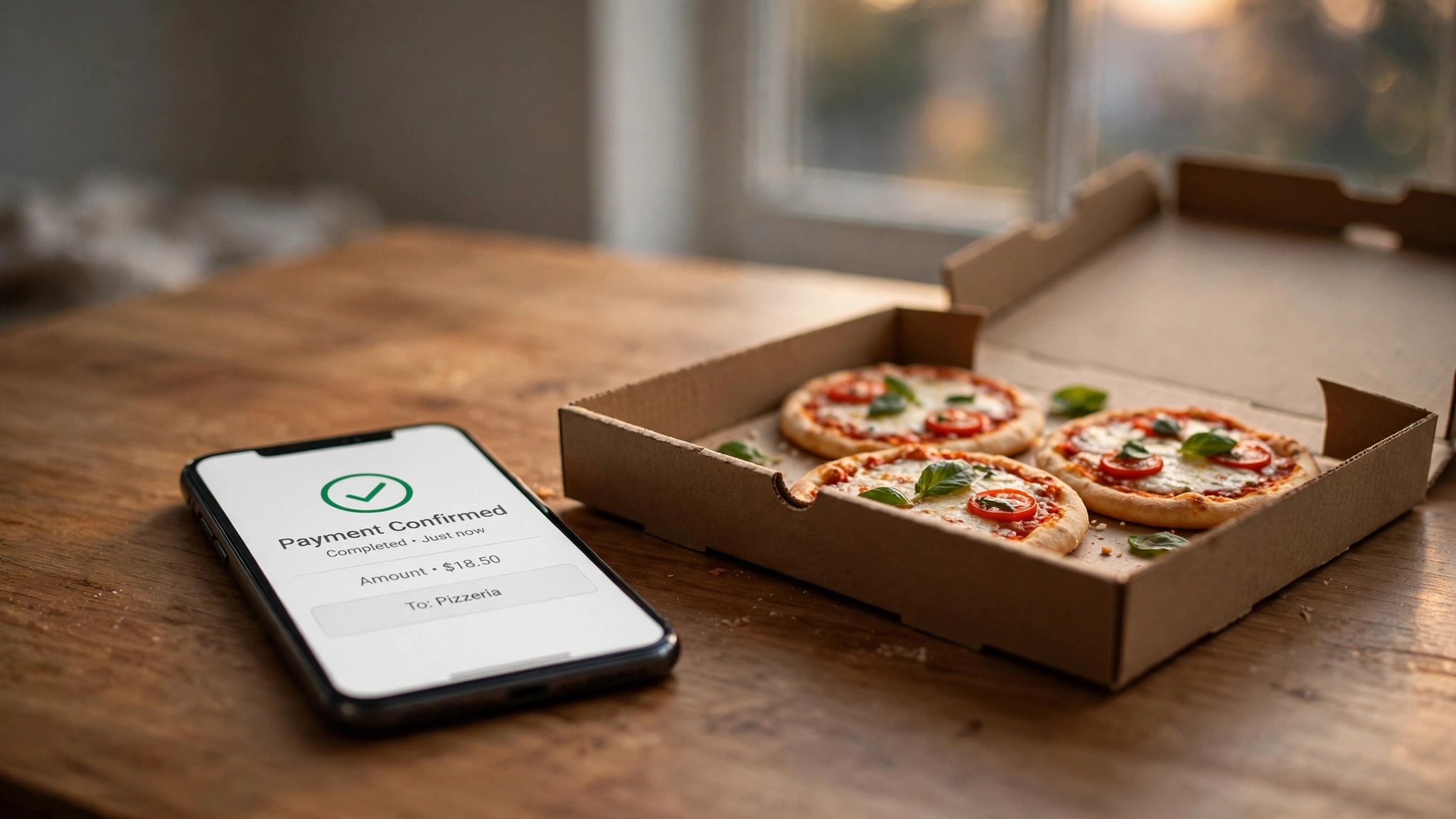
On 27 November 2026, the UK completed a rather unusual pizza order: Papa John's AI ordering agent ordered nine mini margherita pizzas for a real customer, with the money taken straight from the customer's bank account — no card number used, no password entered. Payments company TrueLayer calls it the UK's first cardless retail payment made by an AI agent. The pizzas themselves don't matter; what matters is how the money left the account, and who was in charge of it.
How the money moved
The transaction ran inside the Financial Conduct Authority's (FCA) Supercharged Sandbox, with Lloyds Bank taking part, and TrueLayer announced the result at an FCA showcase on 26 November. The payment travelled over open banking rails: the customer had linked a bank account to their Papa John's account in advance and agreed per-transaction and monthly spending caps with the bank. Once the agent placed the order, the payment moved directly from the bank account to the merchant's account; the customer confirms in their own banking app, and the authorisation can be cancelled at any time through the bank or the merchant. TrueLayer also says this is the first time Lloyds' variable recurring payment (VRP) interface has been used for an agent payment.
The hard part of agent shopping is not ordering — it is paying
Having an agent order things for you is nothing new; the hard part is letting it spend money in a compliant way. TrueLayer chief executive Francesco Simoneschi puts it this way: today it's pizza, tomorrow it's everything else. But that sentence comes with a long list of conditions: the bank sets the limits and enforces them, and the agent cannot exceed them; the FCA also warns that agents spending on someone's behalf remain subject to existing authorisation rules, that some payment activities may need separate authorisation before they go commercial, and that success inside a sandbox is not regulatory endorsement. For now this is still a controlled trial, and ordinary customers cannot use it yet. TrueLayer expects a wider UK rollout to wait until June next year, when the commercial terms for retailers to access banks' digital interfaces are due to be settled.
Unlike Mastercard opening agent payments to early access in October, when a card network gave agents a budget to spend, this time the money came straight from a bank account, with the bank setting the limits. Three things are worth watching next: whether the FCA sets out clearer rules for agent payments, what next June's commercial terms look like, and which retailer beyond pizza moves this process into everyday shopping first.