On November 26, NVIDIA published a post on Hugging Face opening up what sits behind its document-parsing model Nemotron 3.5 Parse: three synthetic datasets totaling about 18.9 million samples, plus the fine-tuning recipe and the DFlash2 inference accelerator. This is not a new model launch — it is the full recipe for training a good document parser, laid open for the community.
Three datasets, plus a recipe
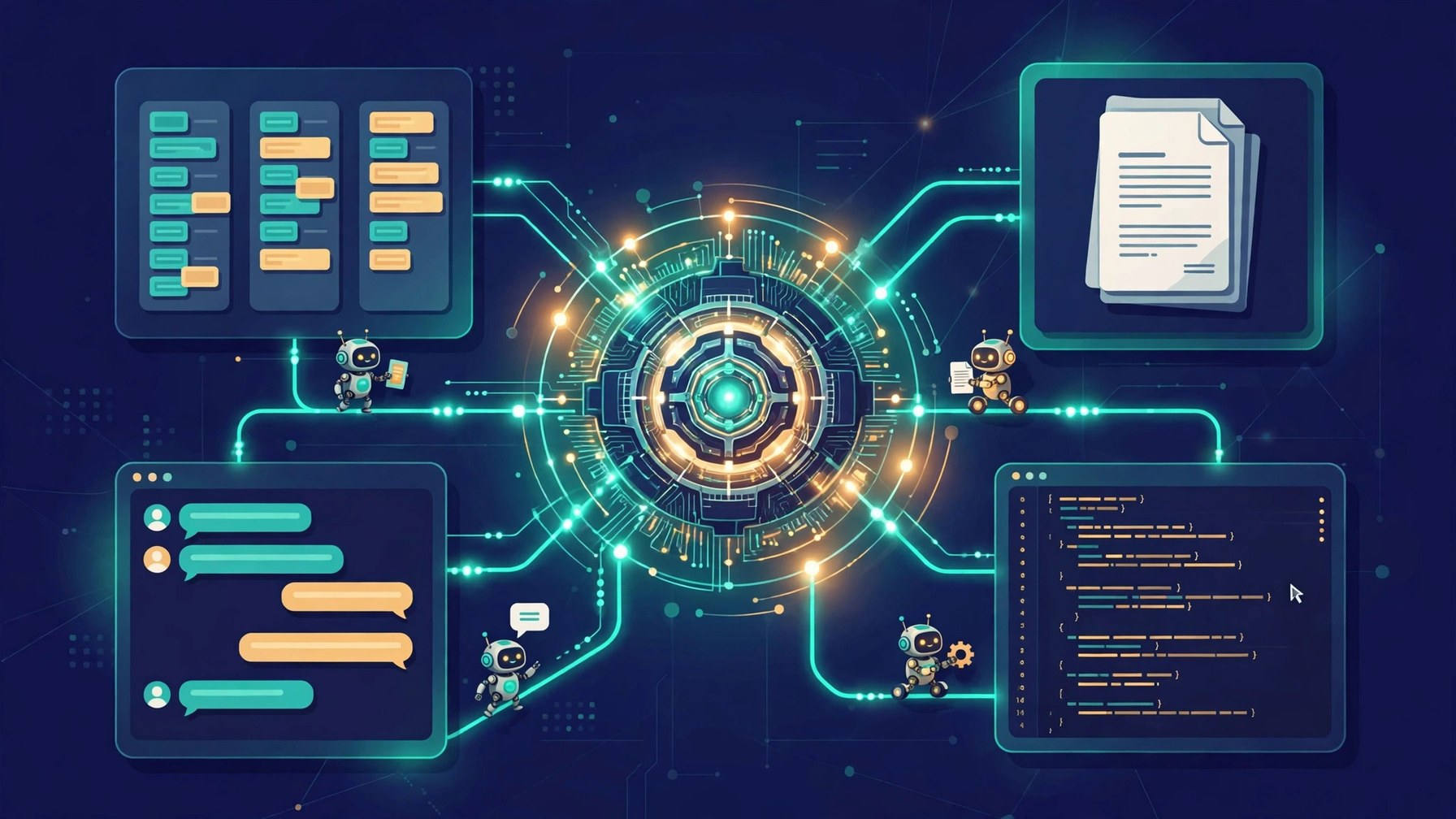
The three datasets are: 9.98 million synthetic charts, 1 million synthetic tables, and 7.9 million multilingual OCR synthetic pages, covering 28 scripts, all labeled in Parse format. Training runs in two stages: supervised fine-tuning first teaches the model to output headings, paragraphs, tables, charts and bounding boxes in reading order, then reinforcement learning with verifiable rewards (GRPO) refines accuracy and consistency. NVIDIA's self-reported figures: a 95.85% first-attempt success rate after fine-tuning, and 96.58% after reinforcement learning.
Where the 7.6x speedup comes from
DFlash2, on the inference side, is a form of speculative decoding: a small draft model guesses 32 tokens ahead, and the Parse model verifies them in batches, advancing about 15 tokens per step on average. On the 2,078-page ParseBench test set, single-request throughput rose from 0.54 to 4.10 pages per second, about 7.6x; at 512 concurrent requests it went from 13.48 to 20.44 pages per second, about 1.5x. The higher the concurrency, the smaller the speedup — normal behavior for speculative decoding, not inflated numbers.
Two boundaries to see clearly before using it
For teams building RAG and agents, this release matters more than the model itself: document parsing is the first step of a Q&A pipeline, and if tables and charts are read wrong, everything downstream is wrong. Now anyone can follow the same recipe to fine-tune a version adapted to their own documents, and community adaptations for Thai, Persian and Arabic are already underway. But two boundaries need stating: first, the data is entirely synthetic, so sample counts are not counts of real documents, and performance on dirty scans has to be tested yourself; second, the overall reuse license for the datasets is not settled yet — the cards show CC BY 4.0 while the text says no license has been assigned, so check each card's terms before commercial use. The model itself is a small 0.631B model released in October, built to be a lightweight parser, not to compete with large models. What is worth watching next is whether the community grows more language-specific parsers from this recipe.