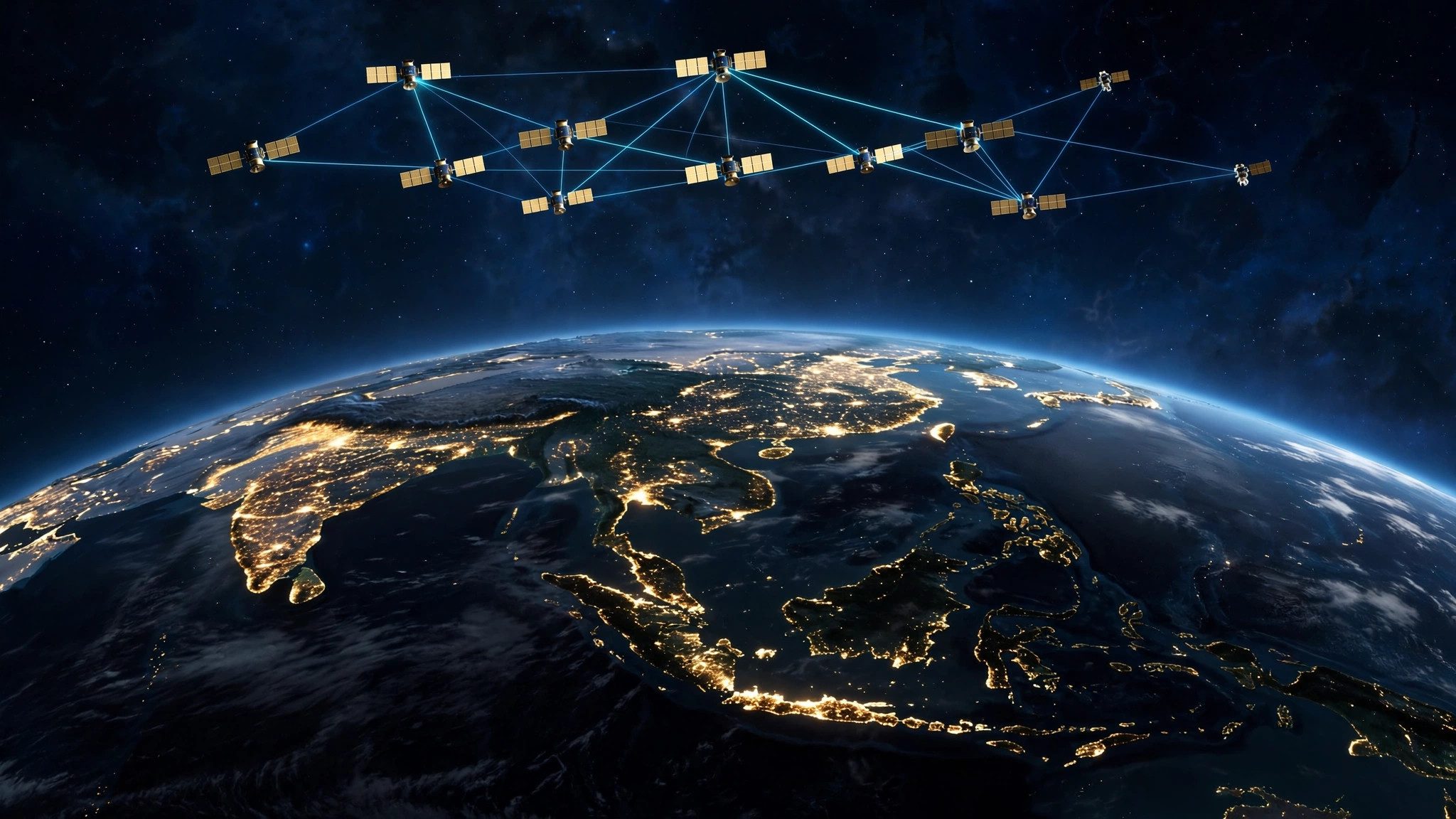
On November 25, 2026, the U.S. Federal Communications Commission (FCC) authorized SpaceX to deploy up to one million orbital compute modules forming a constellation called Starmind — data centers in space running AI workloads. The FCC said it is the first authorization of a space data center constellation in U.S. history, intended to meet rapidly growing demand for superintelligence computing.
Starmind's idea is to move computing to orbit, where solar energy is effectively inexhaustible: each satellite carries its own AI chips, runs on solar power, and beams results back to Earth by laser. SpaceX filed its application on January 30, and the FCC opened it for public comment on February 4. Amazon's Kuiper, Viasat, and the American Astronomical Society all raised objections; the FCC did not accept them this time.
The deployment schedule set by the FCC is:
- First operational satellite: in orbit by November 2033
- 100,000 satellites (10%): by November 2035
- 500,000 satellites (50%): by November 2038
- All one million: by 2040
The constellation would operate at altitudes of 500 to 1,002 kilometers, with a design life of 15 years.
Approval is not a blank check. The FCC declined one waiver SpaceX had sought: letting satellites above 600 kilometers move into 'graveyard orbits' at the end of their lives instead of burning up on reentry. SpaceX must also submit an orbital debris plan before deploying above 600 kilometers. Astronomers' concerns have not gone away either — about 17,000 satellites are in orbit today, so one million would be roughly 50 times the current population, and the bright streaks crossing the night sky would multiply with it.
For SpaceX, this is a third line of business after rockets and Starlink: from selling launch capacity and connectivity to selling computing power. Chief Financial Officer Bret Johnsen said last week that the first space data centers are planned to launch in 2027 and scale up before 2029. The FCC's 14-year window is generous; the real test comes later — whether the first satellite gets up on time, and whether the cost can be pushed below that of a ground-based data center. Google is working on a similar idea: Google's space computing plan with Blue Origin has its first satellites scheduled for launch in 2029. And it is the same play as SpaceX's ground buildout — SpaceX's $74 billion ground supercomputing campus plan goes to a vote on December 9.