In a historical study reported on November 24, OpenAI's GPT-6.2 Astra solved the mystery of an anonymous 1808 sketchbook in 22 minutes. Historian Mark Humphries asked the model to identify the creator of an unsigned sketchbook held at Yale's Beinecke Library. Its answer: the French aristocrat Vicomte de Chabot — and a diary he later tracked down confirmed the call.
A sketchbook that had stumped scholars for years
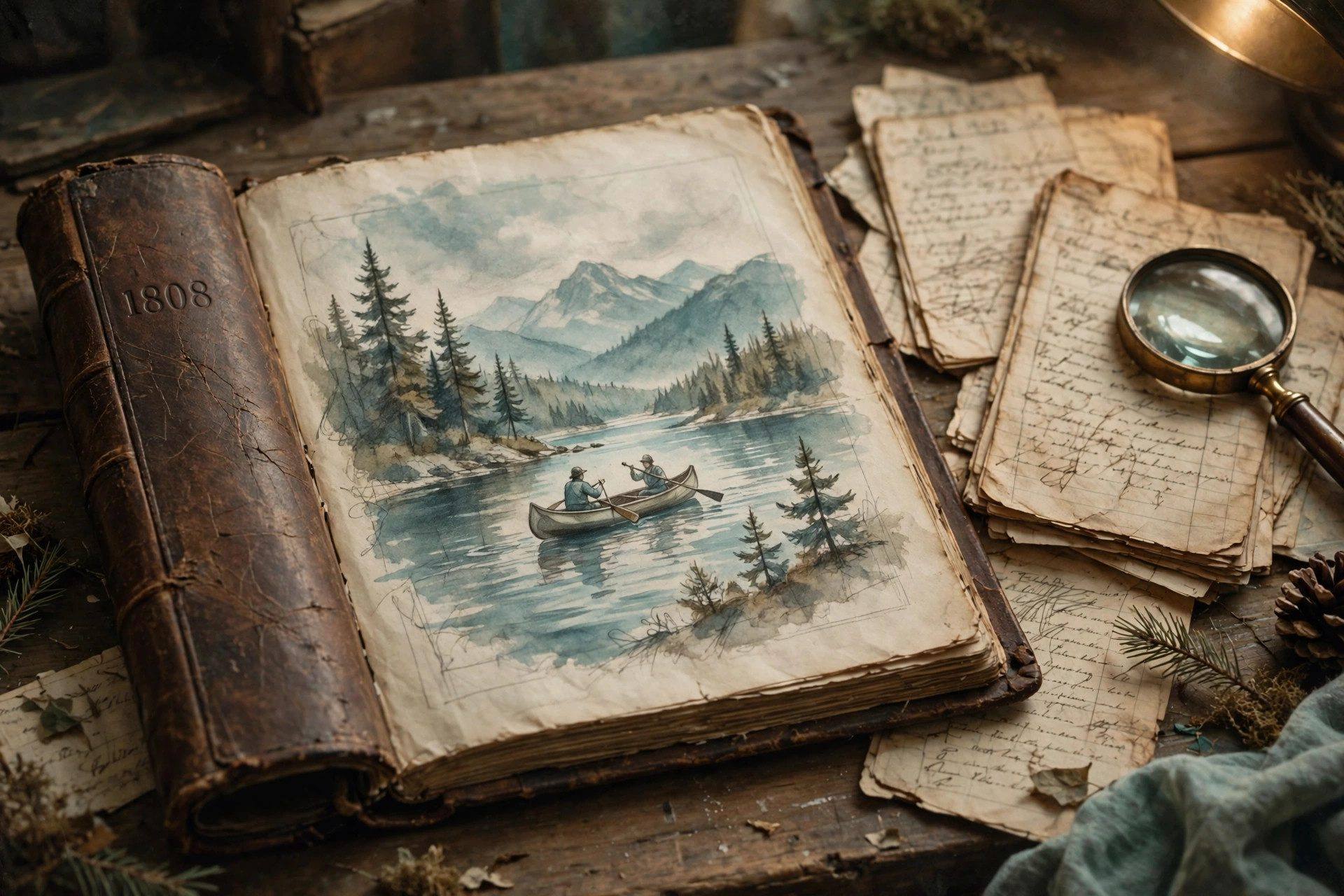
The sketchbook has 84 pages, 34 of them pencil or watercolour drawings, recording a canoe journey from Montreal to Fort William on Lake Superior in March 1808. Only three drawings are dated. It passed through private hands for decades before Yale bought it from an antiquarian bookseller in 2020, and its author remained unknown. The difficulty: hundreds of canoes made the same route every year, so the artist could have been any of several thousand people, while the surviving written sources are mostly handwritten, unindexed, and scattered across dozens of archives. Humphries says he spent years getting nowhere, so he handed the "impossible task" to GPT-6.2 Astra, which he was testing, giving it only the sketchbook images and one of his own old articles for context.
How the model zeroed in on Vicomte de Chabot
The model read through the sketchbook page by page, paying special attention to the three dated drawings, and used them to rule out both candidates Humphries had suggested — on those dates, they were elsewhere. It then combed through the primary sources it could find, following an obscure lead to a footnote in a 2014 PhD thesis that mentioned a travel diary left by Vicomte de Chabot. Its conclusion: Louis-Guy-Charles-Guillaume de Rohan-Chabot, Vicomte de Chabot (1780–1875), probably made the drawings — and it suggested ordering a microfilmed copy of the diary from Cleveland State University to test the claim. Humphries did just that. The diary arrived in two parts, one from a family archive in France and the other the microfilm reel itself. Running to 162 pages, it includes an entry for 18 June in which Chabot writes, after his canoe reached Fort St. Joseph, that he "took a sketch" — depicting exactly the view of the fort in the matching drawing — and the handwriting matches the sketchbook's distinctive letter forms.
What a single case can — and cannot — prove
Humphries himself cautions that this is one practitioner's report, not a controlled experiment, and no other scholar has yet checked the diary. But the significance is not "AI beats historians"; it is a new way of working. The model tracked an obscure lead across public archives and produced a prediction that could be tested by hand, rather than an unfalsifiable answer. Notably, while models have lately been cracking hard problems in mathematics, and proteins designed by GPT-6.2 have already entered laboratory validation, this time the same long-horizon reasoning was brought to historical research, where there is no single right answer. OpenAI president Greg Brockman shared the account, and more scholars are likely to test the model on their own cold cases — the key question now is whether findings like this can be repeated.