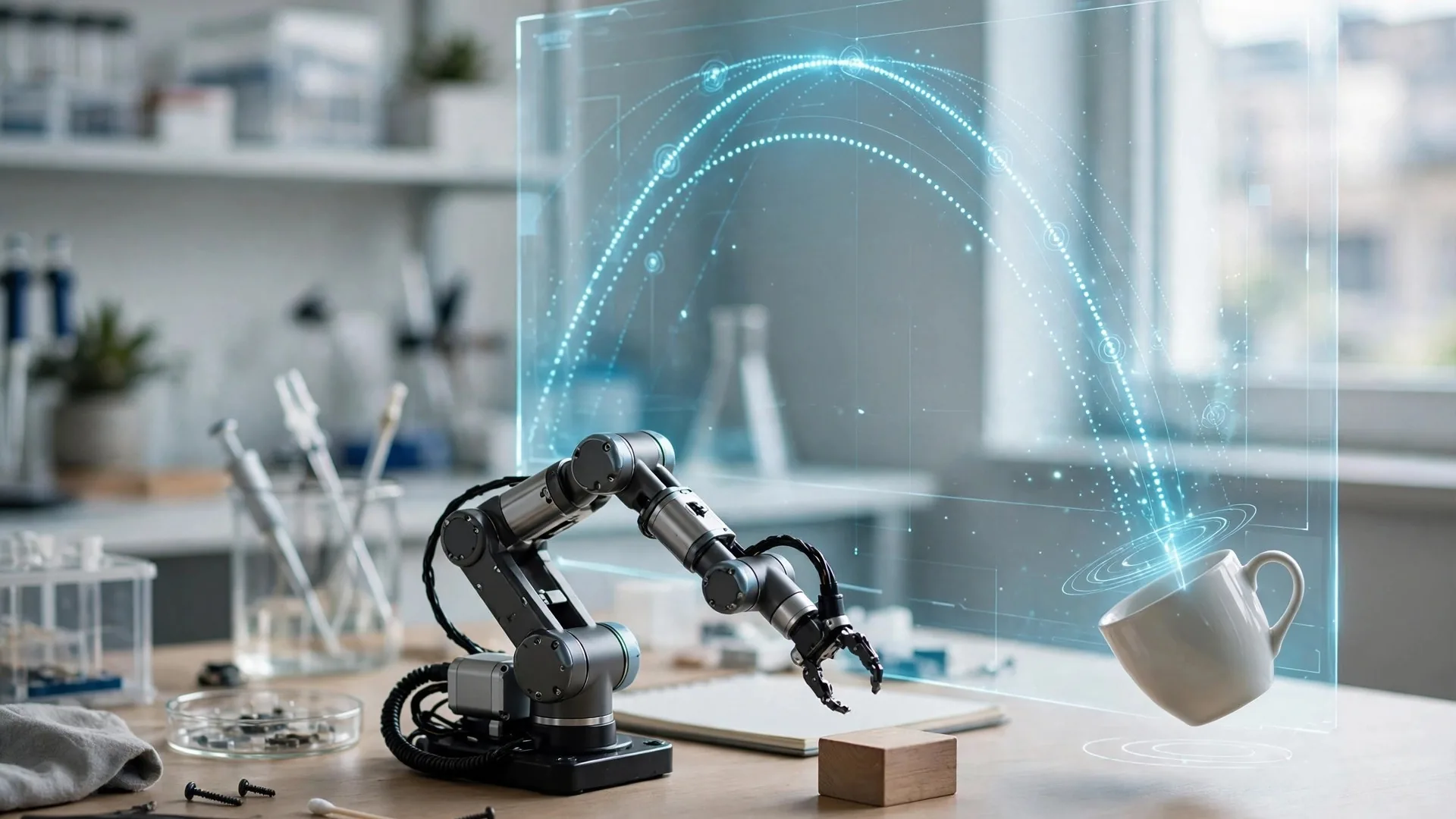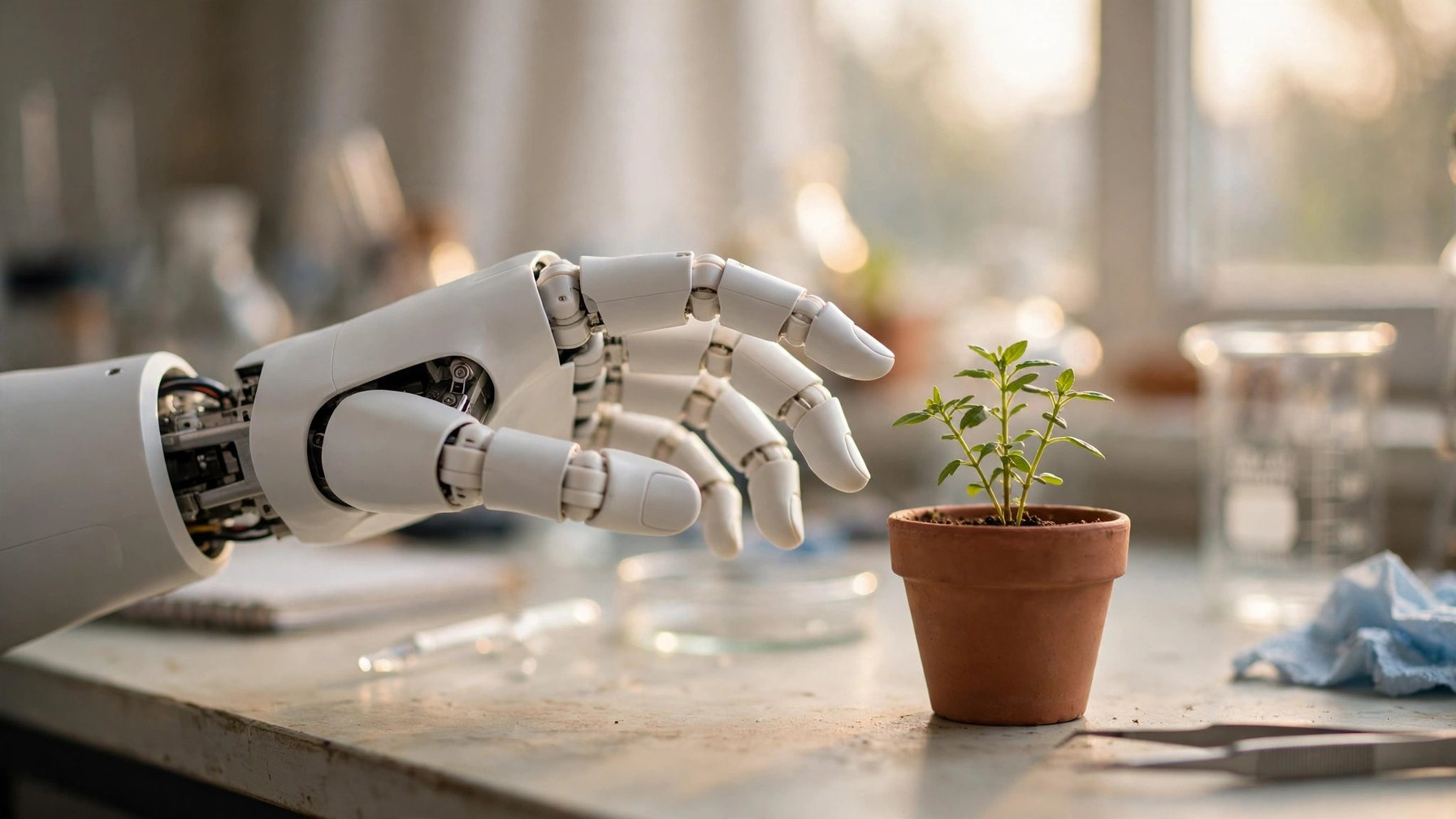
Embodied AI is the technical path of giving AI a body so it can work with its hands in the real world. It does more than chat, write and draw: with cameras, robotic arms and wheels for a body, it senses its surroundings, takes action, and lives with the real consequences of what it does. A model without a body can be as smart as it likes; it is still only thinking inside a screen. Embodied AI has to think, then act — and correct itself when it gets something wrong. Its technical base includes multimodal foundation models, vision-language-action models (VLA), and world models.
How it differs from ordinary robots and pure software agents
Traditional robots mostly follow fixed programs: a vacuum robot navigates, a robotic arm grabs along a set path, and a changed environment throws them off. Pure software agents are the opposite: they can search the web, write code and book flights, but they cannot touch a single real object. Embodied AI sits in between: a large model does the thinking, a body does the doing, and sensing, deciding and acting form a closed loop. Think of it this way: a chat model is a brainy adviser who only thinks, a traditional robot is a worker who only moves without thinking, and embodied AI is an apprentice who uses both — and learns from real interaction.
How hot it got in 2026
Embodied AI has been written into the government work report, and the 15th Five-Year Plan has set its direction. The Embodied AI Development Report published in October 2026 by Tsinghua University and the China Academy of Information and Communications Technology shows that domestic financing in the field reached about 93.5 billion yuan in the first half of 2026, roughly five times the same period last year; global humanoid robot shipments passed 22,000 units in the same half; more than 70 training grounds have been built across China, and there are 405 domestic companies in the field. Hot money, policy and shipments are all rising at once — that is why it keeps coming up this year.
The cold side: shipped does not mean deployed
Behind the excitement there are three realities to face. First, a considerable share of devices are powered on fewer than 10 days a month; most sit in showrooms and warehouses, and few are actually working in factories or homes. Second, the price of the machine is only 40% to 60% of its full lifecycle cost — deployment, maintenance and training data cost more. Third, once the environment changes, model performance drops sharply: controlled desktop manipulation benchmarks are close to saturated, but in real environments with disturbances, performance generally falls below 30%. Fine manipulation, long multi-step tasks and open-ended semantic interaction remain weak spots.
So when you look at embodied AI, do not just watch the launch demos. The real question is whether it can finish a job from start to finish in an environment nobody rehearsed. If it can, it genuinely understands the world; if it cannot, it is still at the stage of being able to move rather than being able to work.