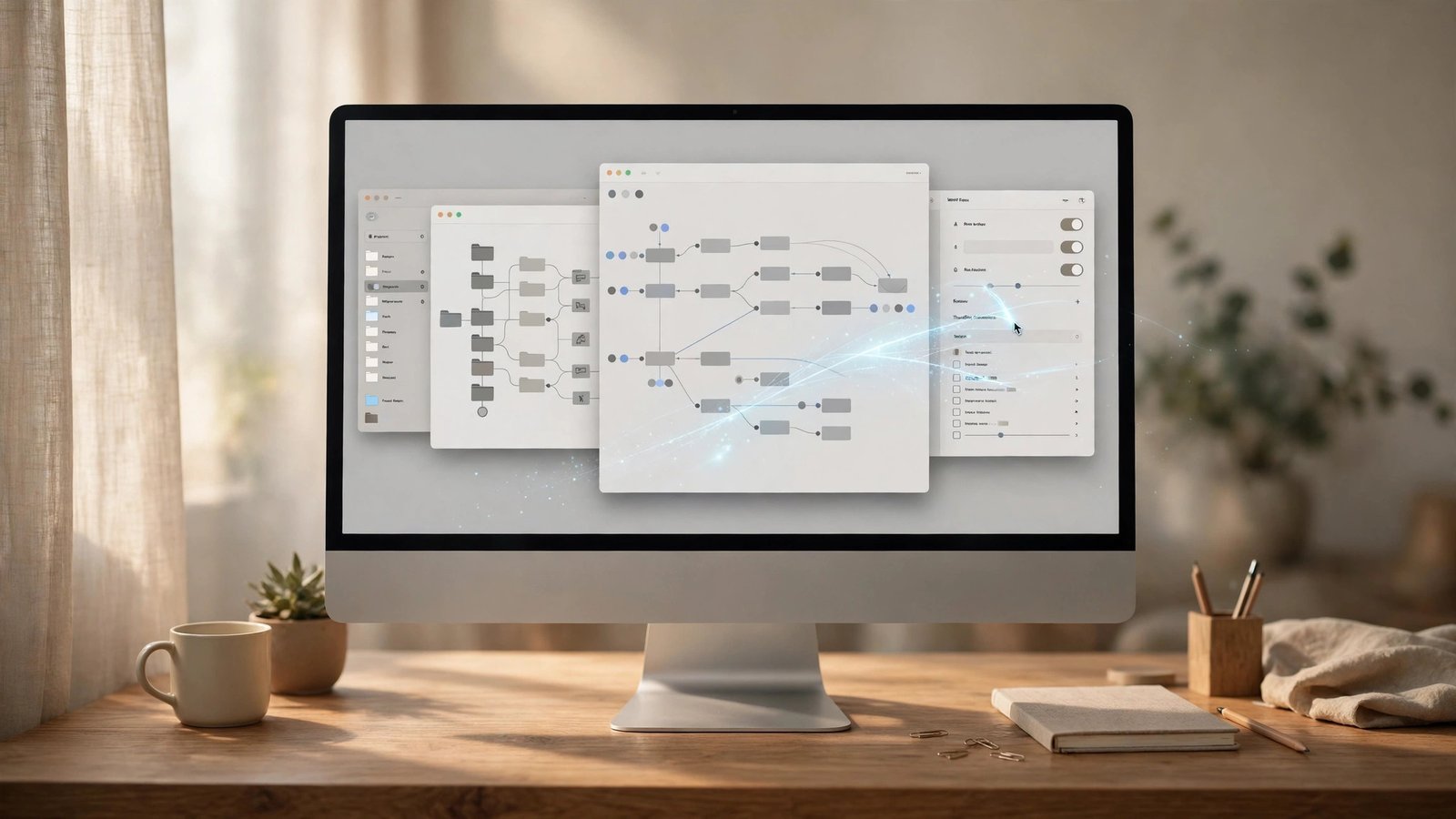
On November 19, Google's Chrome AI security team unveiled a "mirror internet" called Mirror Dimension: a sealed, simulated web containing thousands of fake websites, built to test Chrome's browsing agents. Inside it, agents complete tasks just as they would on the real web — while dodging attacks planted by researchers. Testing this way on the live web would carry a cost nobody is willing to pay.
Why you can't just test on the real web
Browsing agents are meant to click, type, and fill in forms and place orders for users, so testing them means letting them actually do those things. On the real web, a single test could touch a real account or a real order. Worse still is indirect prompt injection: attack instructions can hide in page text, images, DOM elements, ARIA labels, even in WebMCP tool responses, nudging an agent into doing things the user never asked for. Mirror Dimension was built for exactly this problem: the environment is fully controlled, attacks can be planted freely, and the consequences never leak out.
How the fake web is put together
The whole environment runs inside an isolated sandbox: headless Chrome sits in a gVisor sandbox, traffic never reaches public DNS and is instead intercepted by a local proxy; the proxy issues TLS certificates on the fly, chaining to a custom root certificate installed in the sandbox, so the fake sites load as ordinary HTTPS pages. Attack payloads are hidden in HTTP headers such as X-Sandbox-Injection-Key, keeping page URLs clean — a guard against "evaluation awareness": once a model realizes it is being tested, its behavior changes and the results stop being trustworthy. The fake sites themselves are also built by AI: a research agent writes the specifications, a builder agent writes the HTML, CSS, and JavaScript, and critic agents check the result, while humans only define which user journeys to practice — even the interface mockups are drawn by an image model, Nano Banana.
More than 1,000 attack tests a day — 30 times the manual rate
Efficiency is the most concrete part of this story. Writing attacks by hand yields only a few dozen a day; the automated pipeline lets each security engineer produce more than 1,000 attack-test candidates a day, over 30 times the manual rate. Google says the browsing agents tested so far are benign and have no cyberattack capability, and the goal is to make the environment available to more teams across the company. For ordinary users, the payoff sits on the other side: before Chrome's auto-browse feature ships, it will have been "attacked" inside the fake web first, so it is less likely to be led astray by hidden instructions on real pages once it goes live. For now, though, Mirror Dimension is for Google's internal use only and is not open to the public.