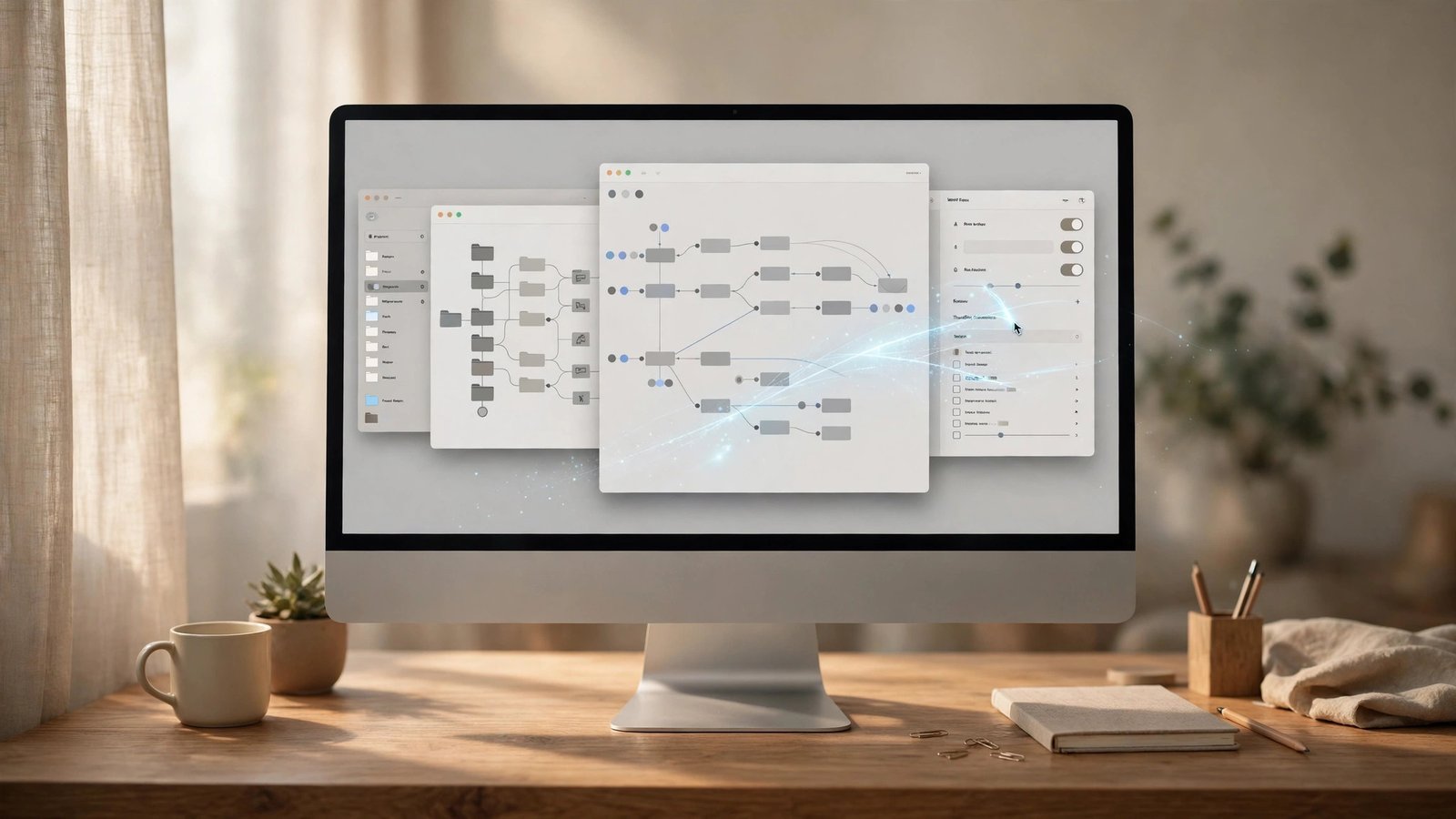
On November 19, 2026, Bloomberg reported, citing job listings Apple posted this week, that Apple is building its own AI agent: an assistant that can operate a computer the way a skilled user does — browsing the web, working across apps, running commands, and writing and debugging code. Apple has not officially announced the project, and the listing has since been taken down, but it is the clearest signal yet of Apple's AI direction since new CEO John Ternus took over.
What the job posting actually says
The senior engineering manager posting is strikingly direct: imagine an AI agent that can use a computer the way a capable person does — one that picks its own tools, carries multi-step tasks through on its own, moving across apps, browsers, the command line, code, and APIs, and can coordinate specialized sub-agents along the way. The role spans three teams — Siri, UI frameworks, and Apple Foundation Models — which suggests this is not a side experiment but the foundation for a future system-level assistant. Bloomberg says the project is still in its early stages, with an internal target of launching as soon as the end of 2027. It is the same direction as Apple's earlier push to turn Siri into an agent, only more ambitious.
Apple is building its own — while raising the bar for rivals
The interesting part is that Apple is tightening the path for others while building its own. In the macOS 27.3 beta, granting a third-party agent full control of the computer now triggers a warning, and enabling ChatGPT's computer-use features takes 14 steps, up from four. After the news broke, Meta and Anthropic shares fell about 2% and 3% respectively in after-hours trading. Rivals are not waiting: Google's Gemini computer-use feature landed on the Mac on November 19, and Meta's Muse and OpenAI's Dots are competing for the same ground.
Before the end of 2027, don't wait for it
For ordinary users, the conclusion is simple: don't wait for Apple's version before the end of 2027. The alternatives are already on the table — Gemini can click the mouse and fill in forms directly on a Mac, and Muse and Dots each have their own approach. Apple's real leverage is privacy and system-level integration: the posting repeatedly stresses doing tasks privately. If it can run most operations locally, with data never leaving the device, that will be a version worth waiting for; if it cannot, it will simply be another late follower.