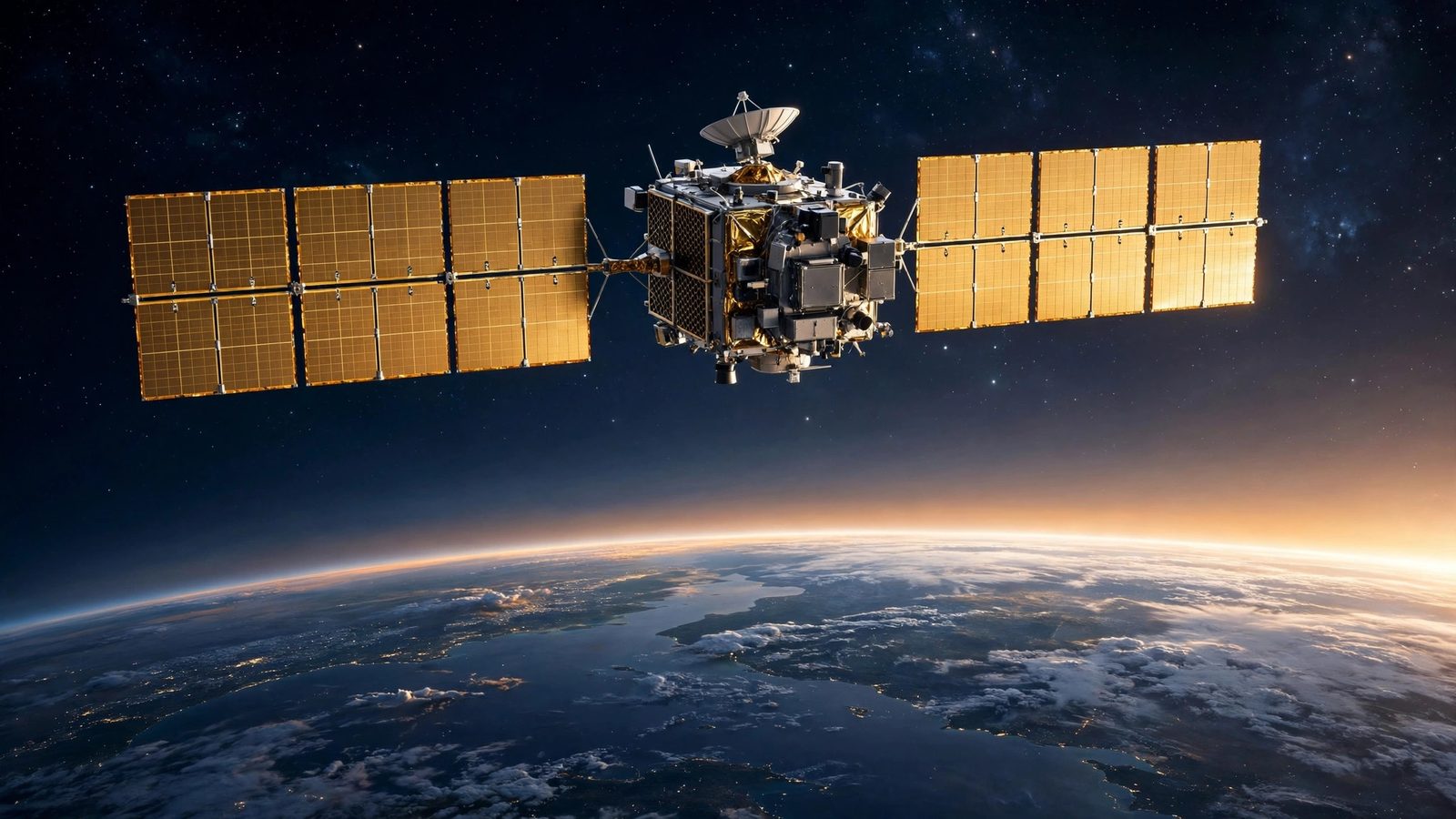
On November 19, 2026, Google announced on its official blog that it is partnering with Jeff Bezos' Blue Origin on the first heavy-lift launch for Project Suncatcher: Blue Origin's New Glenn rocket will carry a batch of satellites into sun-synchronous orbit in the first quarter of 2029, each satellite carrying roughly the compute capacity of a data center rack. Google wants to move AI compute off Earth and power it with the abundant solar energy available in orbit.
How far along is space-based compute?
Suncatcher is Google's long-term moonshot: network satellites carrying its own TPU chips so AI models can run in orbit, sidestepping the power, land, and cooling bottlenecks of ground-based data centers. The project has already passed single-satellite validation: the first prototype satellite reached orbit on October 1, carrying four TPUs, and successfully ran the Gemma 4 model and sent back results; in late October it sent back a haiku generated by AI, proving that in-orbit inference and the telemetry link work. This partnership is the key step from one test satellite to a multi-satellite network, which Google calls a crucial milestone on its long-term roadmap.
Before 2029, two things to watch
For Google, space-based compute remains a long-range experiment, not capacity that will be commercially available in 2029: the launch itself is more than two years away, and Google disclosed nothing this time about the size of the network, the number of satellites, heat and radiation protection, or the cost of sending data back. For Blue Origin, the New Glenn rocket gains a flagship long-term order just as the company works to return to flight. For the industry, putting data centers in space now has a firm launch date for the first time — but it answers a decade-scale energy ceiling, not today's compute shortage, and ordinary users will feel nothing in the short term.
The next things to watch are whether Blue Origin's New Glenn can return to routine flights, and whether Google discloses the number of satellites and the shape of the network; data from the prototype's in-orbit operations will also decide whether this moonshot can move from demonstration to scale.