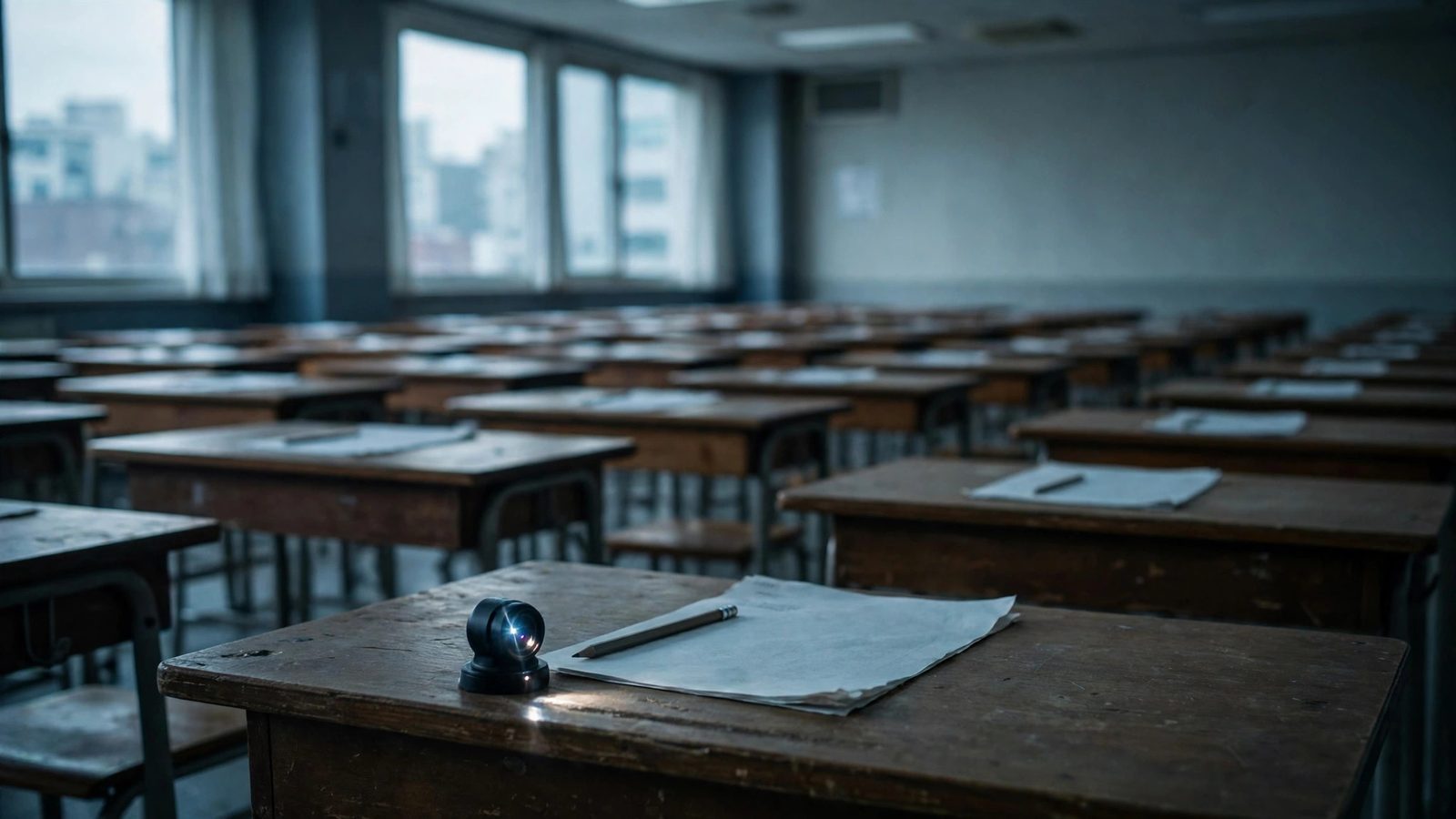
On November 15, 2026, the top scorer of South Korea's 63rd Certified Tax Accountant Examination turned himself in to the Seoul Metropolitan Police Agency, admitting he cheated in both rounds of the exam, held in April and July this year: he filmed the questions with a miniature camera and sent the photos to a generative AI, which answered them on the spot. A first-place title colliding with a cheating confession shows AI cheating is no longer a question of whether it can be done, but of how to prevent it and catch it.
He missed just one of 160 questions — the score gave him away
A, whose real name has not been disclosed, had previously published his own scores: in the first round, a 160-question multiple-choice test, he got just one wrong — 97.5 in public finance and a perfect 100 in tax law, introductory accounting and commercial law. The implausibly high scores had already drawn suspicion online, with some guessing he had used AI equipment. In a recent interview with a lawyer, A admitted the cheating and said he had written everything he did into a confession letter submitted to the Seoul Metropolitan Police Agency, and that he would hand over the remaining materials and devices as evidence. The report by South Korean outlet Etnews, however, does not name which AI tool he used, nor how the camera was hidden or how the answers were sent back to him; neither the Seoul police nor the exam authority has commented publicly, and it is still unknown whether his qualification will be revoked or how the investigation is proceeding.
Exams now have to guard against more than cheat sheets
The confession exposes a new reality: generative AI has pushed the cost of cheating down to taking a photo. Exam security used to focus on smuggled notes, impersonation and signal relays; now a hidden miniature camera and a phone can fetch answers in real time inside the exam hall, and traditional invigilation may not stop it. A professional qualification's credibility rests on scores meaning ability — once candidates suspect the top scorer got there with AI, the whole ranking loses trust. Italy has just fined Meta €805 million for reading photo galleries without consent, and four nonprofits sued five major AI companies earlier this month — regulators are tightening the rules on AI misuse from several directions, but AI cheating in exam halls still has no ready-made answer.
Three things to watch next
First, how the Seoul police handle the confession letter and whether they open a formal investigation; second, whether the exam authority revokes A's qualification and takes back his certificate; third, whether South Korea tightens security at professional exams, for example with stronger signal blocking and checks of personal devices. The name of the AI tool involved and the details of how the answers were sent back will also have to wait for the investigation.