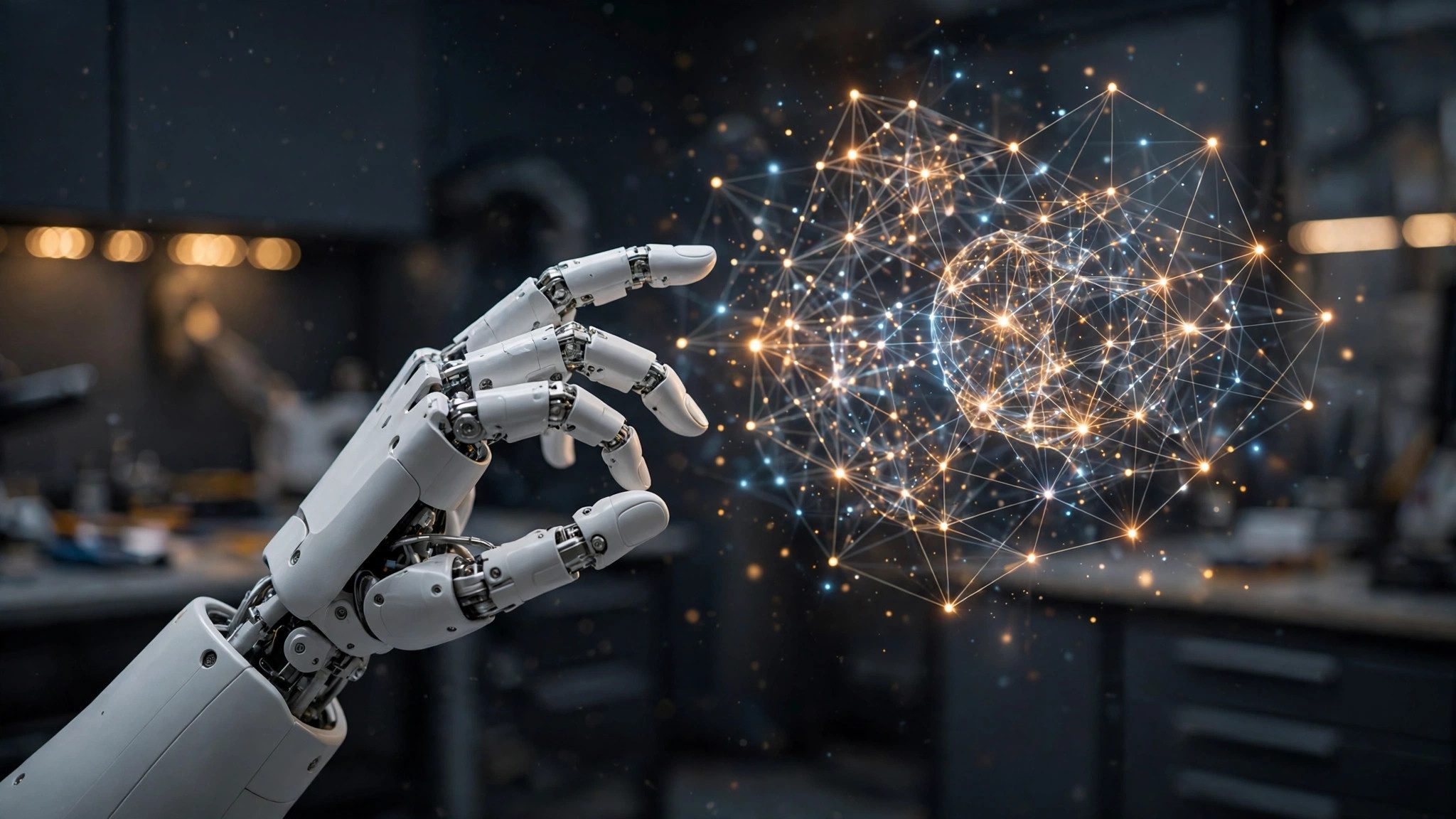
OpenAI's robotics team no longer stands alone. On November 13, 2026, Fortune reported exclusively — and OpenAI confirmed to the magazine — that the standalone robotics team has been reorganized: its researchers join the main research organization led by Chief Research Officer Mark Chen, while applied robotics and hardware staff move into the Applied organization led by President Greg Brockman. OpenAI stresses this is not a retreat from robotics — a humanoid demo is still targeted for 2027 — but a judgment that general-purpose models can now serve directly as a robot's brain, with no need for a separate team building robot-specific "brains."
Why general models can take over robotics
OpenAI's evidence is an October 14 study from Nvidia: GPT-6 Astra, with no robot-specific training at all, acted as a controller in a simulated grasping benchmark and scored a 74.8% success rate, above the 51.0% of the best specialized robot model. Those numbers are the basis for OpenAI's bet — and they also draw the boundary: the test ran in simulation, not on a physical robot, and simulation scores say nothing about latency, cost, or reliability on real hardware. GPT-6 Astra's most recent moment in the spotlight came when it treated its own evaluation as a violation and shut down the task it was running. OpenAI has published no blog post about the change and has not said how many people are affected.
How this differs from the 2020 shutdown
This is the second time OpenAI has eliminated its standalone robotics team. The 2020–2021 closure was a retreat: once the team was shut down, robotics work largely stalled. This time OpenAI has repeatedly corrected Fortune's "disbanded" wording, calling it a reorganization, with the robotics program and roadmap unchanged and the research simply sitting in a different org. For OpenAI, the dividing line is clear: whether general models are good enough decides whether a robotics team needs to exist on its own.
For robotics startups, the signal is more direct: if general models can genuinely take over control, the business of selling specialized robot "brains" gets harder to defend. But until real-hardware data arrives, this remains a bet — on the continued improvement of model capability, not on robots already in hand. Two things to watch next: whether OpenAI publishes an official statement, and whether the 2027 humanoid demo delivers a physical robot on schedule.