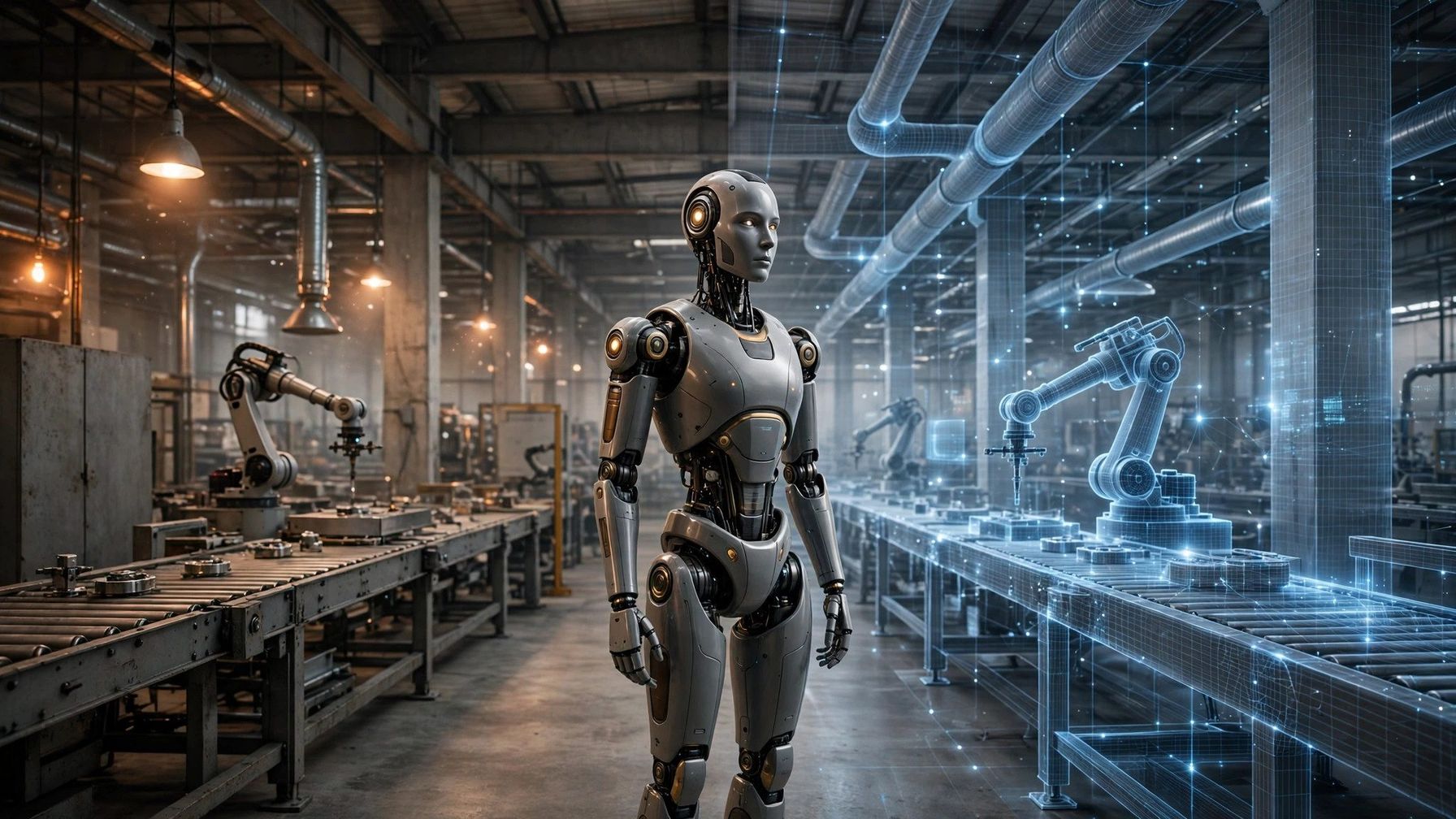
On November 2, UBTech released Thinker-Sim, an embodied AI simulation platform aimed at the most expensive and time-consuming part of robot training: collecting real-world data is costly, building simulation environments is hard, and validating algorithms takes a long time. Its approach is to move the real world into simulation quickly, train the robot thoroughly inside the computer first, and only then validate it on real hardware, so training and evaluation no longer have to rebuild the environment from scratch each time.
The platform is built on a Real2Sim2Real framework and covers three things in one place: digitizing real scenes, generating simulation data at scale, and evaluating robot capabilities. Scene reconstruction uses UBTech's in-house Thinker-GS high-fidelity algorithm, together with SimReady automated asset generation, to move efficiently from real-scene capture through 3D reconstruction to simulation assets. Taking a real factory production line as an example, the platform can restore the plant layout, environmental structure, and visual details, then flexibly load foreground assets such as robots, production equipment, and people depending on whether the task is training, data collection, or algorithm evaluation. Commercial service scenarios can also quickly generate digital twin environments with realistic visuals for training and deployment validation.
How far templates and agents lower the barrier
The platform comes with a rich set of standardized simulation task templates covering the training, data synthesis, and evaluation scenarios robots commonly need. Users do not have to build a simulation environment from scratch; choosing a template and setting parameters is enough to start a simulation task quickly, with real-time video streaming, task status monitoring, and result feedback during simulation, so problems can quickly be traced to a task failure, a model anomaly, or an environment configuration error. The scene, robot, task, algorithm, and evaluation modules can be configured flexibly, and UBTech says the platform can adapt to more than 90% of target simulation scenarios.
More important is the way users interact with it: built on the in-house Ulab-Agent, the platform takes natural language as its unified entry point, understands what the user needs, and then autonomously calls low-level atomic skills such as scene creation, environment configuration, randomization, task orchestration, and scheduling execution to complete the whole simulation workflow. People who cannot write simulation code can still assign a task in a single sentence.
Thinker-Sim is not entering an empty market; NVIDIA's Isaac family of simulation tools has been around for many years. UBTech's difference lies in evaluation and the one-stop workflow, but existing coverage says nothing about whether the platform is open, how it is priced, or what deployment data real customers have. However realistic a simulation is, what ultimately counts is performance on real hardware, and the next batch of publicly disclosed deployment cases will be the real test.