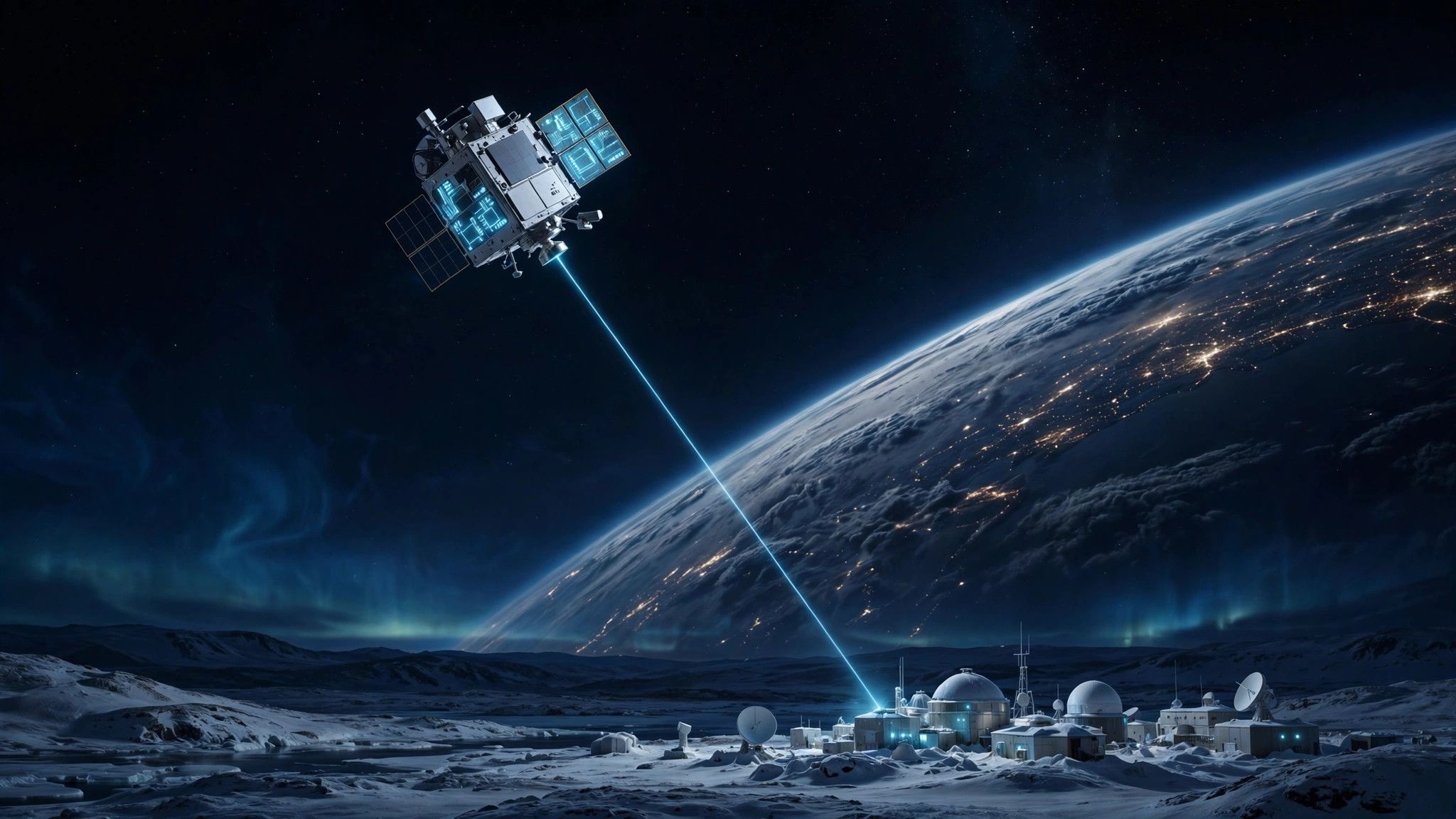
Google's space-based TPU has returned its first AI-generated reply from orbit. On 30 October 2026, Google reported progress on Project Suncatcher: the prototype satellite launched on 1 October aboard SpaceX's Transporter-18 rideshare mission, built by Google together with Planet. After commissioning — powering up the host and TPU trays and running early machine-learning tests — the team uplinked a prompt to the onboard Gemma 4 open model during a ground-station pass, asking it to write a haiku about being in space. As the satellite passed over Svalbard, Norway, the reply reached the ground: "Blue marble below / Data streams in silent grace / Starlight feeds my core." The team then tested space-themed limericks and telemetry prompts reporting the payload's technical status.
What this success proves
The milestone proves the whole chain works: instruction up, model inference on the onboard TPU, result down. Google calls it the first-ever AI response from a data-center-class TPU in orbit. It does not yet prove the chips can work reliably in space over the long term. The next tests will examine how the TPUs perform under thermal stress and radiation exposure, and that is the question that decides whether orbital compute is viable. TechCrunch reports the prototype carries four TPUs, generates up to 1 kilowatt of power, and can run only one chip at a time for about 20 minutes, so cooling and power limits remain obvious.
Why put compute in space at all
Project Suncatcher is Google's long-term research idea: a solar-powered network of satellites carrying machine-learning compute, sidestepping the land and power bottlenecks of ground-based data centers. The next step is two interconnected satellites in 2027, to test cooperation between satellites. If the chips pass the heat and radiation tests, orbital compute earns the right to a conversation about cost and scale; if they do not, the haiku remains a successful power-on check. For now, the judgment should stay narrow: the link works, durability has not yet been demonstrated.