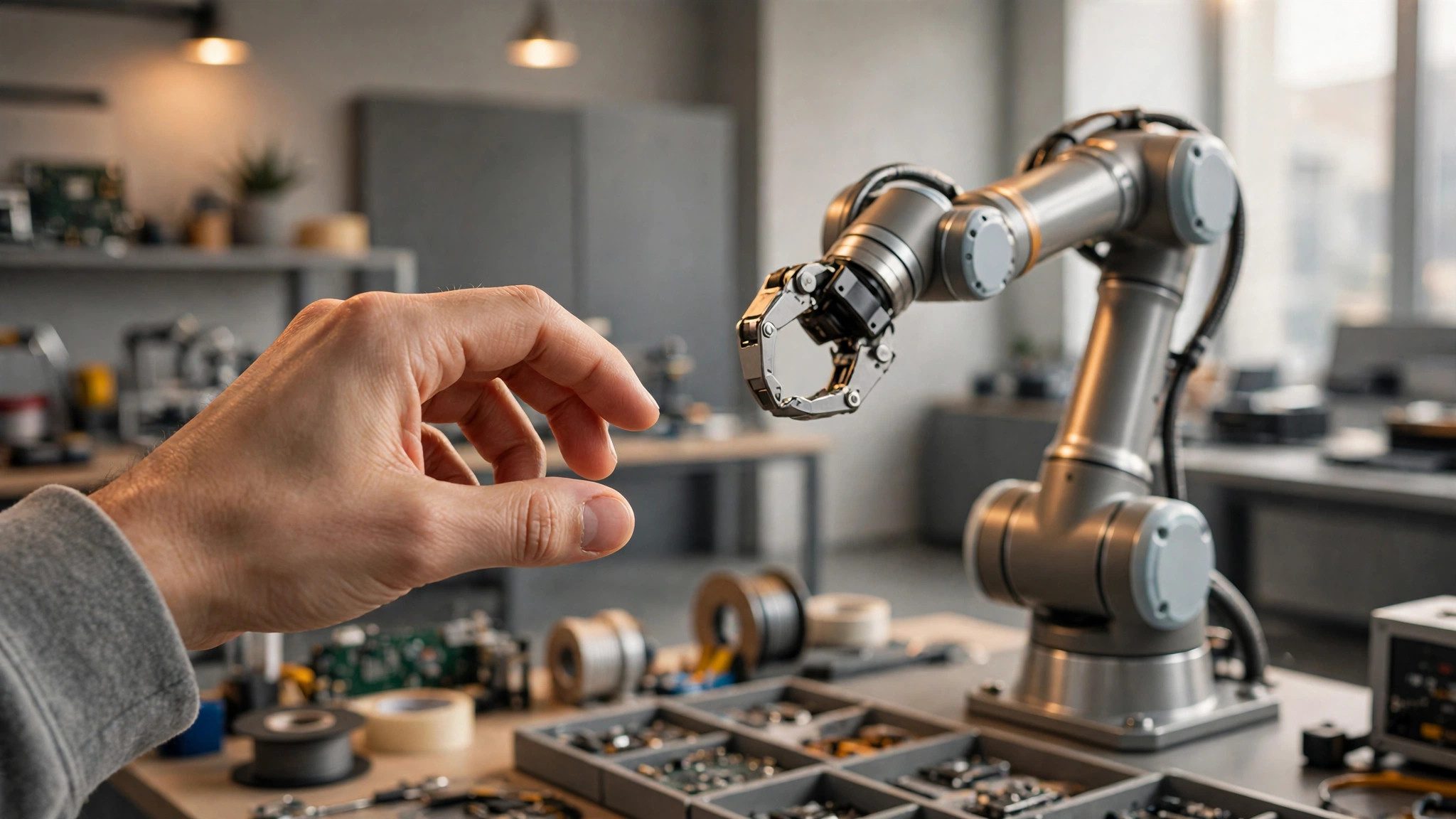
Xingyuan's Chorus data engine was released on October 27, 2026: Xingyuan Intelligence launched Chorus, a cross-embodiment data engine for robot pretraining, designed to turn human operation videos captured by devices such as smart glasses and wrist cameras into training data that different robots can use. The company, founded in June 2026, has chosen not to build robot bodies. Its bet is different: what robots lack is not demonstrations, but training data that can be reused at scale.
The Chorus pipeline has five steps: first identify atomic actions in the video, then add semantic annotations, then reconstruct motion in three dimensions, then optimise the motion trajectories, and finally map them onto the body structure of the target robot. Human video is not easy to use directly. Hand occlusion, changing viewpoints and incomplete trajectories are common, and human body structures and ways of moving differ from those of robots, so most unprocessed data would be discarded in quality screening. Xingyuan's approach is to let the same piece of human experience pass through this pipeline and then fit 16 robot embodiments, instead of collecting a separate dataset for each robot.
The 40x expansion is a figure from the test setup; real deployment still has to prove itself
Under the test configuration published by Xingyuan, Chorus achieves an effective conversion rate of about 85%. One hour of pre-screened human video can generate about 13.6 hours of cross-embodiment motion trajectories, and combined with 3x instruction augmentation, that amounts to about 40x effective expansion of training data, with the equivalent cost per hour falling to about 5 yuan. These figures come from the company's own test conditions, not from independent third-party measurements on a real production line, and whether data scale and model capability improve together still has to be verified in real settings. Xingyuan also stresses human-machine collaboration on the deployment side: when a robot in a real factory meets a situation its training data did not cover, an ordinary worker can take over and correct it within 2 to 3 seconds, and the feedback flows back into the training system, with the supervision ratio evolving from one worker per robot toward one worker for three robots as the model's success rate rises. For factory customers, the way to judge such an engine is not how smooth the demo looks, but whether it can stop safely, be taken over, and keep learning when it meets out-of-distribution situations.