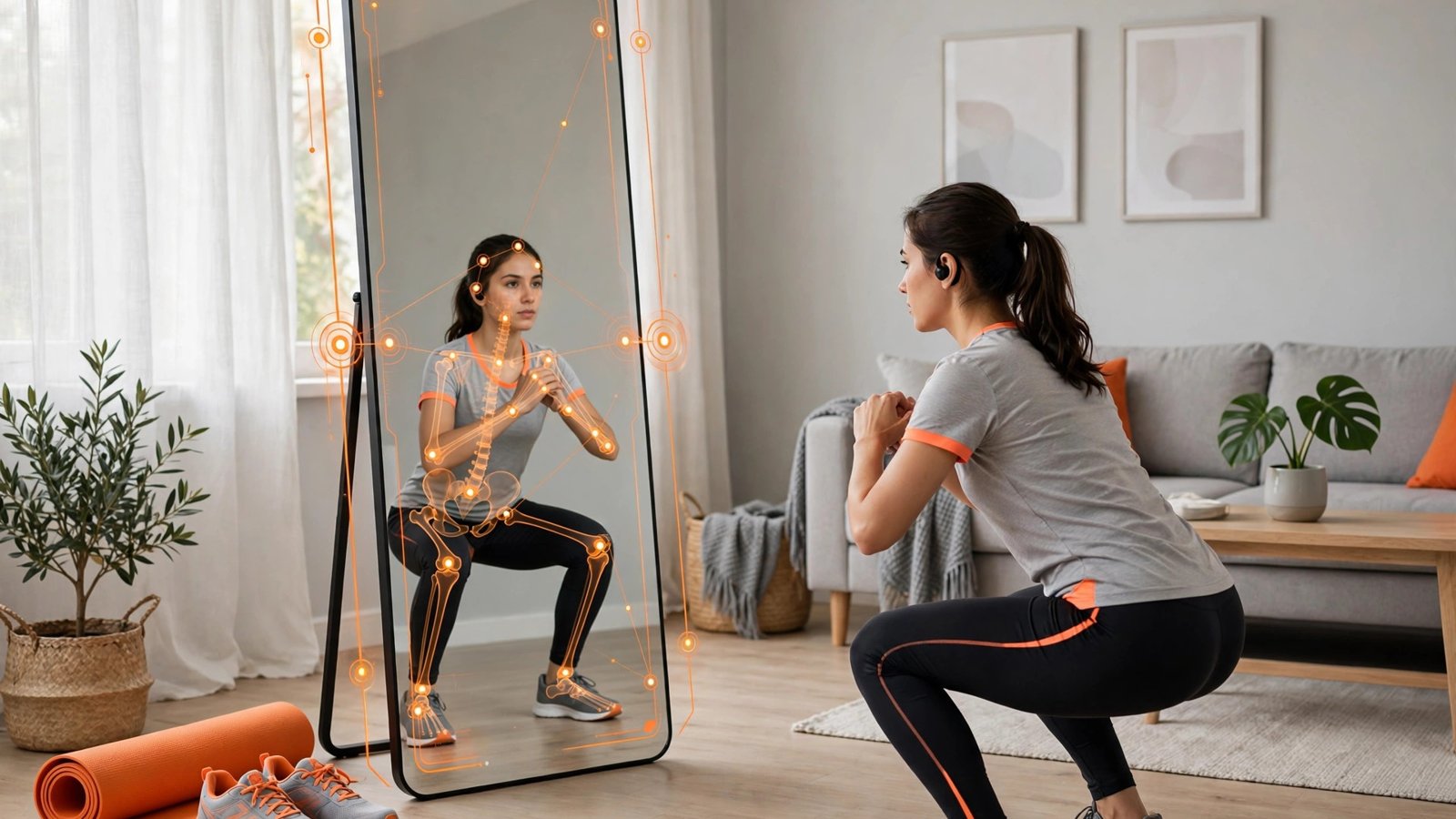
Whether an AI fitness mirror is worth buying depends on whether you will actually stand in front of it and train. At heart it is a full-length mirror with a camera and a screen: follow a class and it counts reps, recognizes movements and flags obvious form errors. For people who cannot hire a personal trainer but worry about training wrong, that is a real skill. But the hardware price is only the entry ticket; if the course subscription, the two square meters at home and camera privacy do not pass, within a month it becomes a very expensive dressing mirror.
Where the real value is
First, immediacy of form feedback. A phone on a stand gives you a video to review after the set; the mirror warns you during it, knees caving in, squat not deep enough, tempo off. It reads joint positions, not effort or pain signals, but it catches a good share of basic form breakdowns. Second, complete counting and programming: following a class means no choreographing your own exercises or counting sets, which lowers the activation energy a lot for someone whose brain is done after work. Third, space manners: when idle it is just a mirror, far friendlier in a small flat than a treadmill or elliptical.
Count the thresholds first
Space is a hard threshold. The camera needs your whole body, which usually means about two meters of depth between you and the mirror, plus lateral room for wide movements; in a small living room, even moving the coffee table may not be enough. The subscription is a running cost: the mainstream model in this category is hardware plus a monthly fee, with the overseas representative FITURE charging around 39 US dollars a month for content, while domestic brands price differently; if you stop paying, the class library and parts of the feedback may be limited, so confirm what still works without a subscription before buying, that matters more than specs. Then network and light: recognition runs on the camera, and backlight, dim rooms or clothing close in color to the background all drag counting and correction accuracy down.
The parts that are not worth it
Form correction has a ceiling. It can judge joint angles and movement paths; it cannot judge whether you should push through fatigue, and it cannot see old injuries or pain. Treating it as a full replacement for a trainer leaves the injury risk on you. Content freshness depends on the vendor's operation and survival; the fitness mirror category has already seen brands shrink or exit markets in recent years, so check the brand's update cadence and support channels over the past year before paying long-term fees for a library that may stop growing. And it does not lower the discipline requirement at all; it only removes the trip to the gym. Anyone whose treadmill became a clothes rack will hang clothes on the mirror too.
Verdict by person
Worth it for people with no time for a gym, an existing home-training habit, and form that trainers keep correcting; it targets exactly your bottleneck. Beginners who have not yet proven they can stick with it for three months should wait: train with free video classes and phone recording for three months first, and by then you will know whether what you lack is correction or company. If your home has no two meters of depth, or a permanent living-room camera bothers you, skip the category and look at wearables plus classes instead. And if the budget covers hardware but not the subscription, also skip it; half of this product's experience lives in the content, and buying only the mirror buys only half.