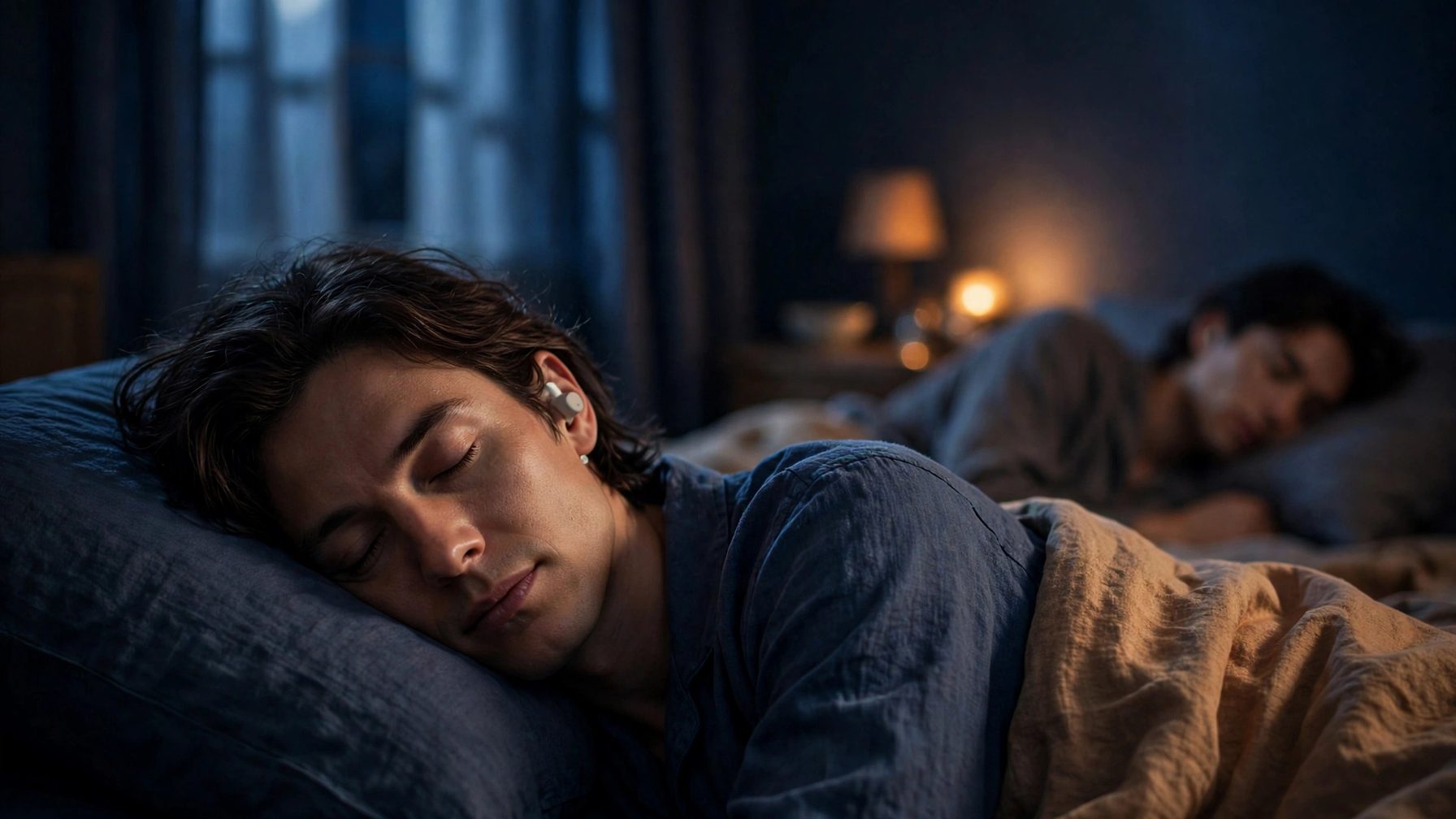
Whether AI sleep earbuds are worth buying depends on what actually wakes you: a partner's snoring, traffic below the window, hotel corridor noise, they are built for that. If your problem is a mind that will not switch off or late-night phone scrolling, they will not fix it. The category has moved from niche to mainstream shelves, led by tiny in-ear designs like Anker's Soundcore line: one tier does passive isolation plus sleep audio, the next adds active noise cancellation and snore masking.
Where the real value is
First, the shape. Ordinary true-wireless buds hurt when you lie on your side; sleep earbuds are made thin and small, with soft silicone and ear wings, so they do not dig in against the pillow, and that is the fundamental difference from making do with regular buds. Second, the noise strategy: models with active cancellation, such as the Sleep A30, go beyond cancelling and monitor for snoring, automatically playing masking sound that turns broken snore bursts into a flat background, while the cheaper A20 skips ANC, relies on fit-based isolation plus preset sleep sounds like white noise and rain, and in exchange lasts longer, well over ten hours in sleep mode. Third, they log rough sleep duration, movement and snoring for a morning glance in the app; treat that as orientation, not measurement, since a watch or band does it better.
Thresholds, and where it is not worth it
Battery is the first gate: high-end models running cancellation plus audio often manage only six to nine hours per charge, so long sleepers may have them die before morning, and the sudden silence when they shut off can itself wake you. Hygiene is the second gate: in-ear tips worn all night keep the ear canal warm and damp, tips need regular cleaning, and anyone prone to ear inflammation should ask a doctor before wearing them nightly. Third, masking is not erasing: low, steady snoring is covered well, but loud, sharp, wildly varying snoring defeats it more often than the demos suggest. Fourth, some advanced sound libraries and sleep analytics in the app sit behind subscriptions or ecosystem accounts, so check what keeps costing money after purchase. Fifth, loss: each bud weighs a few grams and will end up in the bed frame or under the bed, so check find-my-buds features and single-bud replacement prices in advance.
The verdict by person: if snoring or environmental noise wakes you night after night and you have to share the room with the source, the ANC-plus-masking tier is the one genuinely on target. If you only fear noisy hotel rooms on occasional trips, a passive budget model, or plain earplugs plus phone white noise, is enough. If you sleep fine and are merely curious about sleep data, skip it; earbud sleep staging is no more accurate than a band's. And if in-ear devices hurt or your ears are inflamed, pass on the whole category and deal with the ears first.