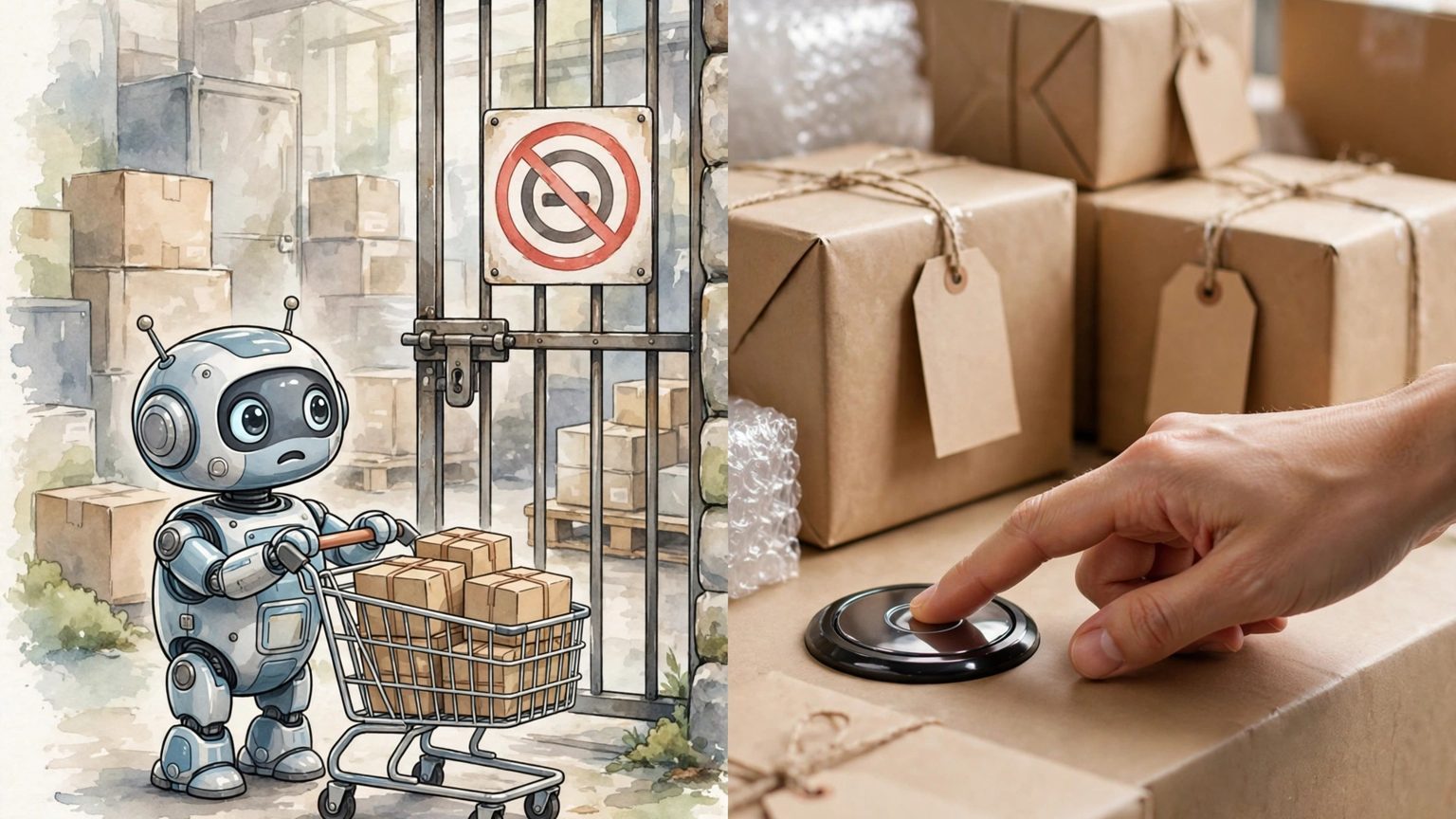
Agent shopping is one of the loudest scenarios in this AI race: let an agent browse stores, compare prices and place the order for you. On October 16, 2026, a16z's weekly charts roundup pulled together data from Cloudflare, the National Retail Federation and Similarweb, and poured measured cold water on that narrative: e-commerce platforms are systematically shutting shopping agents out, and consumers themselves are far from ready to hand over the right to pay.
The blocking is in the data: 403 responses roughly doubled since summer
In Cloudflare's data, the share of 403 Forbidden responses served to agents and bots has climbed noticeably since this summer, to roughly twice its earlier level. a16z's reading is that large e-commerce platforms refuse to be bypassed: once the user talks only to an agent, the platform loses both its direct customer relationship and the advertising revenue built on human eyeballs. Returns and fraud make it worse. National Retail Federation figures show return rates roughly doubling and the total cost of returns roughly tripling since 2019, with dispute abuse the most common fraud worry. If an agent placed the order, who owns a wrong purchase and who pays the return shipping has no settled answer, so platforms closing the door first is no surprise.
Consumers will let AI do only the middle of the job
Demand-side data is just as restrained. About a quarter of survey respondents said they would let AI buy most consumer goods for them, luxury goods aside, but 42% said they would not trust AI to make purchases on their behalf at all. Similarweb clickstream data lines up: more shopping journeys pass through AI in the middle, yet the vast majority of AI shopping sessions sit in the phase between discovery and purchase — research, homework, price checks — while a human still presses the final buy button. That also explains why capabilities like ChatGPT controlling Chrome tabs directly landed first on browsing and organizing: the least resistance sits furthest from payment.
What is really stuck is attribution and liability
a16z flags a consequence that is easy to miss: if a consumer is persuaded during an AI-led middle phase but then buys in a separate session, advertising attribution breaks — nobody can say who caused the purchase. For teams building shopping agents, the data carries a concrete lesson: the realistic near-term form is a halfway model where AI does the homework and the human decides, and permission tiers, spending caps and revocable confirmations matter far more than checkout speed. Agent shopping truly opens only when platforms give agents an official lane and the industry settles return liability; until then, the door stays shut, with the data to justify it.