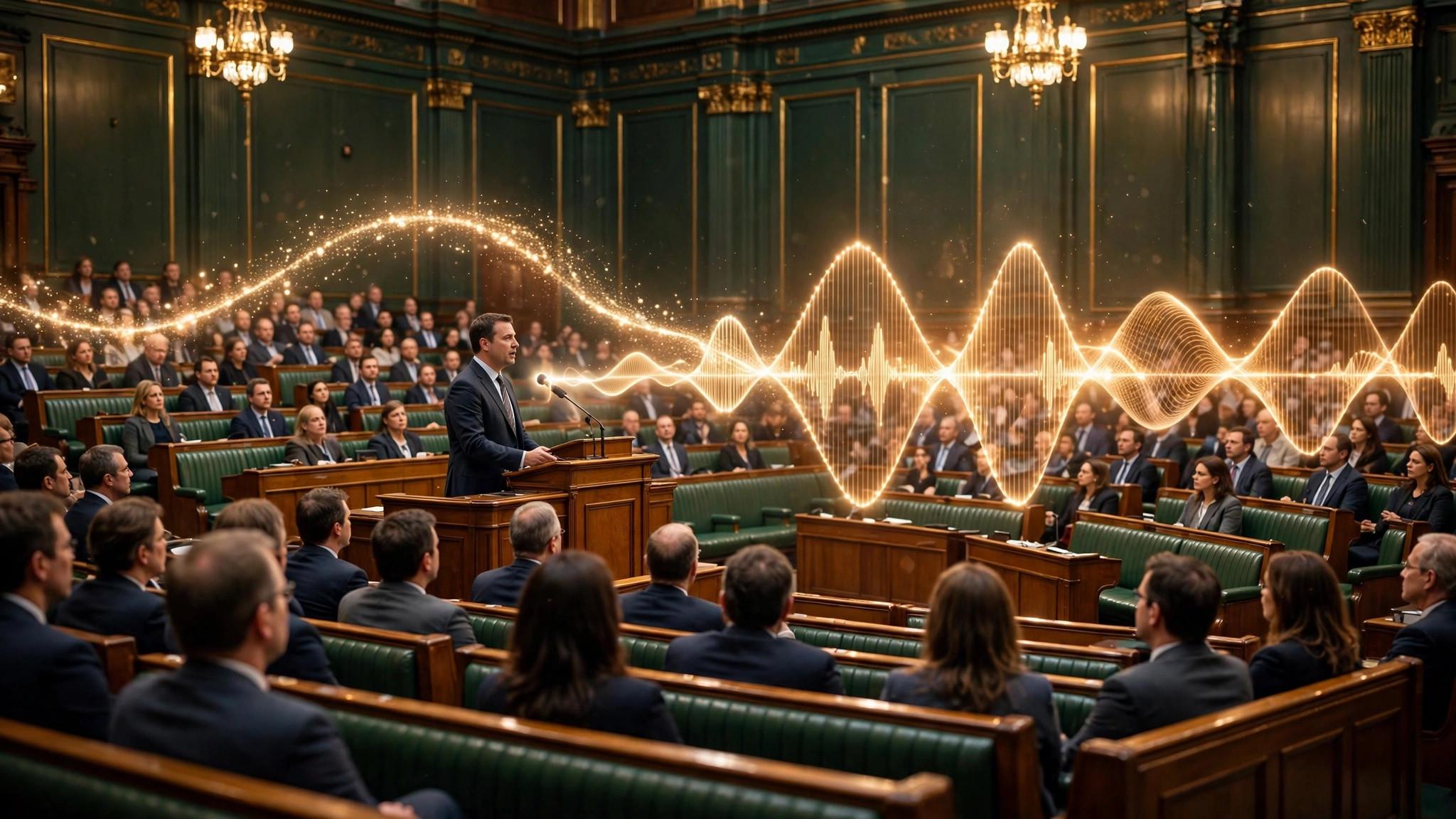
The ElevenLabs voice clone heard in the UK Parliament on October 13, 2026 marked a first for the institution. During a debate on a health bill that day, Baroness Campbell of Surbiton opened in her own natural voice, supported by a ventilator, and then switched to a recreation of her voice built by ElevenLabs to deliver her speech — the first time an AI-recreated voice has been used to address the chamber. ElevenLabs announced the moment on its official account, and AFP and The Times reported and verified the details the same day.
A voice she had been waiting more than a decade for
Campbell lives with spinal muscular atrophy, which has progressively weakened her speech. In 2012 the Lords' procedure committee had already made an exception for her, allowing an assistant into the chamber to read her speeches — itself a departure from a 1707 ruling that bars non-peers from the floor. The AI voice was likewise approved by the procedure committee in advance. The clone was built from recordings of past interviews, including a radio appearance, recreating the tone, rhythm and pitch of the clear voice she had before her condition progressed. She introduced it to the chamber as "Baroness Campbell Mark 2" and said it would let her contribute to debates in her own once-clear voice, calling it a showcase of inclusion in democracy. Gabi Leibowitz of ElevenLabs told AFP the team worked with her briefly to fine-tune the clone so it felt authentic; the technology needs as little as 30 seconds of audio, though 30 minutes to an hour is recommended for the best quality.
Why this is more than a feel-good story
The order of operations matters: the subject commissioned a clone of her own voice, a parliamentary body approved its use in advance, and the chamber was told openly that a recreated voice was speaking. A voice is the part of a person's digital likeness that can now be cloned most completely; used without consent, the same technology is fraud and forgery, while inside this procedure it became an accessibility tool — the difference lies in consent and disclosure, not in the model. ElevenLabs says its technology has helped more than 11,000 people who lost their voice to injury or illness, and it aims to reach one million. Our earlier report on ElevenLabs doubling its valuation to $22 billion on the voice agent boom covered the capital side of this business; the Lords speech supplies the application-side evidence.
How far the barrier has fallen for people losing their voice
Before AI cloning, banking a voice meant recording close to 400 sentences before losing it, and the result still sounded relatively robotic, carried little feeling and worked in only one language. Now, well under an hour of archival audio can serve as a starting point, with emotion tags to shape delivery. For people with progressive conditions, that removes the race against the clock at diagnosis: interviews and recordings they already have may be enough to restore a way of speaking. Campbell is 68; doctors once predicted she would not live to see her second birthday — and her speech itself is a footnote on how wide this technology's reach has become.