An OpenAI employee allegedly hid a recording device behind a television in an executive conference room. On October 13, 2026, the U.S. Department of Justice unsealed a complaint in the Northern District of California and announced an arrest: Abdulrahman Alfozan, a 35-year-old Saudi national, was arrested on October 9 and made his initial court appearance, charged with using or endeavoring to use an electronic device to intercept oral communications. OpenAI said the same day, in a post on its official account, that the employee had been fired and the matter referred to the FBI.
The device was found at the end of September
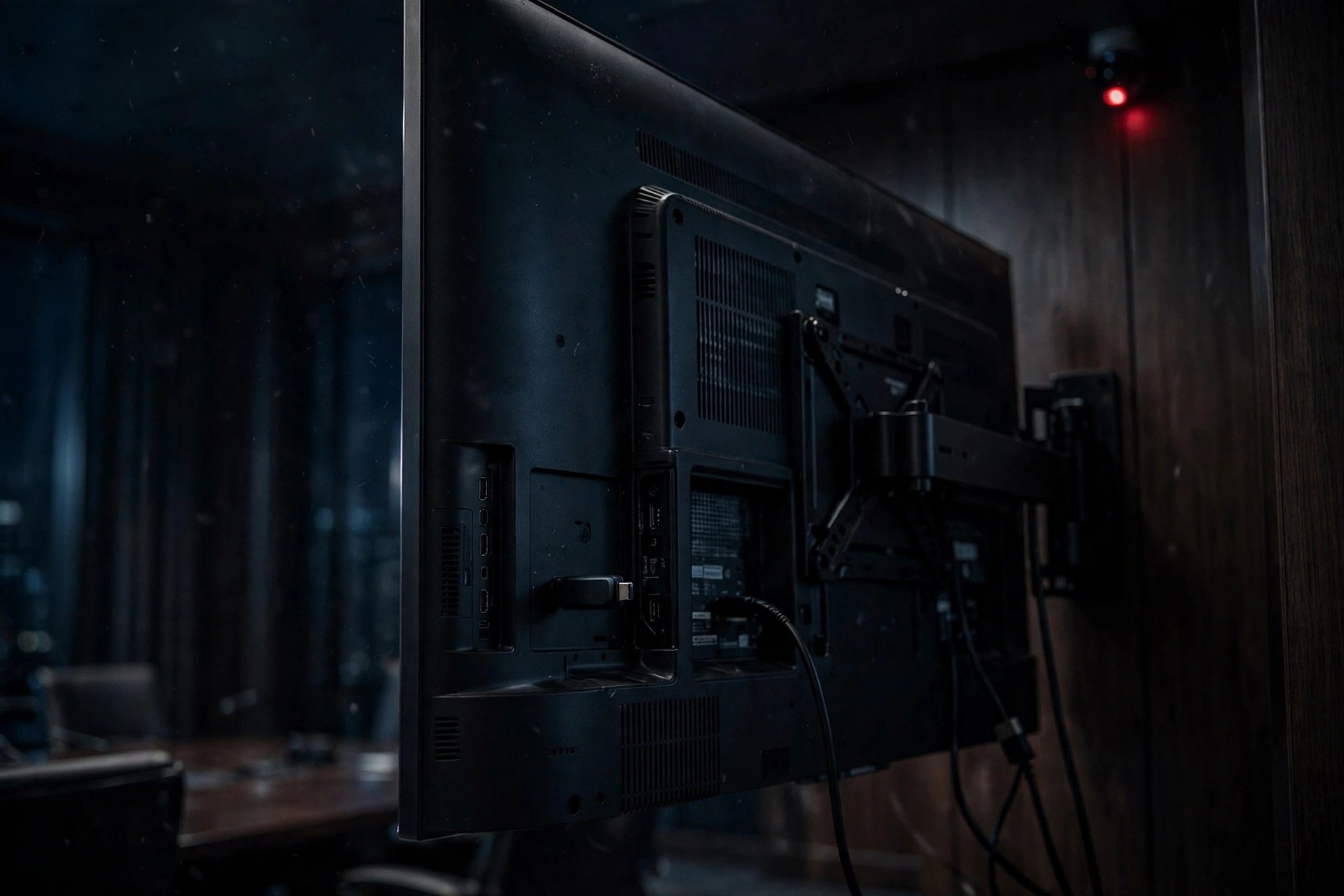
According to the complaint, the device was installed on or about September 28, 2026. It sat in a USB port on the back of a television in a San Francisco executive conference room, concealed in toilet paper, and its contents were encrypted; OpenAI staff did not discover it until September 30. That room was used for highly confidential discussions — proprietary research, product plans, technical progress, government engagements, and commercial relationships. Surveillance footage showed Alfozan near the room on multiple dates before the discovery, although he had no authority to enter it or attend its meetings. On October 5, he entered the room and looked behind the television; the same day, a bag he left unattended in another building contained his wallet, ID, and a second recording device similar to the first.
Some of the trail came from chatbot prompts
The complaint cites two easily overlooked details. Before September 28, Alfozan used a productivity tool to make repeated inquiries about OpenAI building addresses, meeting-room locations and capacities, where leadership and executives sat, and external partner meetings. Separately, a chatbot account associated with his spouse — one sharing multiple identifiers with his own account — submitted prompts between September 24 and 30 about building, customizing, installing, and remotely accessing an audio recording device, including improving live listening and encrypting an SD card; prompts on September 27 and 28 even referenced the device's custom header and unique MAC address. OpenAI said it used its internal models to understand the device and where it came from, identified the employee, and alerted the FBI. These remain allegations in a criminal complaint; Alfozan has not been convicted.
No sign of weights or code being taken, the company says
One qualifier in OpenAI's statement matters: at this time, it has no indications that the individual inappropriately accessed or exfiltrated model weights, source code, or customer data. The Justice Department set out the maximum penalty if convicted — five years in prison, a $250,000 fine, and three years of supervised release — and the FBI investigation is ongoing. FBI Director Kash Patel characterized the scheme as capturing sensitive communications about the company's super intelligence technology, and Director of National Intelligence Jay Clayton framed protection of frontier intellectual property as a national security matter. Who the recordings were meant for, and why, is still unknown: the complaint does not allege direction by any foreign government, and TechCrunch noted on October 13, 2026 that the purpose remains unclear.
A warning shot for every frontier lab
Much of a frontier lab's most valuable knowledge is never written down; it lives in spoken discussions about unreleased model capabilities, roadmaps, and negotiating positions with government customers. That kind of asset is exposed not only to outside hackers but to insiders with valid badges. How this case broke is equally instructive: the device's encryption did not stop investigators, while behavioral traces — repeated appearances near a room he could not enter — and a string of chatbot questions about building a recorder assembled the chain. For people who work at AI companies, even casual questions to an AI assistant can become part of a compliance record. For the labs, security budgets are visibly expanding from stopping intrusions to countering insider threats.