Muse Wonder is the first frontier model series Meta released on October 12, 2026. In its official announcement, Meta introduced Muse Wonder and Muse Wonder Full together, calling them its most capable models to date, with state-of-the-art performance on personal and professional agentic tasks. The launch comes fourteen months after Meta overhauled its AI efforts, and it is the first time its superintelligence lab has fielded a frontier model meant to compete head-on with OpenAI and Anthropic, rather than a lightweight design like Muse Spark.
Two models, two different doors in
The two models are not sold the same way. Muse Wonder is available now through the Meta Model API and Muse Code; TechCrunch reported the same day that API pricing is $4 per million input tokens and $20 per million output tokens, roughly in line with GPT-6 Sol and Claude Opus 5.5. Muse Wonder Full, by contrast, is reserved for Muse Code subscribers and will not be served through the API. Both models will later power Meta's Muse agent, rolling out to subscribers first. In third-party testing published the same day by Artificial Analysis, Wonder scored 52 and Wonder Full 56 on its Intelligence Index, while Meta's own testing describes benchmark performance comparable to Fable 5.1 and GPT-6 Astra. Neither the vendor numbers nor the third-party index has been independently reproduced yet; the real gap will only show once developers run their own workloads.
Active Memory and Active Focus target two old weaknesses of long tasks
Notably, Meta put memory ahead of coding in its pitch. Active Memory is the ability to carry what matters to a user across conversations and bring back the relevant details when a new task needs them; on MemoryBench, a benchmark built for continual learning and memory construction, Meta says Wonder now scores above Fable, Opus and Astra. Active Focus addresses execution: when a task gets hard, the model keeps working toward the goal, tries other approaches, recovers from errors and follows through, checking in before anything important. The use cases Meta names are insurance claims, leases and personal finances, plus expert domains such as law, finance and health, alongside frontier coding. Underneath the marketing sits a plain admission: the bottleneck for agents is no longer only single-answer quality, but whether a model can remember context and finish a long job.
Training site, safety framing, and what is still undisclosed
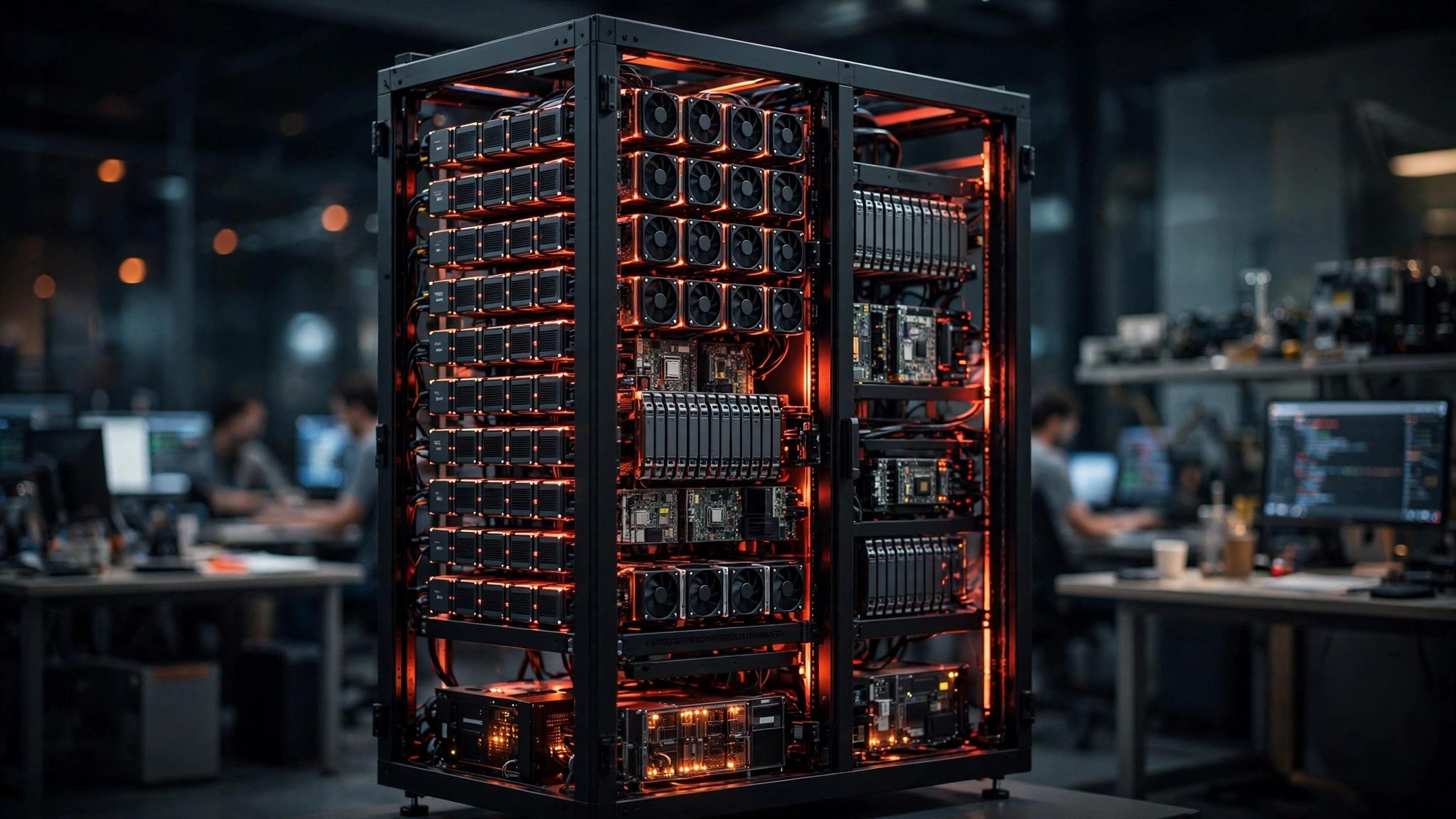
Meta says the models were trained at its Prometheus data center in central Ohio, which came online earlier this year. On safety, the company says the family is trained to avoid sharing private information without permission, to refuse help with genuinely harmful acts, and to be evaluated under its superintelligence scaling framework, with a full safety report to follow. Several key specifications, however, remain undisclosed: no context window, parameter scale or knowledge cutoff has been published, and keeping Wonder Full away from the API means enterprise users cannot yet call the strongest version from their own systems. The model's real standing will become clear only when two things land: how it performs on long tasks for Muse subscribers, and whether independent evaluations reproduce the memory results. Until then, this launch reads more as Meta's signal that it is back at the frontier table than as a verified generational verdict.