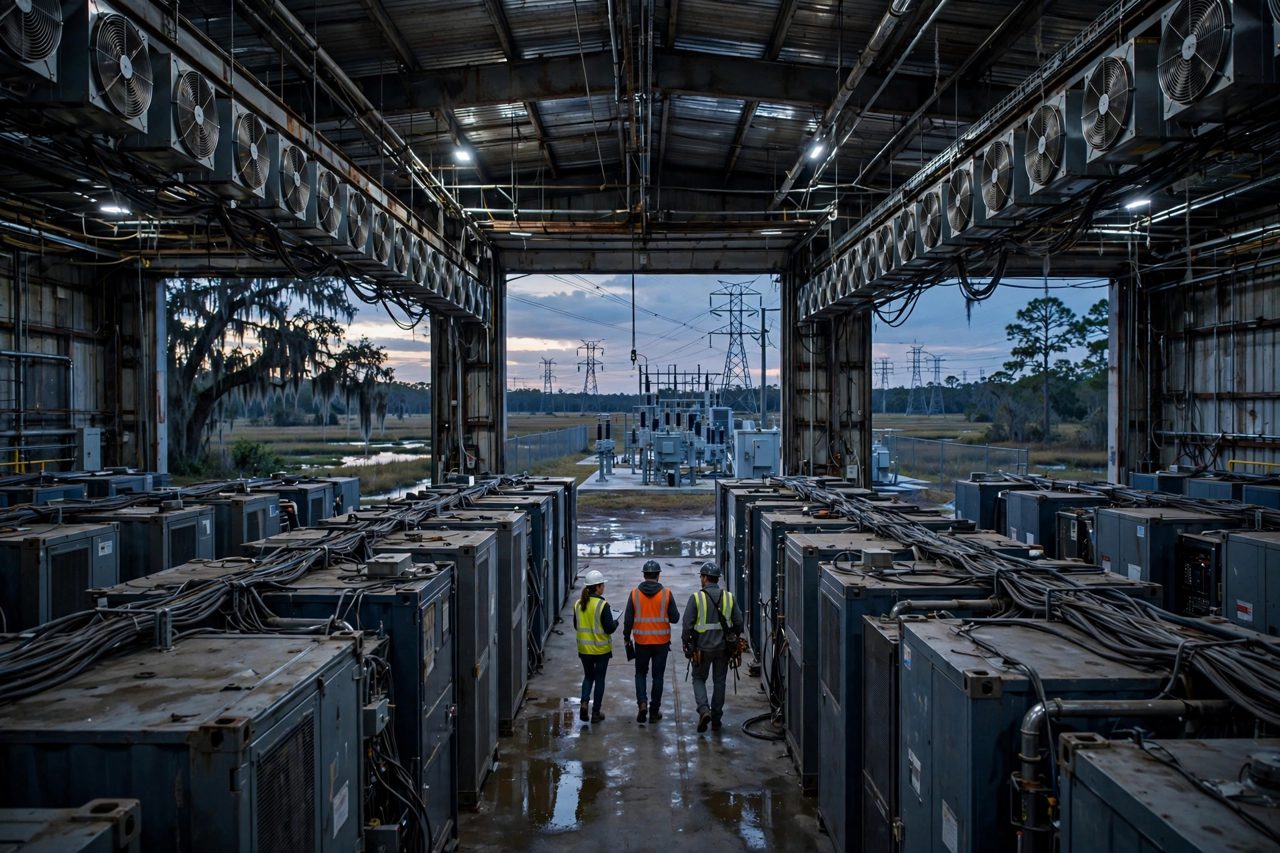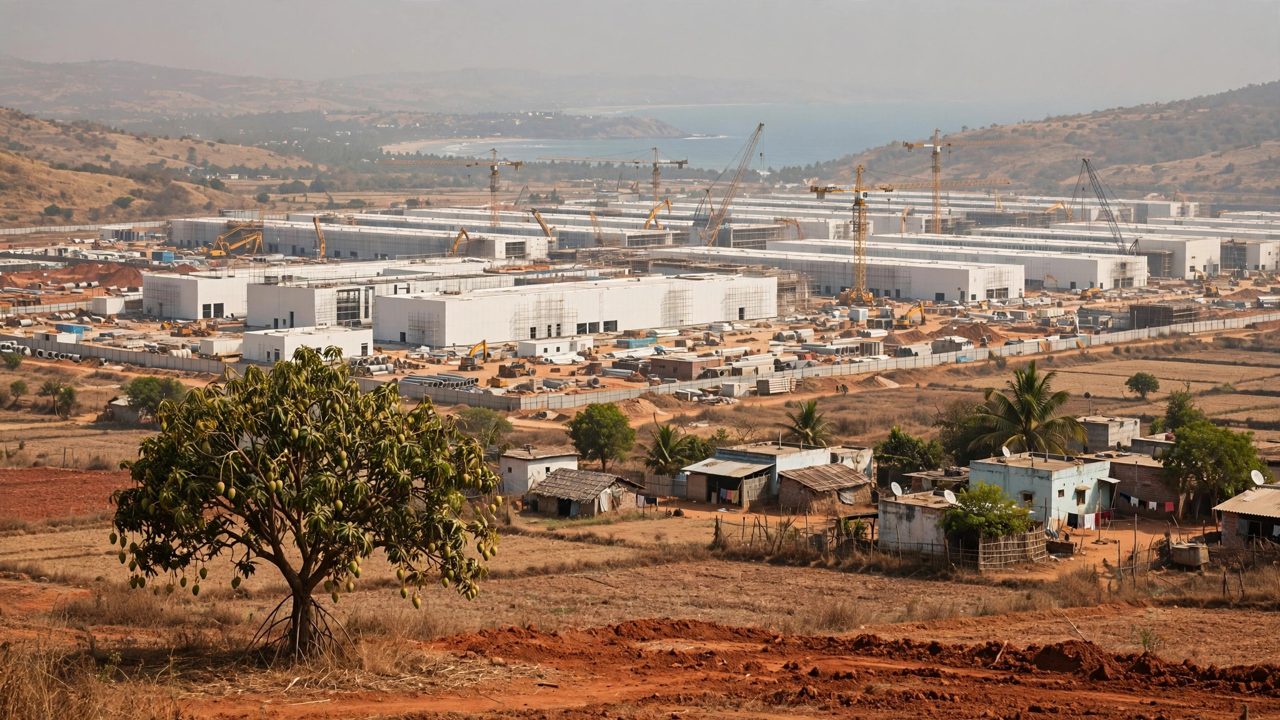
Google's $15 billion India AI hub ran into a new development in its siting dispute on October 11, 2026. AFP published an interview that day with Alexander Smith, Google's head of infrastructure and energy for Asia-Pacific: the gigawatt-scale AI hub in Visakhapatnam, Andhra Pradesh, will use advanced air cooling instead of water cooling, because Google's own water assessment found the local watershed already under pressure. The project involves roughly $15 billion of investment planned for 2026 to 2030, developed with the Adani Group across about 600 acres, with three data center campuses and a subsea cable landing station. It is scheduled to start operating in 2028 and would be Google's largest AI hub outside the United States.
What local residents are actually worried about
Farmland around the site has already been cleared, and some farmers who accepted compensation remain bitter about it. One local farmer told AFP that seeing the land where her mango and cashew trees once stood reduced her to tears. Residents and environmental groups are not worried about one thing but four bills arriving at once: whether cooling and daily operations will squeeze an already tight water supply, whether gigawatt-scale power demand will strain the local grid, who bears the ecological cost of 600 acres, and how many of the promised jobs will actually go to local people. Activists have made a concrete demand: a moratorium on new data centers across Andhra Pradesh until independent environmental and social impact assessments are published. In August 2026 the Andhra Pradesh High Court heard a challenge to the project's environmental clearances, but did not stop construction.
Google's answer: air cooling, assessments, and no competing for power
Smith's response has three parts. First, Google runs independent environmental assessments 12 to 24 months before a project begins, covering grid stability, water risk, ecology and noise. Second, the Visakhapatnam project was designed around its water assessment from the start and chose air cooling rather than drawing water from a water-stressed area. Third, if a location lacks sufficient power and building a data center would mean taking supply away from the community, Google will either develop more power or not build there. He also said the company will fund upgrades to local power infrastructure and invest in additional clean-energy projects. It is worth noting that all of this is currently the company's own account: air cooling does eliminate direct cooling-water use, but air cooling itself consumes more electricity, and the facility's overall power demand does not shrink.
Two sets of jobs numbers, more than forty times apart
The clearest point of friction is jobs. Google's figures are about $688 million in local economic activity per year, roughly 4,200 construction jobs, and several hundred specialist roles once operations begin in 2028. The Andhra Pradesh government, by contrast, expects 188,000 direct and indirect jobs, without explaining what that estimate covers. The two figures differ by more than forty times, and the gap itself is one source of local resentment: if residents give up land and water and receive only temporary construction work and a few hundred jobs for outside specialists, the deal does not look worthwhile from where they stand.
The real test comes after the opening, not the groundbreaking
Visakhapatnam is a subsea cable landing point on India's east coast, and the siting logic is impeccable from Google's side. But the project is also becoming a case study in how global AI infrastructure gets built: the bottleneck in the compute race is increasingly not chips, but water, power, land and community permission. By putting air cooling and environmental assessment front and center, Google is signalling that a data center's social license is now part of the project schedule, just like its permits. The real test comes after operations begin in 2028: whether independent monitoring data is published, whether the promised new power materializes, and which set of jobs numbers reality converges toward. If those questions go unanswered, the data center projects queuing up in other Indian states will likely replay the same dispute.