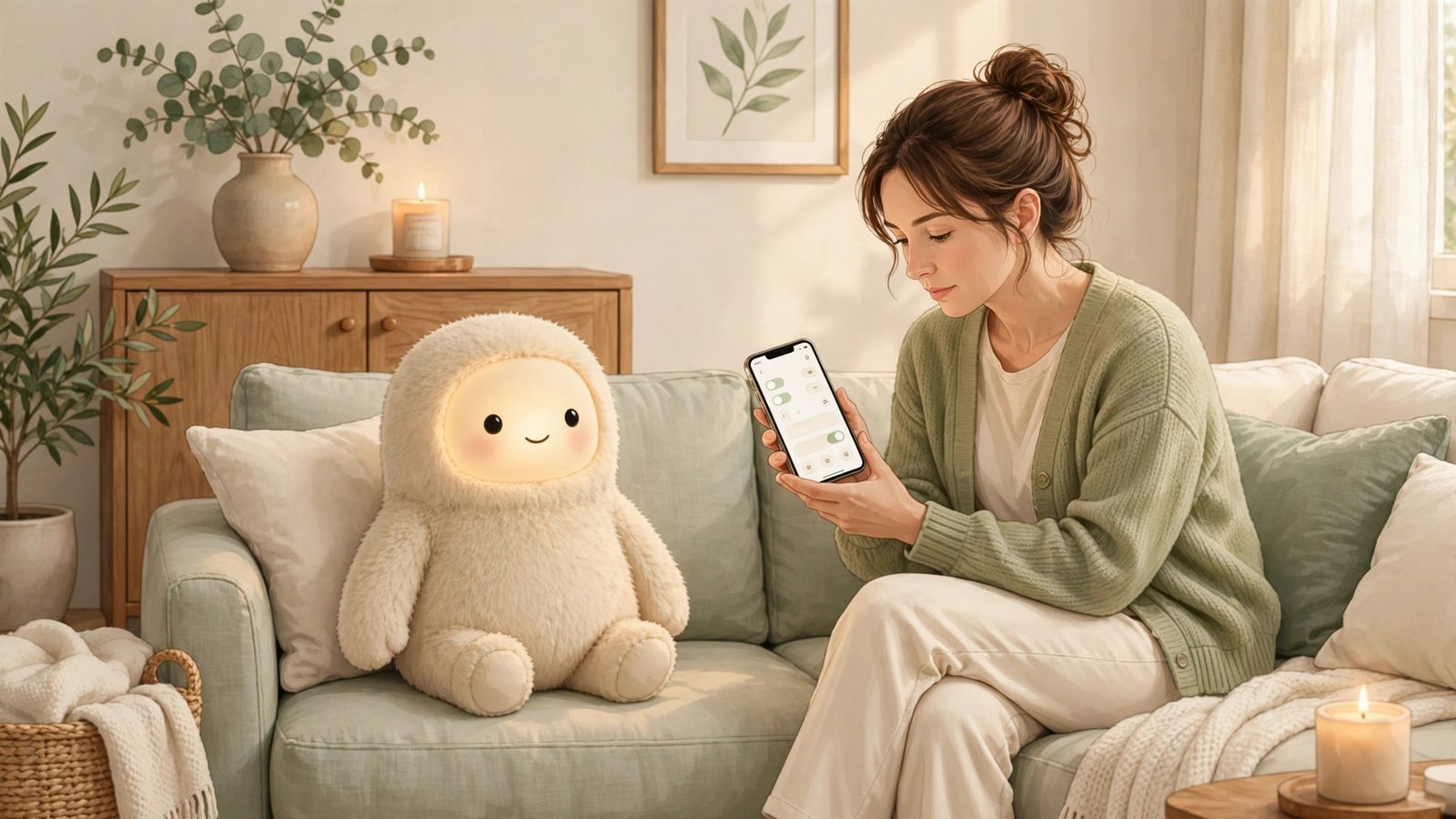
Whether an AI companion toy is worth buying hinges not on whether it can chat, but on what remains once the chatting is stripped away. These products usually take a plush or desktop form fitted with a microphone, a speaker and a connected large model, able to converse, tell stories and answer questions, some with expression screens and touch responses. As a story partner for a child or a talking companion for an older person living alone, the pitch sounds lovely, but three costs must be counted before ordering, and none of them appears on a spec sheet.
Cost one: what keeps it in use after the novelty fades
The novelty of conversation fades fast. If the dialogue is generic question-and-answer, a child will discover within a week or two that it cycles through the same few routines, and the device ends up in a corner. What genuinely stretches a product's life is regularly updated story and lesson content, memory that holds names and preferences, and interactive play the whole family can join. When choosing, do not stop at a three-minute demo chat. Ask how often content is updated, how long memory lasts, and what still works if updates stop. Products that rely on the raw model alone, with no content of their own, are the most likely to gather dust.
Cost two: subscription and privacy outweigh the sticker price
For many companion toys the price is only a ticket in; core conversation and content sit behind a monthly or yearly subscription, and cancelling may disable chatting altogether. Count the three-year total before buying: device price plus three years of subscription, compared with a tablet plus content apps, and the gap is often smaller than the marketing suggests. Privacy is the other side. Such a device lives in bedrooms and living rooms for long stretches, and a child's voice travels to the cloud for processing. Confirm whether recordings can be deleted, whether parents can view records and switch recording off, and whether the microphone has a physical switch or a clear indicator when idle. A brand that cannot explain where the data goes should wait, however cute the product looks.
Cost three: it cannot replace human company
Companionship is the word vendors love most, yet its core, responding to real feelings and remembering shared experiences, is exactly where these products are shallowest. If a child treats it as the only confidant, or an older person as the main conversation partner, the risk is that it crowds out time with real people. The safer positioning is a small household tool with specific jobs: bedtime stories, English read-alongs, reminders to drink water or take medicine. Decide in advance which two or three jobs it will hold, because a device with a clear post rarely gathers dust. Households that already own a smart speaker and a tablet, whose children show no interest in voice chat and who do not intend to renew a subscription, can skip it entirely; the money does more good spent on books or an in-person activity.