
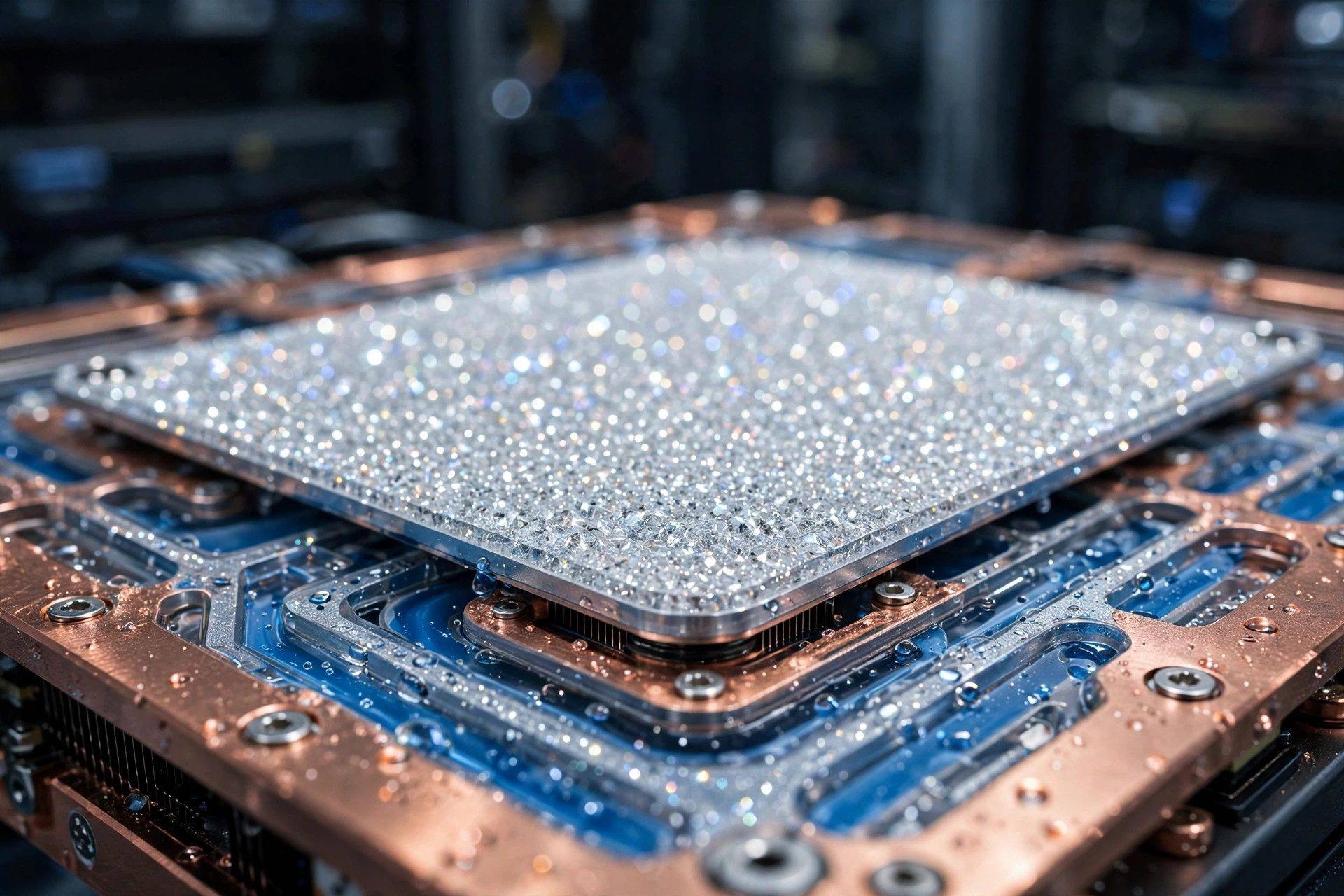
Frore Systems unveiled the LiquidJet Diamond coldplate on October 8, 2026, integrating a diamond heat-spreader layer into the base of its liquid-cooling coldplate for data-center GPUs. The company claims it cuts hotspot temperatures by a further 10°C and raises tokens per watt by 35% versus traditional coldplates. As GPU power density keeps climbing, cooling hardware is moving from background plumbing to a variable that decides output per watt — but every number in this launch comes from the vendor's own testing, so start with what actually changed.
One change: diamond at the bottom of the coldplate
The original LiquidJet uses a 3D ultra-short-loop, multi-stage channel design customized to each GPU's power map, aimed squarely at hotspots; Frore says it already lowers GPU die temperature by 12°C versus traditional skived coldplates, worth 25% more tokens per watt. The Diamond version keeps that structure and adds one element: a spreader with integrated diamond wafers at the coldplate's base, using diamond's extreme thermal conductivity to flatten hotspots before the liquid channels carry the heat away. Against traditional coldplates, the vendor's comparison claims GPU temperatures 16–22°C lower, hotspot cooling power density more than 150% higher — up to 770 W/cm² — heat transfer efficiency 75% higher, 30–35% more tokens per watt, and a drop-in upgrade path. Frore also plans a live demonstration at OCP 2026, running the coldplate on a 2,300W NVIDIA Rubin solution.
Why operators fight over 10 degrees
For an operator, temperature is not a comfort metric; it is how much output a given power budget buys. If hotspots cannot be held down, GPUs throttle, or power-capped facilities install fewer of them. That is why the pitch is written directly in tokens per watt. If the in-house numbers hold, a coldplate swap could raise a facility's output ceiling without redesigning racks, manifolds or liquid loops — hence the emphasis on drop-in. For chips like NVIDIA Rubin, whose power keeps pushing upward, the power density a coldplate can keep up with is becoming a purchasing criterion on par with the chip itself.
Hold the order: independent tests and the cost line are missing
The cold water is specific. Figures such as 35% and 770 W/cm² currently rest on Frore's word alone, with no public validation from an independent lab or a customer. The company disclosed nothing about the diamond layer's cost, yield or production timeline, and however strong a coldplate is, buyers ultimately compare the output gain per watt against the price premium. The OCP 2026 live demo is the first observable checkpoint: if the plate delivers close to its claimed temperatures under a 2,300W load, the diamond coldplate will have moved from launch parameters to engineering evidence. Until then, read it as a clear signal of direction — competition among AI factories has reached the coldplate layer.