AI robot vacuums love to talk about mapping, object recognition and pet awareness these days, as if a cleaner had moved into your home. Once you live with one, you learn that knowing the layout is not the same as cleaning well. Whether it actually saves you effort depends on navigation, obstacle avoidance and the dock — and just as much on whether your floors cooperate. These machines are not a gimmick, but they are not a blind buy either: the right household will use one daily, the wrong one will park it within a week.
Where it genuinely helps: fewer detours, fewer chores for you
Once laser or camera navigation has built a map of the home, the robot cleans room by room along a planned route instead of bouncing around and missing the same corners like early models did. Obstacle recognition has genuinely improved, too: better machines spot charging cables, slippers, socks and even pet mess, and steer around them instead of pushing them along or rolling straight through. A dock with auto-emptying and mop washing matters even more — no daily dustbin emptying, no hand-washing pads; you are left with periodic bag changes and dock cleaning. For pet owners, a scheduled full-home run is the biggest win: loose hair is picked up before it gathers into tumbleweeds, and floors and socks stay noticeably cleaner.
Cost one, the entry barrier: you tidy up before it can work
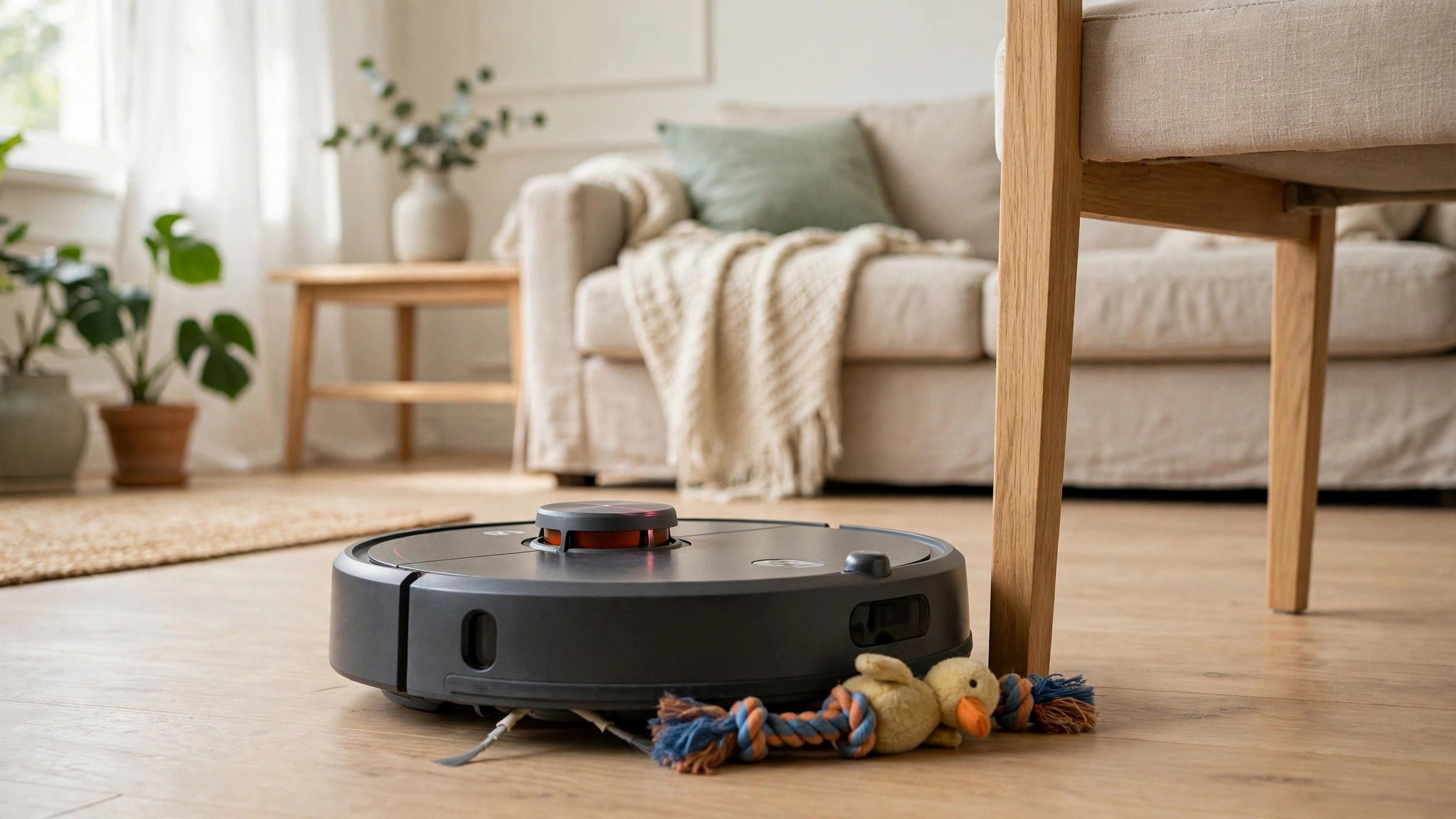
A robot vacuum has a precondition: the floor has to be clear first. Leave charging cables, children's socks and small toys lying around, and even the smartest avoidance system will eventually slip up — tangled, stuck, or dragging a cable across the room are all common endings. The home itself filters buyers, too. A threshold higher than about two centimetres is a wall it cannot cross, so you end up carrying it. Dark carpets can fool cliff sensors into seeing a drop, and the robot refuses to cross. Split-level and multi-storey homes mean repeated mapping and carrying the machine between floors, which hands the saved effort right back. The tidier the floors and the flatter the layout, the more it behaves like help.
Cost two, the long run: the sticker price is only a down payment
Stare only at the price of the main unit and you will underestimate the bill. Filters, side brushes, main brushes and mop pads are all consumables that wear out or start to smell and need regular replacement, and a year of them adds up. The dock is not maintenance-free either: the clean-water tank needs refilling, the dirty water needs emptying, and trays and pipes left unwashed develop odours, with limescale on top in hard-water areas. The battery ages as well — after two or three years capacity fades noticeably, runs get shorter, recharging more frequent, and a replacement pack is another expense. Spread all of that across the machine's life and compare it with cleaning yourself or paying for help before judging whether it is expensive.
Cost three, the gap: big numbers do not mean a clean floor
Marketing pages love stacking chip performance and suction figures in pascals; bigger numbers sell, but high suction does not guarantee clean edges or grit pulled out of carpet pile. What actually decides the result is often unglamorous work: brush design, how closely it hugs the skirting board, how much pressure the mop applies. Get those right and modest specifications still clean well. Treat avoidance demos with scepticism, too — they are filmed in bright light on empty floors, while at night, in backlight, or among dark furniture, recognition accuracy drops noticeably. Do not let a staged video convince you; what matters is whether it finishes a run reliably under your lighting and your level of clutter.
Privacy and fit, last: think before a camera moves in
Models with cameras record your rooms, build floor plans and send them to the cloud — convenient, but it hands over your most private spaces. Before ordering, check three things: whether images are processed locally, whether the camera can be switched off completely, and whether you can delete the floor plan yourself. In the end, these machines suit pet owners in larger, flat, open homes who will happily let one run every day. They are a poor fit for small, clutter-filled flats, homes full of thresholds and steps, or anyone expecting a full replacement for a deep clean — edges and the depths under the sofa still need a human pass. Households on an entry-level budget that also keep pets should be especially careful: cheap avoidance fails often, and it is better to save longer for the tier with obstacle recognition you can trust.