
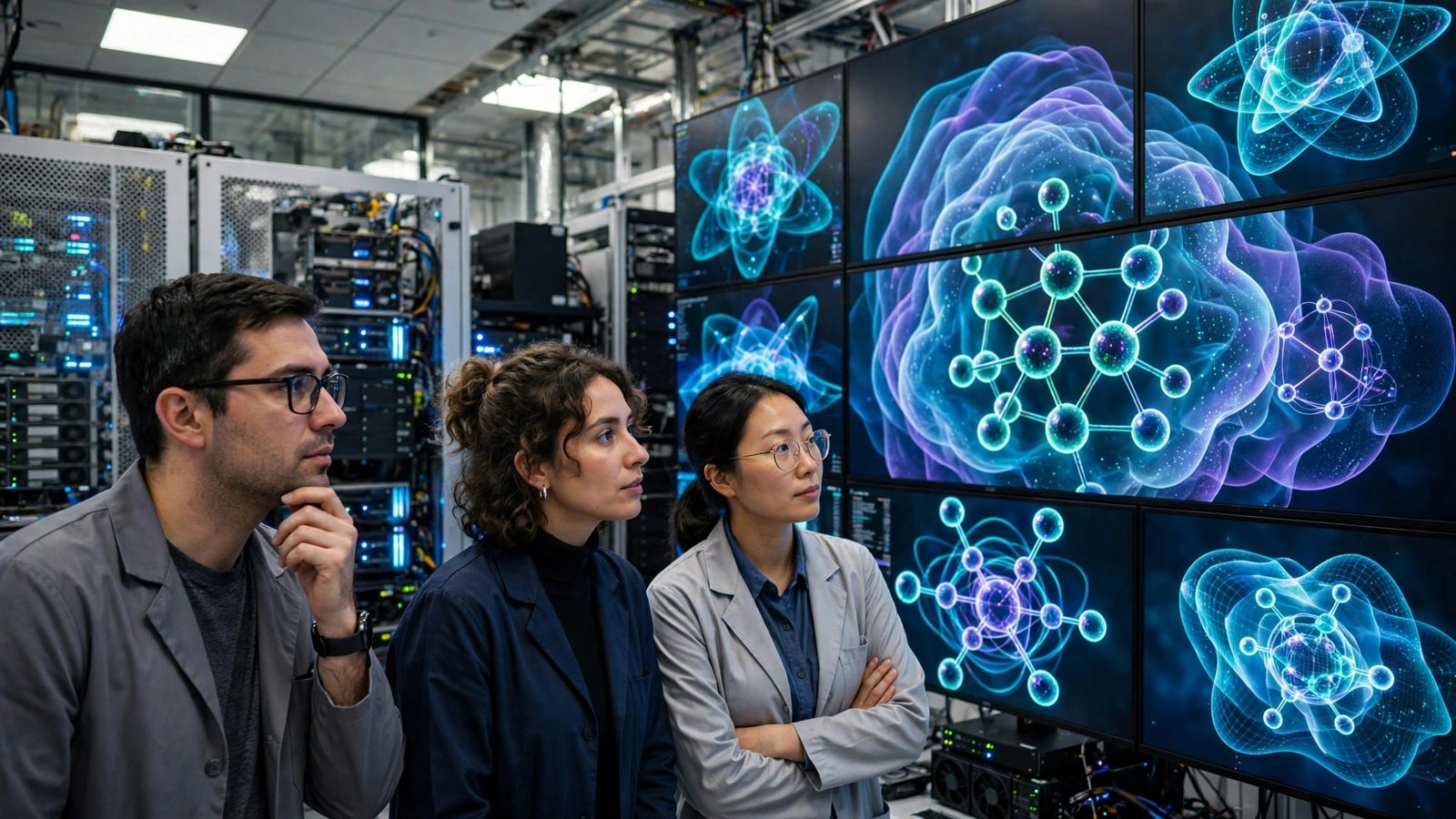
NVIDIA announced in Washington on October 8, 2026 that it will commit a total of $1 billion over the next five years to advance science in the United States. It is not a cheque written to a single laboratory but a package of commitments: university research, quantum computing and cloud providers supporting government missions will all share in the resources, aimed at quantum computing, healthcare and energy security.
Where the money and compute will go
According to the company, the commitment connects with the Genesis Mission, whose expansion the White House Office of Science and Technology Policy marked the same day. NVIDIA is a leading industry partner in the program and a collaborator on a set of phase-two awards covering quantum computing, fusion, accelerator design and microelectronics. For universities, the most tangible part is not cash but scarce compute and engineering support; for NVIDIA, every additional laboratory doing research on its hardware and software stack deepens the ecosystem's stickiness.
The history behind the headline
NVIDIA has worked with U.S. national laboratories for more than two decades. Last year it already announced work with the Department of Energy on the Genesis Mission, including building a large supercomputer for scientific research at Argonne National Laboratory and supporting seven new systems across Argonne and Los Alamos. Seen that way, the $1 billion is less a brand-new move than existing cooperation repackaged into a five-year framework, and its value should be judged by how many concrete projects follow, not by the headline total alone.
The other ledger scientists must keep
Laboratories that receive compute can run simulations and train models faster, which is a real benefit. But there is a lock-in side: when research topics, toolchains and publications all grow inside a single vendor's stack, switching costs rise year by year. What deserves tracking next is the project list and how resources are allocated – whether they flow to universities through academic review, or mostly to cloud providers tied to government missions. That will decide whether this money reads more as research funding or as industrial positioning.