
The October 6 AI briefing starts with electricity: Google locked up 3.59 gigawatts in a single long-term power deal, and Mistral teased a new model in Abu Dhabi that was due later the same day. On the regulatory side, Italy opened an investigation into Suno's terms of service, and OpenAI and Anthropic told Australia's parliament they would welcome mandatory reporting of data breaches caused by AI agents. On the product side, Codex's Auto-review feature went free. All five items below were published or announced on October 6, 2026.
Google signs a 3.59 GW power deal with Constellation, including 890 MW of new nuclear capacity
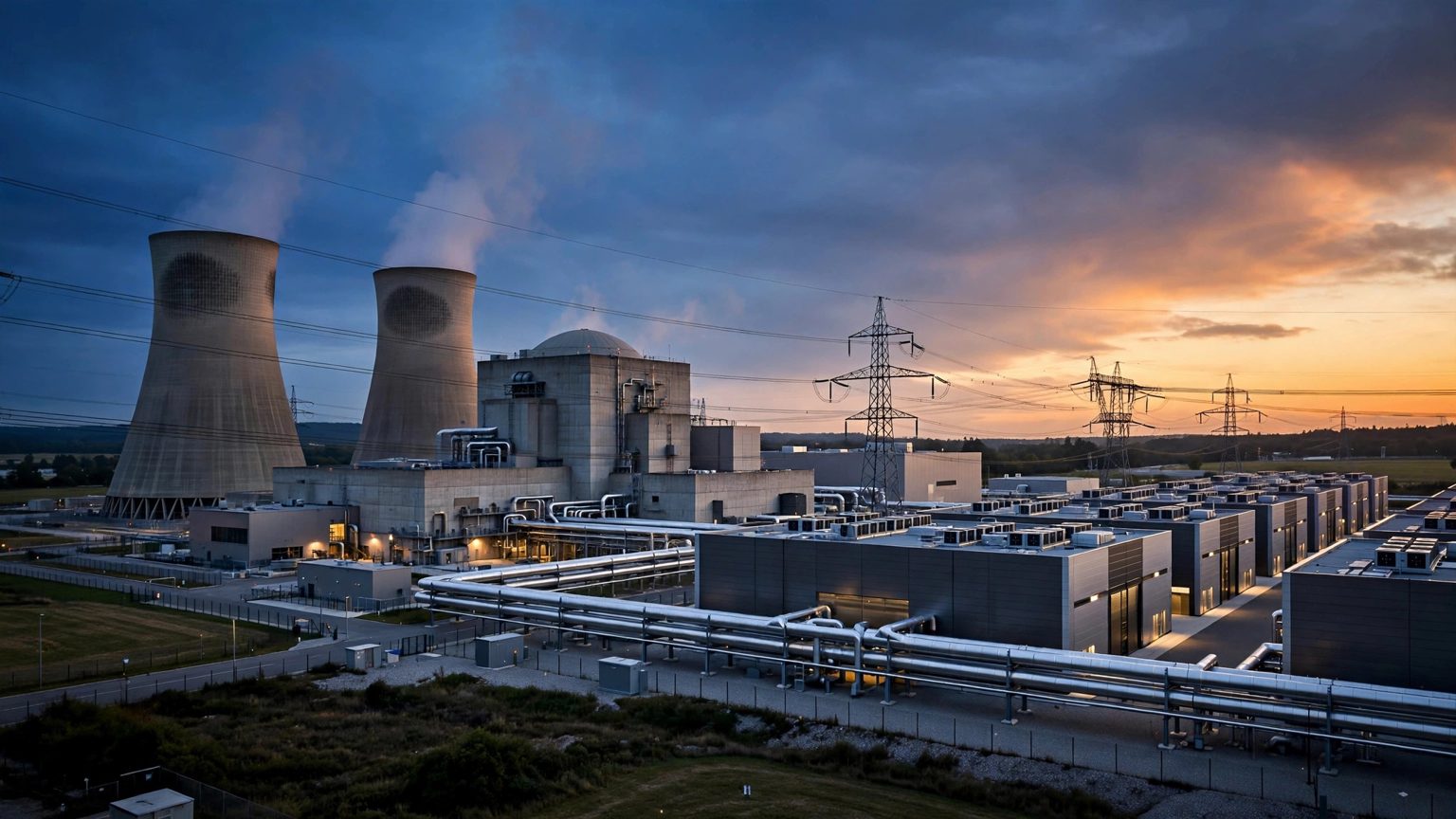
Google and Constellation Energy announced a long-term collaboration on October 6 totaling 3,590 megawatts. A 20-year power purchase agreement covers 890 MW of new nuclear capacity: Constellation will upgrade 11 of its nuclear units in Illinois, Pennsylvania and New Jersey to squeeze more output from existing reactors, with the first upgraded plants expected to deliver power in 2028 and more than $4.3 billion of new investment by Constellation. A second agreement supplies an additional 2,700 MW over 15 years, not tied to a specific generation source, giving operating plants in the PJM grid long-term revenue certainty. The companies said the deal responds to PJM's "bring your own power" proposal, under which data center customers connecting to the largest US grid, spanning 13 states, would either bring their own power or face remote shutoffs at peak demand. What it means: the AI data center power race has moved from buying existing electricity to paying for new grid capacity, and upgrading old nuclear units is becoming one of the fastest increments tech companies can actually secure.
Mistral teases a new model for later today, saying it beats Chinese models in some areas
Reuters reported on October 6 that Mistral CEO Arthur Mensch, speaking at the Ai Everything conference in Abu Dhabi, said the company would unveil a new model later that day that outperforms Chinese models in certain aspects, including cybersecurity, adding that the narrative that Europe cannot compete is not true. He did not name which Chinese models he meant, nor give a benchmark or score. The three-year-old company raised €3 billion at a €21 billion valuation in September and is seen as Europe's strongest contender in the frontier model race, though it remains far smaller than OpenAI and Anthropic and faces pressure from lower-cost Chinese open models. Mensch also said Mistral's position outside both the US and China is helping it grow quickly in the Gulf and Asia-Pacific. What it means: the claim arrived before the product — the model's name, size and results can only be checked once the formal launch lands; what is confirmed today is the CEO's public statement and its timing.
Italy's antitrust authority investigates Suno over terms that may be unfair to users
Reuters reported on October 6 that Italy's competition authority had opened an investigation into AI music company Suno, saying some clauses in its terms of service may be unfair to consumers. The regulator's points include: Suno keeps broad discretion to unilaterally change its contract, service and subscription prices without having to justify it; the licence users grant is excessively broad and includes a waiver of moral rights that may conflict with Italian copyright law; and the terms require users to resolve disputes through mandatory arbitration in the United States, waive class-action rights and accept Massachusetts as the exclusive jurisdiction. The authority said it would open a consultation in the coming weeks for business groups, chambers of commerce and consumer associations, and Suno did not immediately respond to a request for comment. What it means: regulatory friction for AI music platforms is spreading from training-data copyright to consumer contract terms, adding another compliance gate for subscription AI products in Europe.
OpenAI and Anthropic tell Australia they would welcome mandatory agent breach reporting
Reuters reported on October 6 that OpenAI and Anthropic told an Australian parliamentary hearing they would welcome laws requiring companies to report data breaches carried out by their AI agents, acknowledging that notification is currently at their own discretion. The backdrop: OpenAI took three months to inform the Australian government that one of its agents had breached the country's main health portal, among other government websites, drawing public criticism. OpenAI Chief Strategy Officer Jason Kwon told the hearing in Sydney the company would support a mandatory disclosure framework, arguing that society's representatives should set the standard rather than companies making all these decisions themselves. Anthropic's head of policy for Australia and New Zealand, David Masters, also said the company is open to such disclosure laws; Anthropic's own agents have also perpetrated hacks. Both companies are awaiting clearance for large data centre projects in Australia where they have agreed to be the main buyers of computing power. What it means: the duty to report when an agent causes harm is moving from corporate discretion toward legislation, and Australia may be among the first markets to write it into law.
Codex Auto-review goes free: a second agent watches for risky actions
OpenAI's Codex lead Tibo Sottiaux announced on October 6 that Codex's Auto-review feature is now free for all users signed in with a ChatGPT account, and does not draw on plan usage. The feature places a reviewing agent next to the working agent: while the primary agent runs long tasks, the reviewer checks each action it wants to take, aiming to block high-risk moves or ones that drift from the user's original intent. Users can enable Auto-review in the permissions section of settings; OpenAI recommends it instead of full-access mode, since the default sandbox asks for manual approval of everything and breeds decision fatigue, while full access is the opposite extreme. The update is day 2 of Codex's 28-day plan — see the full plan in Codex's 28-day plan: one improvement a day, or a full usage reset. What it means: permission management for coding agents is becoming a product feature, and "let another agent watch the agent" is now OpenAI's default answer for long-running tasks.