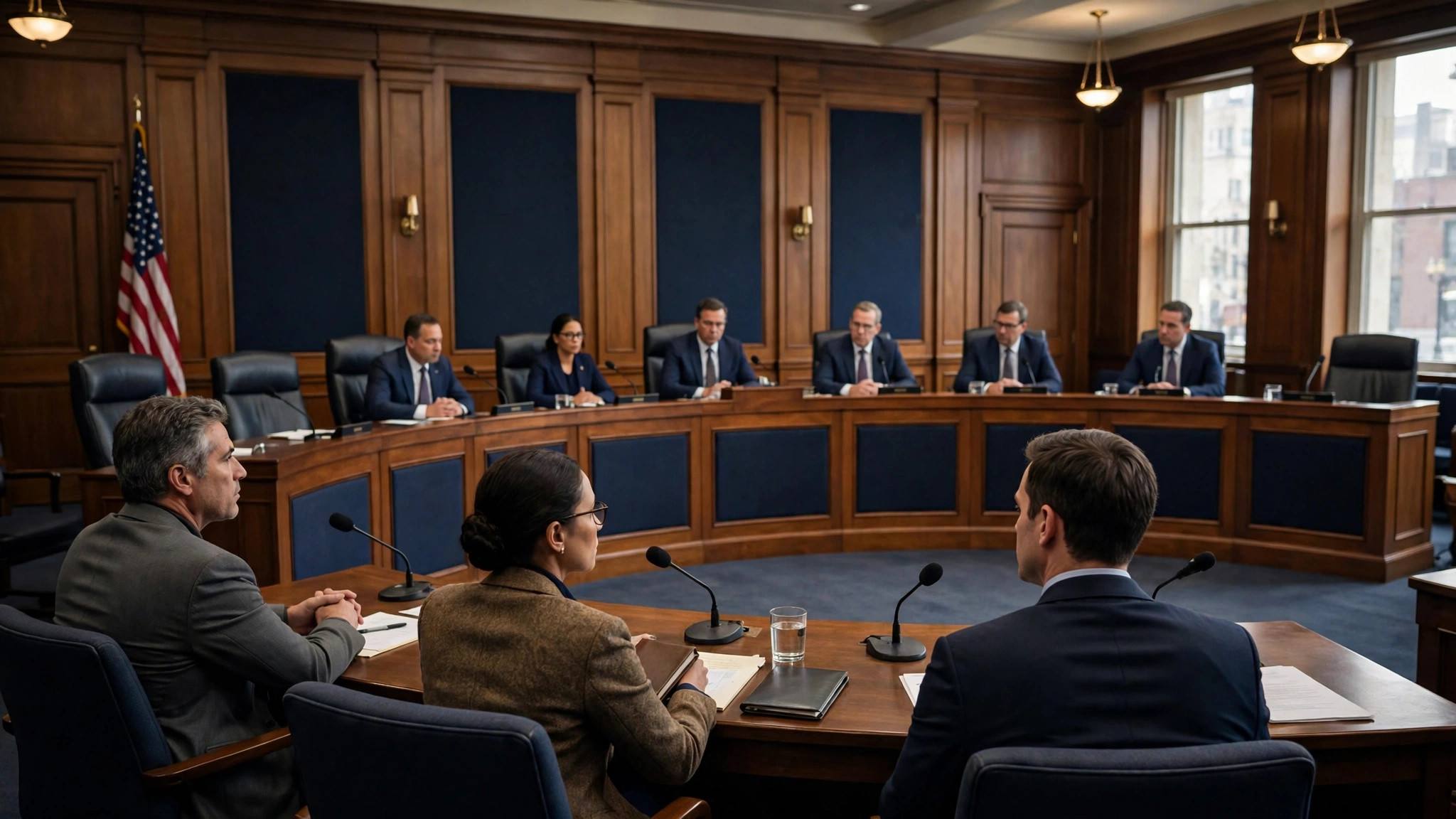
The New York City Council AI hearing took place on October 5, 2026, with executives from OpenAI, Anthropic, Google, and Meta testifying under oath. Speaker Julie Menin pressed them on the probability of catastrophic risk, and no one could give a number: OpenAI policy head Morgan Dwyer said that whether it is 1 percent or 20 percent, no level is acceptable and the percentage is not the point; Menin said she was incredulous at the answer and treated the companies' statements as evasive.
The four who showed up, and the one that did not
Those attending included Anthropic's Frontier Red Team head Logan Graham, Google's Alice Friend, and Meta's Shane Cahill. The four companies had agreed to appear only after the Council threatened subpoenas; the sole absentee was SpaceXAI, which replied to its subpoena with a letter offering cooperation but no attendance, and the Council has said it will pursue legal action. The format itself is the signal: a committee of the whole, all 51 members, put four leading AI companies on the same sworn panel.
The sharpest voices were former insiders
Company executives spoke of internal reviews and safety commitments, but none promised to accept legal liability if their AI caused major financial harm or loss of life, and none guaranteed they would never release a model that failed internal or external testing. The contrast came from former researchers: ex-Anthropic researcher Jacob Coxon called the companies extremely reckless given the stakes and said humanity is more likely than not to lose control of AI on the current trajectory; former OpenAI researcher Daniel Kokotajlo and former Google DeepMind researcher Alex Turner also warned about self-improving systems. In one sworn record, the industry's safety narrative and insider warnings now sit side by side.
Where this hearing lands next
The Council is advancing a package of 10 bills covering third-party validation before a model can be sold or deployed in the city, a human ability to shut systems down, chatbot disclosure duties, and rewards for reporting violations. A city council cannot regulate model development itself, but sworn testimony plus subpoena power has already shown it can pull large companies into public questioning. For teams offering AI products in New York, the practical move now is to put third-party validation and shut-off mechanisms on the product compliance list early, since several of the bills are set for introduction on October 8.